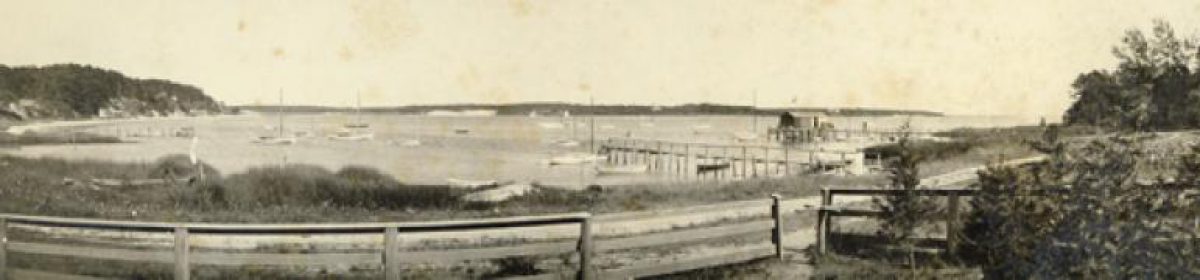
The Mysterious Mister Coggins: The Cape Cod Times

The Cape Cod Times — where I started my career in journalism in 1980 covering the waterfront and county politics — issued a public apology yesterday after discovering one of its longtime reporters had faked names in three dozen stories over the years.

One of those fictional characters was an imaginary 88-year old Cotuit resident named Johnson Coggins, fabricated in a 2011 story about the Cotuit Fourth of July Parade and introduced as the “patriarch of the family” and a “longtime Cotuit summer resident.” I note this because I remember reading the story and wondering who the f%^k this mysterious codger was and did he live in the pines somewhere in an alternative Cotuit universe I had never heard of. I also remember thinking, “damn, Cotuit is really changing and getting invaded with new faces when I don’t recognize the names of “longtime summer residents.”

Now I feel a little irked at the deception. Irked, not angry, just mentally tweaked at the memory of trying to put a face to a name and feeling mystified because, well, I was supposed to feel mystified. As a reporter I know the temptation of phoning something in, of fudging an age, a middle initial, but then it clicks that if I don’t the middle initial or the person’s age, if I didn’t take the time to get the little things right, well, the whole credibility began to crumble. It’s one thing to make an error and issue a correction. It’s another thing to deceive and have to deliver an apology.

The writer, Karen Jeffrey, used her imagination when populating the usual human interest stories about weather, parades, etc., inventing bystanders, observers, and participants. She got caught last month when she made up the names of some tourists surprised by a Veteran’s Day ceremony and the Times went deep into the morgue to discover that indeed, such chimeras as the fabled Mister Coggins didn’t exist.

Such a shame when a reporter goes down in flames.   The news business has enough problems as it is, and trust shouldn’t be one of them.

I have fond memories of the Times. I was there the last year they used typewriters, and learned the reporter’s craft from some good reporters and editors like Don Brichta, Bill Briesky, Peggy Eastman, and Milton Moore. I learned how to properly use a reporter’s notebook, take a snapshot of a ribbon cutting and check passing ceremony, where to sit during a public meeting, and the true physical meaning of the term “cut-and-paste.”  They have since become a Murdoch paper, their local news seems to shrink a bit every year (I rely on their sister weekly, the Barnstable Patriot for more hyperlocal coverage of town affairs), and they seem to be content with the usual light blend of car accidents, arrests, weather and features with no deep dives into Cape civic life. They took a pasting during the Wind Farm debates when a pair of critics wrote a book tarring their ethics for opposing the windmills are ardently as they did — but editorial pages are for taking a stand and they did.

If I were to make any request it would be to throw a little money at the local side — online can handle the page counts so the ad-edit ratio shouldn’t be an issue.  The Cape needs the coverage which is now piece-meal between the one and only daily and a handful of weeklies. I know local news is expensive, but someone has to step up to the challenge and Patch is not it.


Paying for Past PC Sins

The performance of a computer degrades over time and most experts will advise re-installing the operating system and restoring the machine to its factory settings as a matter of habit. They also tell us to backup regularly and floss our teeth, but who has time?

My 2010 Thinkpad is a perfectly nice run of the mill T410s with a Intel i5 3450s 2.8 GHz processor and 4 GB of RAM, a 128 GB harddisk, and built in Intel graphics. It’s rugged, it’s black, it has a trackpoint, and it does what it is supposed to be, albeit more slowly lately and with all the lethargic signs of a laptop that either needs to be replaced or revived.

The machine had some issues over the course of its life. A known defect in the display required a return to the service depot, and last summer I was so sick of constant overheating issues and black screen reboots that I sent it back with a week remaining on the warranty to have the motherboard and keyboard replaced.

Now it is just slow and sucky and needs a second life. The new keyboard means it is in top form physically, it’s just anemic and needs a cheap set of upgrades.

So the plan was:

  1. Install a solid state harddrive – SDD — because that will probably deliver the biggest performance increase, especially for fast booting and application launches.
  2. Re-install Windows 7 — but install a 64-bit version  because …
  3. I can get 8 GB of cheap memory from Crucial for $38 and only 64-bit Windows can take advantage of any ram over 4 GB.

Here’s the problem:

  1. The machine only accepts a 1.8″ SDD and prices for that weird form factor are almost as much as a new laptop in some cases. I am scouring the usual suspects — Newegg, Crucial, Amazon, eBay — but so far can’t find a cheap 64 GB SDD in the 1.8″ size other than a $117 64GB drive from Kingston. (Other option is a Thinkpad UltraBay HDD tray that will permit a standard 2.5″ drive, but that does away with my extra battery and/or DVD optical. 64 GB is fine given my complete embrace of Dropbox for my document storage and Amazon MP3s for my music storage up there in the cumulus.
  2. Microsoft won’t permit a 32-bit to 64-bit Windows upgrade online.  In the end I need to pay $70 for the retail version of the Windows 8 Professional Upgrade as that contains both versions. Thanks to Paul Thurrott I found that answer. Microsoft makes it nigh impossible to figure out with their overengineered “update” wizard tool that drives a $40 download of the 32-bit version.
  3. The RAM was ordered, installed, and sits awaiting some more headroom from the 64-bit Win8.
When done, I’m looking at spending $117+$70+$40 for a total of $230  to recharge an old and faithful machine with a lot of years left in it. I have absolutely zero inclination to invest in a new Windows machine, hate Macs, think $250 for a Chromebook is a foolish buy, and in the end, realize I am looking for a portable kickass keyboard, screen and wireless connection so I can be productive with my documents in the cloud. So why buy when I have one of the classic Thinkpads to come out of my buddy David Hill’s design organization in Japan and North Carolina. I know the X1 Carbon is the flagship, and friends who have purchased sing its praises, but the keyboard is a departure to the new “island” keys” and I can’t get over the cost-benefit hump.
As for the past-sins referred to in the title — SDDs were still a bit new and raw when I bought the machine during the summer of 2010, and being new they were a very expensive (like $500 for 64GB) option. I paid top price for this, even with the employee discount program, but should have gone 64-bit then and added the extra RAM, and also should have paid more attention to the bad graphics specs and the strange hard disk form factor. In the end, it has been a great machine, slim enough, rugged enough, but just frustrating enough to make me resent it from time to time.
Waxing philosophically on the state of the personal computing world in this year of tablet/Android/Win8/Surface upheaval — there will always remain a market for a machine with a QWERTY keyboard for people who work, write, create, etc.  It may be a tablet screen with a bluetooth keyboard, it may be a continuation of the classic laptop clamshell, it may be something unforeseen….but what will endure is a keyboard in one form or another. Just please god don’t make it a Dell.


Colonial Theraflu: Hot Buttered Rum

Last summer I dusted off my bartender’s chops and made a deep dive into the artisinal cocktail craze with a specific focus on Tiki drinks and Italian apertos and vegetals. This fall my focus is on stuff the American colonists drank.

I majored in American History, and two of the best two courses were David Brion Davis‘ course on Jacksonian Democracy and Michael Coe’s seminar on colonial archaeology. Both featured a focus on the important place alcohol had in early America and taken together I got a great introduction into American’s domestic life between 1600 and 1850. Everyone knows the old timers were big drinkers.  Really big drinkers. I mean these people drank alcohol the way modern fat people drink Fanta. The per capita consumption was huge — primarily beer and rum, the latter being the basis of the three-legged Salem slave trade that had New England merchants carrying slaves from West Africa to the West Indies and then molasses from the islands to distilleries around Boston.

“Colonists … enjoyed alcoholic beverages with such names as Rattle-Skull, Stonewall, Bogus, Blackstrap, Bombo, Mimbo, Whistle Belly, Syllabub, Sling, Toddy, and Flip. If they indulged too much, then they had dozens of words to describe drunkenness. Benjamin Franklin collected more than 200 such terms, including addled, afflicted, biggy, boozy, busky, buzzey, cherubimical, cracked, and “halfway to Concord.” Drinking in America: Colonial Williamsburg.

The origins of the first “cocktail” is attributed to antebellum New Orleans, and has something to do with French bitters, absinthe and American rye whiskey, resulting in the classic Sazerac. In the publick houses and taverns of New England, the drinks were mainly rum based and often served hot. Now they are being revived and the result is kind of interesting, basically like drinking stuff that tastes like liquified pumpkin pie with a kick.

In September, shortly before the end of the yachting season, I was mooring the boat after the sunset when the person helping me forgot to tie off the painter (nautical term for “rope attached to the bow of a small boat for purposes of securing it) to the motorboat (you know who you are Marta).  As I furled the sail I looked up to see the motorboat drifting away towards North Bay. I stripped off my shirt, flexed my muscled torso for the benefit of the ladies, and plunged into the autumnal seas with a gonad-shrinking gasp. The boat was returned, all was well, but I “caught a chill” — code for “I need a drink”  — and at the restaurant that evening, while waiting at the bar for a table, I saw that the drink special that had been chalked on the blackboard was a Hot Buttered Rum.

I was cold.

The drink was hot.

I had become cold while sailing.

Sailors drink rum.

I was tempted but ….

… Bad memories of hot buttered rum gave me pause. I had made them for customers at the Balboa Cafe in San Francisco in the early 80s.  Like a grand total of two of them. The pre-made “mix” was a brown paste that came in a plastic cottage cheese kind of container. It was disgusting stuff. A dollop was spooned into an irish coffee glass, hot water was added to a shot of dark rum, everything got a quick muddle to break it up and melt it and the steaming mess was shoved in the direction of the weirdo who ordered it. No one ordered hot buttered rum. Ever. So the brown paste was of some dubious vintage and I never took a test sip to confirm that it was horrible. It smelled like the basket of dried flowers my mother put on the back of the toilet tank to cover up bad odors.  This is odd because the Balboa was, I argue, the first bar in America to kick off the artisinal cocktail movement – no mixes were uses, all juices were carefully squeezed as needed, and bartenders like me were expected not only to know complex classics, but expected to make them perfectly. The fact we phoned in hot buttered rum was lost on me until this fall when the bartender at Mashpee’s Trevi showed me how it’s supposed to be done.

This was the same bar that turned me onto the evil French 75 earlier in the summer, so with some trust in my heart I ordered one. The bartender built it from scratch. A tablespoon of good butter, a couple tablespoons of dark brown sugar, some fresh grated nutmeg, ground cloves, ground cinnamon, a shot of really dark Kraken rum, then a trip to the steam nozzle on the espresso machine to get it boiling. He garnished it with a slice of lemon and a cinnamon stick.

It was awesome. It was the perfect drink. I felt like I was wearing shoes with pewter buckles, white panty hose, a big white floppy bow tie and a stove pipe Pilgrim hat. I was ready to join Thomas Paine and Ben Franklin and throw frozen dog poop snowballs at the Red Coats in front of the old Statehouse, toss some tea into the harbor, and plot some Manifest Destiny.  I shared it. One person said, “It’s Theraflu for Pilgrims.” That seemed appropriate, especially since the prior Theraflu analogy has been applied to the complimentary lemoncello that restaurants in Florence like to pour at the end of every meal but missed the fact that Theraflu is generally served in a mug of hot water.

It was so good I had to recreate it. I spent some time online searching out recipes. I made a batch and thought it pretty good (but not as good as the one at Trevi). I was biased because I made it, but no one else hanging around my kitchen was exactly clamoring for one, so I guess it falls into the category of acquired taste or total failure.

The hipster artisanal cocktail subculture has seized on reviving the classics from the golden age of cocktails, and with all obsessive (and bloggable) fads, that subculture is spawning branches into Tiki cocktails (Mai Tais, Fog Cutters, Zombies, etc.), vegetals (homemade nocino, Cynar, Aperol, etc.), boutique distilled gin, etc. etc. etc. etc.  The colonial branch in the mixology fad is focused on punches, flips, Bishops, shandy’s, cobblers, mulled ciders, wines,  etc..  This list of new bars from the New York Times caught my eye, primarily because of the news that a new place is opening on Broad Street, the Dead Rabbit:

DEAD RABBIT Sean Muldoon and Jack McGarry, veterans of the Merchant Hotel bar in Belfast, and Danny McDonald, who owns the Manhattan bars Puck Fair and Swift, collaborate on this historically minded three-story cocktail bar just around the corner from Fraunces Tavern in the financial district. The ambitious spot (named after a notorious 19th-century street gang) intends to combine two of the area’s bygone drinking destinations: the sort of taproom patronized by immigrants and a sporting man’s cocktail lounge. Expect punch, bishops, flips, cups and cobblers, and food. (Late November): 30 Water Street (Broad Street).”

And yes, hot pokers were used to heat up these things, but having converted the fireplace into a gas insert, I am not planning on brandishing any red-hot pokers around my glassware any time soon. This guy made his own, which I think is awesome:

The full story is at Cocktalians.com


Social commerce bites the dust, Mobile Rising

Check out this great IBM report on Black Friday ecommerce discovered by Uncle Fester who gleaned it from Business Insider. It yields some interesting takeaways to digest this Cyber Monday.

  • Conversions are way up on online stores at 4.58%. That’s visitors who actually checkout and buy something. Up 9% from last year.
  • Mobile is a significant force. 16% of online sales came from mobile, up from 10% last year. And mobile devices accounted for 24% of traffic.
  • iPads delivered 10% of online commerce traffic. Damn.

How badly does Social media suck in driving commerce referrals?

  • Facebook delivered 0.68% of all Black Friday sales. Less than 1%.
  • Twitter? To quote Business Insider:  “A couple of years ago, people were excited about Twitter’s potential as a commerce platform, too. But Twitter’s impact on ecommerce, it seems, is zero. Not basically zero. Zero.”


The Christmas Tech Fork

A friend asked my advice about a new PC over the Thanksgiving holiday. He had used my Lenovo employee discount code in the past to equip himself and his sons with laptops, but now the time is here to get new stuff, so the question was put to me: what do I recommend?

My daughter beat me to the punch: “MacAir, I love mine.”

I ignored her, having never owned an Apple computer — only an iPod and an iPad (neither of which I use any longer) — and thought for a minute, realizing that two years out of the PC business has left me a little more ignorant than usual when it comes to staying on the cusp of personal platform discussions. Time was when it was an easy debate: PC or Mac. Now, not so much. So let’s look at the options out there this holiday buying season, and try to understand what to ask Santa for.

  1. The incumbent heavyweight in PCs remains the so-called classic Wintel duopoly of Windows on Intel processors. This puts one into the realm of Lenovo, HP, Dell, Sony, Toshiba, etc. etc. etc..  The old Wintel world was defined by corporate computing standards for desktops and laptops running Windows. Now corporate IT departments are losing their dictatorship powers, and opening up their environments to permit iPhones in lieu of Blackberries, MacBooks in lieu of Inspirons and Pavillions andThinkPads, and in some cases telling employees to buy their own crap and run it off the cloud. So, while the influence of the Enterprise Gorilla is probably still huge for most workers, it’s waning a little bit. So, if you want a classic laptop running Windows, good luck. The things are on the way out to be replaced by an entirely new world – actually a big bet to restore relevance — by Microsoft called windows 8. You can still buy a laptop, now pushed by Intel co-marketing dollars as “ultrabooks” — classic laptops made thin to compete against the MacAir. They look nice, and if you are a keyboard heavy person like me, then that may be where to go for a deal right now.
  2. I have never used Windows 8. It is the new text-heavy, tiled touch-oriented user interface that Microsoft has decided is the way forward for both its vision of the tablet/pad computer — it’s first hardware platform the Surface — and its phone, best experienced in the Nokia Lumia. Think of Windows 8 as Microsoft’s last stand against the insane disruption in consumer computing driven by the iPhone, the iPad, Android, Cloud computing, touch interfaces and Amazon’s store and web services.  I can’t help you here. The Lenovo Yoga and Thinkpad Twist are getting semipositive reviews from Walt Mossberg and others. The Microsoft Surface is getting grief for being expensive (two versions to keep in mind, the cheaper RT and the full version which runs legacy Windows apps). Basically this is a cake-and-eat-it-too world of having a heavy tablet with a keyboard if you need it. I can’t recommend or criticize as I haven’t even touched one in a store yet.
  3. Apple. Riding high but probably working through the pipeline of products influenced by the late Steve Jobs. The holy trinity of iPhone, iPad and MacBook/MacAir is what my wife and daughter have bought into. They love the design, struggle with the iCloud, and essentially are happy where they are at whatever price premium they pay to be there. I hate Apple’s closed environment and predatory approach to intellectual property. I suffered in iTunes, resented the lack of portability of the media I bought there, and in general find the Apple software model too …. simplistic. If you have the cash, love design, and are ready to live in the world as Apple defines it, then get a Mac, iPhone, iPad and live long and prosper. The choices are pretty clear: iPhone 5, iPad3, and some variation of MacAir or MacBook depending on the budget.
  4. Android. My preferred world for religious reasons.  I’m on a Samsung android smartphone and a 7″ Google/Asus Nexus tablet. I use Gmail. Google Calendar, and occasionally Google Docs (I am a Dropbox guy when it comes to cloud storage and collaboration). I have an eye on the Chromebook — $250 from Samsung ain’t bad — but still use a ThinkPad for my portable typing needs. That Thinkpad is now more than two years old and needs a refurb with a SDD to get it snappy again. I like Google Play — it’s attempt to sell content ala iTunes or Amazon — but it isn’t anything to fall in love with. If you are a Gmail person, then Android is your world and the design of the smartphones isn’t half bad.
  5. Amazon: The Kindle was (and still is) a nice light e-reader. I loved my very first Kindle, but never use the Kindle Touch I was gifted over a year ago. The Kindle app on my smartphone and the Nexus tablet (and before that the iPad) is all I need. I think Amazon messed up taking Android and forking it into a proprietary environment for the Kindle Fire.  They are cheap, obviously sold at a loss by Amazon as feeders into its vast store. I am a big Amazon MP3 store fan. It is everything iTunes should have been when it comes to music and sharing.
  6. Also rans: avoid Nooks, Blackberries, and other weirdness.

In the end, I would ask Santa for:

  • A Google Nexus. I love the 7″ form factor. If you want to spend an extra $100 for the Apple Mini, go for it. But I declare the best product of 2012 to be the Nexus 7″
  • A Samsung Galaxy IIIs: great phone, huge screen, nice design. Apple can shove its patent suit up its butt. Innovate don’t litigate.
  • A last generation ThinkPad on discount running Windows 7. BestBuy was touting a black friday doorbuster of a  wimpy Lenovo IdeaPad around $275, that’s almost too good to be true. There are deals in the last generation of WinTel to be found.

I would wait a few months for the dust to settle on the Windows 8 landscape. The Lenovo Yoga, while interesting, is showing some SDD issues with not much room due to bloatware and bad partitioning along with some touch pad bugs. The Surface — ehhhh, too expensive. And again, Apple is a self-selecting decision. You’re either all in or you aren’t and this post won’t do anything to persuade you one way or another. Kindle? Get a Google Tablet and run the Kindle app if you are looking for an e-reader.

I have nothing to say about gaming platforms, you are on your own there.

The erg beckons…..part 2

As part of my annual and irrational race against age, I did the second 2,000 meter test on the erg yesterday, and cut eight seconds from the first a week before.

I pulled a 6:50.1, averaging 1:42.5 per/500 meters, five seconds faster than the 6:55 I set out to row in my quest to break 6:30 by mid-February. I tried to negative split the piece, but as I always do, I started too fast — pulling 1:28 over the first 100 meters before settling down and finishing the first quarter of the piece at an average 1:40 pace.

I settled down more to a 1:44 for the second 500 meters, went into the pain cave at the mid-point and maintained another 1:44, but brightened up and flogged a 1:41.3 to finish the last 500 meters in a grunting sprint of ugliness.

My coach Mark is determined to get these last 20 seconds standing between me and my goal stripped away, and is emailing me nutritional advice. His demand that I start “eating like a man” is duly noted. The pecan pie remnants are in the trash, no more obsessive-compulsive carrot stick crap, just back to the  paleo diet and some common sense.

Thanksgiving Dredge

Thanksgiving. Not my favorite holiday but it is a four day weekend so I’ll take it.

I woke at dark o’clock, did the 6 am Crossfit workout of the day (“Helen” 3xrowing 500 meters, 21 kettlebell swings, 12 pullups), and drove home in the false dawn feeling all virtuous about burning off the worst meal of the year six hours before I even ate it.  As I drove home, past Shoestring Bay and the little ducks paddling on still waters, I vowed not to write a cliche blog post about stuff I was thankful for, my most excellent Brussels sprouts and pancetta recipe, the tyranny of Black Thursday/Friday and rampant materialism, nor the existential silliness of holidays. Hell no. I wouldn’t post a picture of the Thanksgiving sunrise at Loop Beach just because the world needs to see another sunrise picture just as much as it needs to see 250 million Instagram/Twitter shots of roasted wallboard-tasting turkeys today.

I can handle holidays that commemorate dead people, the birthdays of dead people, the anniversary of big days (the Fourth of July commemorates an event that actually took place on the Second of July), and weird pagan-religious rites like Halloween. The Swiss are the biggest holiday takers I’ve ever known. Their best is Sechselauten, or the Burning of the Bööög — when they celebrate spring by burning old man winter in the form of a snowman effigy packed with fireworks. The local burgermeisters and “guilds” dress up in halloween costumes, booze it up on firewater made from distilled cherry pits, play off-key brass instruments and scare the bejeezus out of school kids waiting at the tram stops at the good and healthy drunken hour of 7 am. I witnessed the burning of the Bööög in Zurich and had it explained to me in a multicultural out-of-body experience by an Irishwoman who was as confounded by Swiss eccentricities as I was.

I won’t be a scrooge and poop on Thanksgiving. (Actually, in reading this after posting it, I am going to do exactly that). So what if the Pilgrims didn’t sit down on the last Thursday of November and break bread with the Wampanoags?  Who knows what they ate. Who cares? It doubtlessly sucked. There wasn’t a lot of balsamic vinegar and wedges of Stilton hanging around Plymouth in 1620.  They ate bad watery squash, maybe an unseasoned striper which tastes like a fishy newspaper in the best of times, some venison and maybe, just maybe, a wild turkey. Half of the Pilgrims were dead or dying from scurvy, scarlet or yellow fever, dropsy, scabies, etc.. The Wampanoags were there because they needed some allies with guns to protect them from the other tribes that had been kicking their plague-decimated butts. Now the Wamps call it a “Day of Mourning” and with good reason as they eventually had their asses kicked and saw their survivors deported to Bermuda or confined to Mashpee.

Thanksgiving is just another concocted holiday up there with Secretary’s Day and Mother’s Day we celebrate thanks to lobbyists on a mission a century and a half ago. In the case of Thanksgiving that lobbyist was Sara Josepha Hale — author of “Mary Had a Little Lamb”. She wrote letters for decades to Congress demanding a national holiday of Thanks. Lincoln obliged, making the holiday official in 1863 — when there was absolutely nothing in America to give thanks for — and it wasn’t until the 1870s that the day became nationally observed, coinciding with a revival of interest in the Pilgrims who had been all but forgotten by time, but were dusted off and held up by some ardent patriots like Ms. Hale as the true forefathers of the country.

Give thanks to Sara Josepha Hale for Thanksgiving It’s all her fault.

There are some amazingly weird and ugly monuments from that period in  in Plymouth (a place to definitely avoid on Thanksgiving as ye olde Plimoth Plantation is mobbed with families looking for some authenticity in lieu of the Best Buy Doorbusters). Among the Plymouth monuments to sentimentality is the incongruous Greek temple built over the randomly selected “Plymouth Rock” and another is perfectly captured by the demented Eric Williams at the Cape Cod Times, our friends at Cape Cast. I give you the National Monument to the Forefathers, aka “The Giant Statue.”

No. Instead of pictures of sunrises, turkeys, rants on bogus thanks or beefs about social media douchebags. I give you a Thanksgiving picture of a dredge. This baby is parked at Cotuit’s Town Dock.

The dredge at Town Dock

Dredges are a big deal around Cotuit because we rarely see them. They make our channels deep again. They modify sand spits, pump sand to places that need to be replenished, and improve the flow of water in and out of our dirty bays. Dredges are cool. They made the Panama and Suez canals. They are the great modifiers.

This dredge is a bit of a mystery. I know there is a county dredge — basically the Cape Cod Official Dredge — but I haven’t seen it around these parts for a long time. Hell, the main channel in and out of Cotuit was last dredged in 1944 by the Army Corps of Engineers when Camp Candoit was training Higgins boats drivers to invade Normandy practicing invasions of Marthas Vineyard. Three Bays Preservation, the local nonprofit devoted to cleaning up the harbors had a dredge clean out some of the inside channels a decade or so ago. But this one …. a bit of a mystery that may be solved by looking up the permit posted on the Town Dock.

Indeed, this is project MA DEP SE3-4898, approved by the Barnstable Conservation Commission two years ago. In short, the dredge is going to make things deeper around the Town Dock and pump the muck over to Dead Neck. I noticed on the moon tide a few nights ago that the inner dinghy floats are high and dry and low tide, so this is a good thing. A lot of silting happens under the dock because the storm drains used to dump out underneath it.

"Town of Barnstable/DPW. Maintenance dredging at Cotuit pier and float areas, and beach nourishment at Dead Neck Beach (Sampson’s Island) as shown on Assessors Map 035 Parcel 089 (Cotuit Town Dock) and Map 050 Parcel 002 (Dead Neck Beach). SE3-4898
The applicant was represented by Bob Burgmann, P.E.
Issues discussed:
• Dredging was last done in 1968.
• Dredge spoil to be deposited at Dead Neck.
• Standard conditions will be imposed with regard to keeping within proposed footprint and depth.
• A letter from MA Division of Maine Fisheries was discussed and was noted for the file as Exhibit A.
A motion was made to approve the project with special conditions.
Seconded and voted unanimously."

I am thankful for the dredge and deeper water under my keel when I come in for landing in the sailboat next summer.

Current reading list

I’ve been juggling the usual reading list, relying primarily on my Google Nexus 7 tablet as my Kindle delivery device. Good tablet. I highly recommend it.

BurrI’ve never read any Gore Vidal, and on the occasion of his passing away earlier this year bought a paperback edition of Burr, his fictionalization of the life of Aaron Burr. Burr shot and killed Alexander Hamilton in perhaps the most famous duel in history; was Jefferson’s vice-president, a hero of the Revolutionary War and, in Vidal’s portrayal, a licentious, thoughtful, and scheming political survivor whom history has tarred and feathered while deifying Hamilton. I recommend it.

Proud TowerIf I could write history I would want to write like Barbara Tuchman. Her Guns of August, and Distant Mirror are personal favorites. Taken in the same vein of other historical authors who manage to make history sing (e.g. David McCullough and William Manchester), Tuchman is the best. Proud Tower is a look at the decline of aristocratic power structures in the two decades before World War I – with exquisite cameos of the best and the brightest in Parliament, Congress, and even the anarchist bomb throwers that presage our modern terrorism crisis.

DeadheadNick Baumgartner at the New Yorker has written a great personal account of being a Deadhead, a compulsive collector of the band’s trove of user-shared bootleg taps of their shows, the fate of the band’s archive and where it stands today in a warehouse in Burbank California. Which reminds me to do something with the two cases of 90 minute Maxell cassettes sitting in my attic.

Readwrite on Outing Trolls: interesting piece in ReadWrite (where the Fake Steve Jobs, my buddy Dan Lyons is now editor in chief) on the use of social media to “out” trolls and racists.  I confess to being a fan of the troll subculture — finding some of the old USENET trolls to be among the more demented disruptors  and jokesters ever known. The rise of 4Chan, Reddit, etc. has given birth to an entirely weird subculture (my favorite being the SecondLife griefers “W-hat”). The example of the Tumblr blog devoted to outing adolescent racists who used Twitter and Facebook to express their ignorance after the recent election is depressing.

Relentlessly Self-Improving

I confess I haven’t rowed on the water once this calendar year. My only excuse is a shitty start to the season with the torn bicep back in January and the five months of rehab. Now it looks like that same arm has a “slap tear” at the top of the bicep, and that means some specific movements are both painful and very weak, including lifting the shell out of its rack and getting it over head.

The winter injury happened just in to time to knock me out of the 2012 CRASH-B sprints (the “world championships” of indoor/erg rowing) and I never got motivatedenough  to wake up extra-early for the calm water and portage my scull down Old Shore Road to the harbor.   Crossfit and the tedium of physical therapy had my full attention and now, with Thanksgiving holiday ahead, it’s time to start hyperfocusing on the indoor rowing season which traditionally begins for me with the Concept 2 Holiday Challenge (200,000 meters between Thanksgiving and Christmas) and ends with the Crash-B’s in February.

This is my last year in the 50-54 men’s heavyweight division. In 2011 I tanked after going out too fast from the start and bonked in the last 500 meters, blowing a nice pace and finishing 14th with a 6:39.9.  I had won the Cape Cod “championships” at the Cranberry Crunch the month before with a 6:42 and was all full of myself and cocky at the Crash-Bs and went out too fast. I learned my lesson and left the arena at Boston University determined to come back better in 2012. I signed up for Crossfit Cape Cod the next week and have been training with an eye towards getting faster on the erg.

Today I did my first 2,000 meter test to set the baseline for my training over the next three months leading up to the race on February 17.  I climbed on the erg, stripped off my shirt, set the monitor for a 2,000 meter piece and decided anything under 7 minutes would be a good place to start. I made it. Barely, with a 6:58.8.  That meant an average 500 meter pace of 1:44.7. Respectable, but a long way from where I need to be in 12 weeks. Ironically, focusing on Crossfit has made me slower on the erg — proof that randomizing my exercise the Crossfit way between metabolic and strength conditioning isn’t as effective as my tried-and-true model of putting in tons of meters and shifting to short sprint intervals as the races grow near.

I logged my time on Concept2’s online ranking page and now stand 39th out of 616 heavyweight men ages 50-59. The winning time in my division last year at the Crash-Bs was a 6:11.4. The world record is 6:07.7 set by Andy Ripley in 1998. The world record — period — for men is 5:36.6.

Breaking seven minutes is a great goal for any guy in good shape, but being the competitive egomaniac I am, of course I am going to obsess on the winning times in my division and have my eyes on the next age group’s record of 6:18 set by Harvard/Olympian legend Dick Cashin.    As for this year. I would dearly love to get under 6:30 in 12 weeks. That means shaving 30 seconds between now and then. It’s improbable, if not impossible, but it is at least aggressive. The question is how to develop a training plan that will get me there while allowing me to do the daily Crossfit workouts, and taper in time for the big event?

If I pull one 2K per week — say every Saturday. I should be shaving 3 seconds off every week if I want to break 6:30 on February 17.  I bet if I were to attack a test piece now with the same intensity a race requires — “emptying the tank” — and leaving nothing to spare at the end, I might get to 6:45 with a superhuman effort. The question is how shave the last 15 seconds knowing full well the law of diminishing returns that sets in as one gets closer to the goal.

Developing a training plan to get from here to there is not a simple matter of plotting a line from 7 minutes on November 15 to 6:30 on February 15 and hoping a miracle will happen somewhere along that line. It won’t. Physiological adaptation doesn’t work that way.

In fact, to be more geeky about it. The best way to look at the challenge is not by gross finishing time, but the specific pace that has to be maintained to get there. For that I turn to the Concept 2 online pace calculator. The rowing machine has a monitor that counts down the meters, notes the strokes per minute and most prominently displays a big bold number — the erg’s equivalent to the speedometer on a car — the current pace for 500 meters. In Saturday’s baseline piece, my average split was 1:44.7. I didn’t row a a flat 1:44.7 every one of the 200 or so strokes it took to tick off 2,000 meters. I started with a 1:33 and gradually degraded to as slow as a 1:50 at one point. Fortunately, the monitor also displays an estimated finish time that one can improve by pulling harder, so having sat down with a sub-7 minute performance as my goal, I was able to keep the predicted time under 7 minutes and not let things decline and get out of hand.

Split strategies are essential to a great 2,000 meter performance. Using the Concept2 calculator and entering in 2,000 meters as the distance and 6 minutes, 29.9 seconds as the goal. I hit pace and it tells me that I would have to maintain a 1:37.4 pace on every stroke. Alas, I am not a machine so I start strong, fade, and then comes back to sprint to the finish. Hence my splits are all over the place. The experts say the trick is to pull negative splits — meaning go progressively faster every 500 meters and not do a “fly and die” and rush out of the start and go like mad until something goes very wrong (which it always does in a fly or die situation). The discipline required, not to mention the conditioning, is massive.

As Mike Tyson said, “everybody has a plan until they get punched in the face.” All of my pre-2k battle plans go out the window the second I start whipping myself back and forth trying to get the flywheel up to speed and realize the adrenaline is pushing me way too fast out of the blocks. After I settle down to my planned pace, and do my power-tens on the 500 meter marks, the dreaded visit to the pain cave begins about 750 meters or three minutes into the race, then comes what my friend Dr. Dan calls the “talk with Jesus” in the third quarter following the half-way point. All sorts of bad thoughts creep into the mind in during the 500 meters when the lactic acid is flaming, tunnel vision begins, and one’s head starts to roll around. This is when the debate between survival and simply continuing and just stopping and puking happens. In a boat you can’t stop. If you stop it is a disaster like an eight car rear end collision on a foggy highway. No one stops in a rowing race. It just can’t happen. Rowing is all about the inner debate between the survival part of the brain and the more noble “because it’s there” part. To hell with winning. The third quarter of a 2K race is about continuing. The last quarter is the realization that in 50 strokes the agony ends and the realization that anyone can do anything for two minutes.

I just need to figure out a practical path to get my numbers down in what should be an interesting test of the “quantified self.” It is a very profound psycho-physiological-spiritual question to ponder: if hope springs eternal as the cliche says, and if one is a “relentlessly self-improving” man (to quote Doctor Evil in Austin Powers), at what point does the aging ego accept the fate of all flesh and realize that the wheels have started to come off and indeed, as we age, the rower’s adage of “the older we get, the faster we were” is the bitter awful truth?

A 18-year old, prime-of-life specimen of immortal perfection can look at next year and rationally expect, with hard work, training, supplements, steroids, whatever …. to go faster. Athletes peak in their 30s. Most Olympians are in the 20s, some in their 30s, (depending on the sport of course. )The oldest successful Olympic rower is Sir Steve Redgrave, who won five gold medal in consecutive Olympics. He won his last in 2000 at the age of 38 and then retired, was knighted, and was the guy who ran the torch from the motorboat into the Olympic Stadium during London’s open ceremonies this past summer.

The best way to show the reverse parabola of progress would be to plot all the erg scores from the Crash-B’s against the age of the competitors. It would show a quick improvement from the teens up through the 30s, then a steep decline that accelerates through the 50s.   Masters rowers — 40 years and up– are  generally Type-A personalities, well funded, and obsessively competitive on and off the water.  I suspect not one of them accepts the truth that they are going to get slower next year, and most, like me, are throwing themselves into training plans, double-session workouts, expensive fish oil, post-workout protein supplements, weight regimens, and new boats (a new high end single scull costs well over $10,000 for 18′ and 35 pounds of carbon fiber). Speaking for myself — we’re fighting the clock.

To end this disquisition on age and improvement …. there is nothing like an ergometer to give one the naked lunch* truth that in the end, everybody has to slow down and stop some day. Eventually everybody runs out of water, has to check oars, and back down before slipping over the spillway and cascading, lifelessly over the foaming precipice. To that I call bullshit and hope to be the toothless cackling codger who walks out on the floor of the Agganis Arena in 2052 at the age of 94 and pulls a sub-ten minute piece and gives time and deterioration the middle finger.

*: defined by the William Burrough's novel Naked Lunch, where "Burroughs states in his introduction that Jack Kerouac suggested the title. "The title means exactly what the words say: naked lunch, a frozen moment when everyone sees what is on the end of every fork.""