
Dress me up in me oilskin and jumper
No more on the docks I’ll be seen
Just tell me old shipmates
I’m taking a trip, mates
And I’ll see them someday in Fiddler’s Green
John Connolly, Fiddler’s Green, 1965
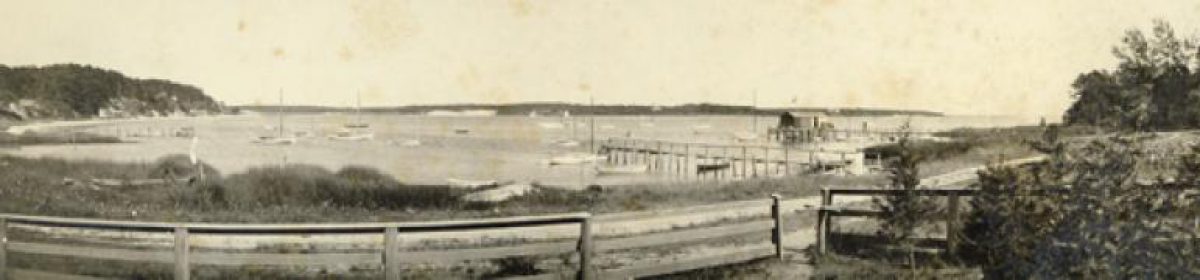
Edward “Ned” Ackerman passed away earlier this year. He was eighty-three years old, a scholar, a shipwright, and a sailor who once spent his youthful summers in Cotuit at “Rookwood,” the old Augustus Thorndike Perkins estate also known as “Sandalwood” that sits on the bluff overlooking Inner Harbor by Little River.
In the 1970s, when Ned was in his mid-thirties, he captured headlines as a self-described “merchant-adventurer” who believed the time had come to revive the sail-powered coastal schooners of the past as a cost-effective and sustainable way to ship goods along the coast and south to the Caribbean. His dream was audacious and well timed, taking form in a Thomaston, Maine shipyard after the price shocks of the 1973 Arab Oil Embargo stunned Americans with gasoline shortages, a tripling of oil prices, and long lines at the gas pumps.
Ackerman worked with the shipwrights at the Newbert & Wallace shipyard over three years to build a 97-foot, two-masted schooner designed by the Hyannis boat builder and designer, Robert “Pete” Culler. Christened the John F. Leavitt after the author of Wake of the Coasters, and Mystic Seaport assistant curator, John Leavitt, the schooner was launched in July 1979.
Six months later and the Leavitt was abandoned on her maiden voyage, 187 miles southeast of Long Island on December 28, 1979. The construction of the ship, and her first voyage carrying a cargo of lumber and tanning chemicals from Quincy, Massachusetts to Haiti were chronicled in the documentary film, Coaster, released in 1983.
The Cotuit Connection
Ned was born in 1942 in Tucson, Arizona, the son of Ruth Wellman Ackerman and Edward Angot Ackerman. His mother’s family, the Wellmans, were from Montclair, New Jersey. The Wellmans spent summers in Cotuit, buying land around Cordwood Landing as well as considerable acreage in Mashpee on both sides of the Santuit River that included the Maushop stables.
Ned attended private school in Tucson, was a National Merit Scholar, and earned a Rifleman’s badge from the NRA. He was named an alternate to the U.S. Air Force Academy by Senator Barry Goldwater, but earned his BA and MA in English at the University of Arizona where he joined a fraternity and drove a sportscar in rallies sponsored by the Sportscar Club of America. His younger siblings were Todd and Jill.

He married his first wife, Margaret, in 1965 while working as a teaching assistant in the U. of Arizona English department. Ned pursued a doctorate in Middle English and Norman French at the University of Pennsylvania, but didn’t complete his studies, instead moving to New England to teach English at Merrimack College in North Andover, Massachusetts.
In the late 1960s and early 1970s he purchased large tracts of land in Cotuit, west of Old Post Road, from Theron Apollonio, and subdivided the property into the neighborhood known today at Cotuit Bay Shores. The proceeds from that development and stock market investments allowed him to purchase a 300-acre farm in Dover, N.H.. In 1973 Ackerman commissioned Newbert & Wallace of Thomaston, Maine to build his first schooner: the 45-foot Fiddler’s Green. Ned isn’t listed in Larry Odence’s history of the Cotuit Skiff as having ever owned or skippered a skiff during his summers in Cotuit, however he evidently learned how to navigate and sail aboard the Fiddler’s Green, sailing her along the New England coast and eventually bringing her to Cotuit and the Crosby yard in Osterville.
The Wooden Boat Revival
Ned was inspired to undertake a revival of shipping freight by sail by John Leavitt’s history of coastal schooners: Wake of the Coasters. Ackerman approached Pete Culler, who, while not a trained naval architect, had established a reputation as a designer and builder of small traditional boats and had published three books about boatbuilding. Ned commissioned Pete to design a schooner for coastal shipping. Culler delivered plans for what would become the John F. Leavitt and was present for the laying of her oak keel, but passed away at the age of 68 in 1978 before the ship was finished.
Ackerman sought, and received, lots of publicity throughout the construction of the Leavitt. He hired a public relations firm and commissioned a documentary about the project that was produced and directed by Jon Craig Cloutier of Kittery Point, Maine. The public’s interest in the Leavitt was well timed: oil prices were rising and the counterculture was proclaiming “Split Wood, Not Atoms.” Opponents picketed the Seabrook nuclear power plant then under construction only miles from Ackerman’s Dover dairy farm. A revival in wooden boats was sparked in the 7os by the restoration and preservation experts at Mystic Seaport, and the founding of WoodenBoat magazine by Jon Wilson out of an off-the-grid cabin in Brooklin, Maine in 1974. The coast of Maine became the epicenter of the wooden boat renaissance. After more than decade of soulless Fiberglass, many sailors longed to return to the halcyon days when wooden boats had a sense of soul that the new plastic, epoxied “Tupperware” boats lacked.
Ackerman worked alongside the crew at Newbert & Wallace during the building of the Leavitt, gaining press coverage in the September 3, 1979 issue of Time Magazine shortly after the launching earlier that summer. In a story by national correspondent Hays Gorey, titled, “In Maine: A Bold Launching into the Past,” Ackerman, then 36 years old, said the Leavitt was intended to turn a profit, carrying cargo by sail for the first time in 40 years. “Someday there may not be any more fuel-driven trucks or motor ships at any price. But wind is plentiful,” he told Time. The story of Ackerman and the Leavitt went national as the wire services covered the story and newspapers from coast to coast reprinted it.. WoodenBoat put the launching on the cover of its November/December 1979 issue. The age of sail-powered shipping had returned and Ned Ackerman’s quixotic quest to prove it could be done became front page news.
The Leavitt is Launched

The Leavitt ignominiously ran aground in the mud of the St. George River when she was launched at Thomaston and had to wait for the tide to come in before she floated free. Sailors are superstitious and the grounding was, in hindsight, taken as a symbol of bad tidings to come by the peanut gallery that criticized Ackerman’s dream. The schooner had a dramatic sheer — the curve of her hull as seen from the side, a common design feature Culler put into most of his boats — a playful, almost whimsical arc that was accentuated by a bold red stripe painted along the white hull and Ackerman’s own modification to raise the stern of the boat even higher than Culler’s original plan called for so the helmsman could see what was happening on the foredeck over the cabin top. The critics (and there were many) claimed the Leavitt was more ofa yacht than a true working schooner, overbuilt at the expense of a capacious cargo hold. Corners were cut, perhaps due to Ackerman’s inexperience or short funds.
The decision was made not to install an auxiliary diesel engine on the schooner. Ackerman was determined to avoid a Coast Guard inspection of the ship; hence her length was kept under 100 feet and the engine was omitted in favor of a small powered “yawl boat” that would tow the Leavitt into harbor and nudge her alongside a dock whenever she took on or offloaded cargo. Ned was upfront about his desire to avoid Coast Guard certification, thus the schooner departed without the blessing of the authorities.
Some omissions would later prove fatal. A bilge pump wasn’t installed in the main cargo hold. A sight glass to measure the depth of water in the bilge under the cargo hold wasn’t installed; essential to determine if the ship was leaking when the hold was filled and the hatches secured. A diesel donkey engine installed by the foremast wasn’t a marine engine and lacked a crucial valve that would later prove fatal to the ship.

Sail plan of the John F. Leavitt
After a series of delays getting underway from Maine, the Leavitt sailed to Quincy, Massachusetts in the late fall of 1979 to take on a cargo of lumber and tanning chemicals for delivery to Haiti. The crew included William Cowan, 21, first mate; Steven Bailey, 30, second mate; Paul O’Donnell, 27 deckhand; Alex Hadden, 21, deckhand; Cynthia Slater, 23, cook; William T. Duane, 42, supercargo; filmmaker Jon Craig Cloutier, and cameraman Robert Eckhardt.
“Of the working crew — that is, the mates, deckhands, and cook — offshore experience in schooners was minimal, though all had served time in coastal passenger schooners and I suspect each had more sea time under their belts than the skipper, Ned Ackerman.”
Peter Spectre, “North Atlantic Shakedown: The Abandonment of the John F. Leavitt” WoodenBoat, #33.
She ran aground again in Boston Harbor, breaking off the end of her jibboom when her yawl boat tugged her off a shoal on her way into Quincy. She pulled alongside the dock and lay there, idle, for six weeks, dogged by delays in loading the cargo, waiting for navigational equipment to be installed, and losing an experienced crew member who injured himself while scaling a fence. The Leavitt languished at the pier in Quincy into December, skim ice freezing around her during the cold nights. Finally, on December 20th, she set sail for Port Au Prince, Haiti. She was towed out of Boston Harbor by her yawl boat.
A photo taken of the Leavitt as she departed Boston Harbor through the Hull Gut, powered by her yawl boat, showed her heavily laden with cargo, trimmed down by the bow, with only a scant foot of freeboard between her deck stacked with lumber and the surface of the sea. The critics said in hindsight she was improperly loaded for a North Atlantic winter passage, but her sails were hoisted and she sailed slowly out into the Atlantic, bound around Cape Cod and Nantucket on her first voyage.
The first couple days at sea were uneventful and calm. The ship slatted slowly around Provincetown and began to pick up speed as she skirted the Cape on a beam reach before a northeast wind. The first calamity of the voyage came when the wind suddenly shifted to the northwest and the sails accidently crash jibed, slamming over out of control, damaging a radio antenna, and shaking up the crew who hadn’t rigged preventers to the booms.
The wind blew harder after shifting to the northwest. The seas mounted higher, building into confused swells that came at the ship from different directions. When the wind topped 30 knots the decision was made to heave-to, drop the sails and rig a storm trysail, then try to ride with the bow facing into the wind. But the schooner wouldn’t turn to windward. She rolled sluggish in the troughs of the waves which broke over her side and flooded the decks. One of the mainsails jammed as it was lowered, the canvas dragging and filling in the water. The cargo boom — a heavy spar used as a crane when loading and unloading cargo — was insecurely lashed down with a light line which snapped, turning the spar into a dangerous, out-of-control battering ram that smashed over and over into the bulwarks of the schooner’s deck. Hydraulic fluid from the donkey engine on the foredeck spilled out of an overflow pipe that hadn’t been fitted with a check valve. The fluid made the deck treacherously slick and impassable for the crew. As the schooner rolled in the seas the cargo boom continued to scythe across the deck and crash into the bulwarks, a menace to any sailor who dared to venture forward on the slipper deck to try to lasso it and bring it under control. The yawl boat, hanging from the transom on its davits when it should have been on deck lashed down, was swamped by the waves and had to be cut free.
Experienced mariners said the Leavitt could have run before the wind under bare poles, streaming lines or a drogue astern, and scudded southeast towards Bermuda. But with the radio’s range cut down by the damaged antenna, Captain Ackerman had to make a decision before the Leavitt drifted out of radio range: should he call a “mayday “and abandon ship, or try to tough out the winter storm hundreds of miles off shore. A Russian freighter approached the wallowing schooner and hailed on the radio to offer assistance. The Americans requested the Russians stand by them through the night until sunrise could reveal any damage. The heavy cargo boom and foretopmast, which had been lashed down on deck, were out of control and battering the rail of the ship. The crew troed to bring the swinging spars under control, but the hydraulic fluid leaking from the donkey engine made the decks too slippery for them to safely move about. Down below, the ship was taking on water, mainly through the flooded decks, so the crew pumped continuously. Ackerman later said the swinging cargo boom had smashed over the covering board that sealed the main cargo hold, allowing water to come into the cargo hold..
Others in the crew said the ship was never in danger of sinking.
On the morning of December 27, just one week into the voyage, Ackerman picked up the microphone and called a mayday.
The weak distress call was picked up by an amateur radio operator in New Jersey who relayed the message to the Coast Guard. The Leavitt was 260 miles southeast of Long Island, too far offshore for the Coast Guard’s helicopters to reach her. So the rescue was handed off to the New York Air National Guard unit in Westhampton, Long Island. Two Army helicopters, capable of being refueled in flight by a tanker plane, were scrambled and dispatched in the afternoon to rescue the crew of the Leavitt. Just before sunset on the 27th they found the stricken schooner and dropped two rescue swimmers into the water to swim their way onto the Leavitt. The swimmers got aboard and helped the crew launch the two life rafts. When the rafts were clear of the schooner the crew were winched onto the helicopters and within a few hours were soon safe ashore on Long Island.
The film crew saved most of their film. However the footage of the rescue was not recovered. The Leavitt was never seen again.
The Inquisition
In 2001 WoodenBoat magazine published “The Loss of the John F. Leavitt – A naval architect’s opinion” by Andy Davis. (March/April 2001, #159). Davis noted that Pete Culer, the designer, “had no formal training in naval architecture, but many people without technical backgrounds have designed successful small vessels in the past…Culler was proud to be an intuitive designer. He was an experienced sailor, and usually his intuition served him well.”
Davis placed the blame for the sinking on the “failures of vital mechanical and emergency systems.” But overall, his indictment was that the Leavitt was a “…design failure for many reasons. The most egregious failure, especially since the vessel had been designed to carry cargo, was its low cargo-carrying capacity.” Based on the vessel’s lack of “deadweight” capacity, Davis concluded “the business plan for the Leavitt was a fantasy; however, it was a highly developed fantasy….The Leavitt’s shape, driven as it was by the designer’s aesthetic, was incompatible with a real, commercially successful, cargo vessel.”
Davis, in his post-mortem, modeled the transverse stability of the Leavitt using CAD software. Transverse stability is the attribute in naval architecture which Davis called the “source of the vessel’s greatest design failure.” Simply put, Davis deemed the Leavitt “extremely vulnerable to capsize.” Yet, as Davis admits, “No one ever indicated that it was the fear of capsize that led the crew to abandon the vessel….it’s quite possible that a more experienced captain and crew could have managed the vessel through the storm and brought it safely into port. It’s possible that the Leavitt would then have been sailed without incident for years. It’s also quite likely that it could have rapidly and catastrophically capsized at any time.”
The abandoning of the John F. Leavitt was national news, coming as it did during the slow news cycle between Christmas and New Year’s Day. The headlines were brutal. The Evening Express in Portland, Maine asked the question ‘Did inexperience play a vital role?” The Lewiston Daily Sun: “Schooner Sinking Shocks Boatyard Owner.”
Ackerman and the crew were tight-lipped about the demise of their schooner, avoiding comment by claiming confidentiality agreements signed with the filmmaker forbade them from speaking about the voyage. Ackerman spoke to the press once the helicopters deposited him and his crew on Long Island: “This boat was a manifestation of a dream. It hurts.” In 1992 he told a reporter from the Portland Press Herald: “There is always the worry you yelled too soon. Everyone said I jumped too quick, that the weather wasn’t that bad. Everybody who wasn’t there had an opinion. But everyone who was on the boat is glad to be alive.”
Some doubted the Leavitt ever sank, and was still drifting abandoned somewhere in the North Atlantic, kept afloat by her cargo of lumber. A Coast Guard cutter, the Chase, was dispatched to the spot where she was last seen, but she was gone. A life raft was recovered. A salvage crew from Warwick, Rhode Island searched for the hulk in an airplane. A rumors spread that a Russian fishing trawler had found the schooner, pumped her out, and towed her back to Russia where she sailed for decades.
Boos and Hisses
In 1981, the documentary film by Jon Craig Cloutier — “Coaster” — was released in theaters. Emmett Meara wrote a review The Bangor Daily News on August 15, 1981 with the headline “Film booed and hissed at Camden.”
Meara wrote:
“Many who became part of the dream and romance of the idea of the Leavitt will never, ever forgive Ned Ackerman…..the theme of the film, with a basso profundo announcer reading what appears to be Ackerman’s journal, is done in the style of an Old Spice aftershave commercial. Many of the Ackerman comments brought laughter from second-show audience on Wednesday night.”
”It was bogus,” said one of the workers at Newbert and Wallace, where the Leavitt was built.
”It was great,” said an avid Camden sailor.
”They never showed the movie. They showed a two-hour cartoon instead,” said a merchant seaman.”
The Washington Post’s review of Coaster concluded: “Ackerman probably did the right thing. But he proved the wrong point. And since he is a first-class publicity hound, he proved it big.”
Coaster was available for viewing on YouTube for a while, but it was removed in 2025 due to a copyright infringement claim by filmmaker Jon Craig Cloutier and is no longer accessible. Cloutier passed away on April 8, 2025. There is talk of restoring the film.
Jon Wilson, the founding editor of WoodenBoat magazine wrote in an editorial:
“The foundering of the John F. Leavitt on her maiden voyage left a lot of people disappointed, and a few people very angry … To begin with, we discovered that the members of the crew had, at some time previous, signed agreements with the film company that has been shooting since the keel was laid. The agreements prevented the crew from revealing the story surrounding the Leavitt’s foundering and abandonment. The film’s producer was unable, he said, to furnish us with any details, or to provide any answers to any questions. Even the owner of the Leavitt, Ned Ackerman, was unable or unwilling to discuss the events….At the same time, Ned Ackerman announced that he was going to answer no more questions from the press, but was going to work at the production of a book on the subject, in which all would be clarified.”
The Leavitt was sarcastically nicknamed the “John F. Leave-it.”
The disappointed and angry fans and critics of Ned Ackerman and his dream vented their ire in the letters-to-the-editor column of WoodenBoat.
- Francis E. Bowker, master of the schooner Brilliant in Mystic, Connecticut: “About the only advice I can remember giving Ned was to get a half-model of an actual coaster and keep away from Pete Culler.”
- Joe Maggio, master of the schooner William H. Albury: ”To try and do and learn what they knew from hand to mate to master, by a 36-year-old school teacher going straight to the command of such a ship because he is a good promoter, would make these men nauseous.”
- Jim Reineck: “….my spirit rebels against watching the abuse it received at the hands of an obviously ignorant captain. It is an insult to the courage, knowledge and wisdom of the many captains who cut their teeth on years of apprenticing to gain the experience necessary to command a ship and its men, for us to support a man such as Ned Ackerman in his profiting from such a performance.
- Otto Kurz: “…the few times I conversed with Mr. Ackerman left me with the distinct impression that prudence is not his most outstanding quality.”
- Philip Bolger, a Gloucester boat designer: “Here was, I thought, a group of novices led by a self-centered dilettante.”
After the Leavitt
Ned Ackerman never wrote his promised book about the Leavitt. After the end of his dream to revive shipping-by-sail, he seemed to quietly fade into the background, continuing to live in Camden, Maine where he raised a family, dabbled in real estate development, and eventually built another schooner, by himself, in a barn at the base of the Camden Snow Bowl. That schooner, the Charm, sails today out of Belfast, Maine, a “dude schooner” that carries tourists on excursions. She’s a pretty schooner, with a more traditional look to her than the Leavitt.
In Cotuit, the Ackerman home – Rookwood – at 621 Old Post Road was sold in 1982 by Ned’s sister Jill. Ned’s brother Todd applied for a permit to build a 165-foot long pier near the Cotuit Narrows, but withdrew the plan after neighbors objected. Jill sold Maushop Farm and the family property along the Santuit River, and now lives in Marstons Mills.
Ned Ackerman’s passing in 2025 seems to have gone unnoticed. No obituary can be found, but memories of his quest and the schooner he built and lost will long linger along the waterfronts of New England.
If you want a glimpse of Ned, the Leavitt, and some scenes from Coaster, this video is worth watching:

Thanks David, There was much more to the story than I knew although a friend, Alex Hadden (one of the crew) told me some of it.