Farewell O.P. – Om Malik, 1966-2026

I first met Om Prakesh Malik in 1995 in New York City when I started Forbes.com in a borrowed office at the magazine’s headquarters on lower Fifth Avenue.  It was the very early days of Internet publishing, and I struggled to find writers who could realize my vision for the project as something more than just a digital version of the print product. I needed writers, especially tech journalists, who were willing to take a risk with their careers and dare to invent a new form of journalism. Then I met O.P.

Cmichel67, CC BY-SA 4.0 https://creativecommons.org/licenses/by-sa/4.0, via Wikimedia Commons

I worked out of a closet in the office I shared with five others because I needed a door to have some privacy when interviewing candidates. No windows. No air. Just a steel desk, two chairs, a lamp and a phone. I kept the door open when I listened to my voice mail, and one distinctive voice started to make a daily appearance, a very polite voice that verged on the obsequity, a distinctive New Delhi accent that asked for the same thing day after day.  The voicemails were long and a bit difficult to understand, but always very flattering, complimenting me on stories I had written years before.  His resume rolled out of the fax machine. He was working for a Japanese financial newswire. He also had a website: desiparty.com, a guide to NYC nightlife for “NRIs” like himself (Non-Resident Indians) No journalists at that time had websites.

“You know you have to call him in so we can see what he looks like,” Michael Noer told me.

I called him in and hired him on the spot. Om Prakesh Malik was the best hire I ever made. In time he became one of my best friends. He introduced himself as “O.P.” and so he shall always remain in my mind.

 He died last week (June 24) from the failing heart that nearly killed him in 2007 but didn’t. He told me last winter that the two decades since his heart attack were “gravy.”

I won’t rewrite his obituary. There has been a flood of them, including one in the New York Times which would have made him blush. Matt Mullenweg’s remembrance is especially poignant.

Om wasn’t a braggart, he was —for all of his amazing networking skills— a very private, unassuming man who craved being unplugged and outside with his beloved Leica. He was also a bon vivant and raconteur who loved his scotch and his Dunhills. Many a night we abused the Forbes expense account at Steak Frites next door to the Forbes.com newsroom.

I will always remember him standing on a Soho Street one summer evening, cigar in the corner of his mouth, his arm around two stunning models, urging me to join them for a dosa at a new Indian restaurant some friends had just opened. “C’mon chief! It’ll be fun.”

Looking at my inbox and scrolling through years of emails with him, invitations to his 50th birthday party, questions about my take on some company or tech trend, advice on how to get in shape after his heart attack, invitations to get on Zoom and catch up. It’s so sad to remember and realize, like his last blog post, “Taking a Few Days Off”  that there won’t be any more calls or emails or reminiscences about those few wild years in the mid-90s when we were building something new and great.

Few passings have hit me as hard as Om’s has. Losing a friendship that lasted over thirty years hurts deeply. I know he meant so much to many, and my condolences go out to his family.  Goodbye my friend. And thank you.

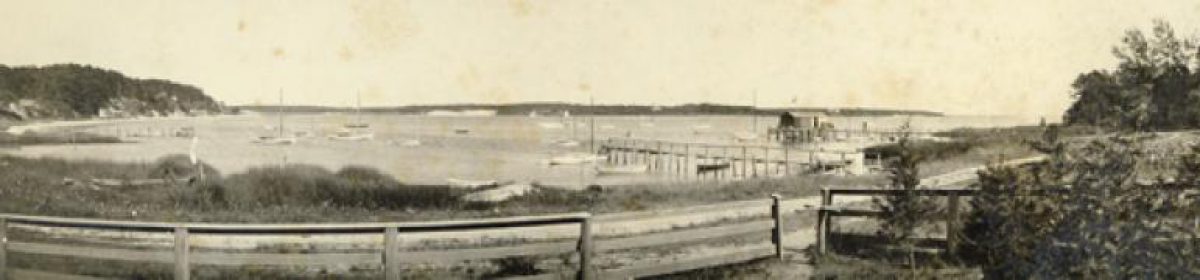
Crazy for Cotuit

from the June, 2026 newsletter of the Historical Society of Santuit and Cotuit
Cotuit was the epicenter of American psychiatry in late 19th and early 20th centuries when it was the summer home of  several eminent psychiatrists and psychologists;  pioneers who were instrumental in the modern treatment of mental diseases and the development of important theories on psychological development.
Dr. James Jackson Putnam
Dr. James Jackson Putnam (1846-1919) was the psychiatrist and professor who first introduced the revolutionary Vienna psychiatrists — Dr. Sigmund Freud and Dr. Carl Jung — to America in 1909. His home in Cotuit was the Captain Andrew Lovell house, located on the corner of Lowell and Putnam Avenue (which is named for him), abutting the Ropes Field. Putnam graduated from Harvard College and Harvard Medical School, studying in Europe before returning to America to open the first neurology clinic at Harvard Medical School, founding the American Neurological Association in 1874, serving as its president in 1888, and then founding the American Psychoanalytical Association in 1911 before retiring from teaching in 1912. Putnam wrote the introduction to the translation of Freud’s Three Essays on the Theory of Sexuality, a book considered very controversial after its publication in America. The Pulitzer Prize winning author, and one-time Little River summer resident, J.P. Marquand wrote about the book’s reception in stuffy Boston in his 1937 satirical novel, The Late George Apley:
At dinner your sister suddenly began discussing psychology. To my amazement, she seems to have been spending a great deal of time in the Athenaeum lately reading the works of a certain doctor named Sigmund Freud. Have you ever heard of this man? … I am writing by this same mail to the Trustees of the Athenaeum asking that all works by Freud be put into the locked room. They are certainly too strong for public consumption and certainly not the books with an Athenaeum Proprietor wishes to have exposed for an unmarried girl’s perusal.”  Putnam’s daughter —  Dr. Marion C. Putnam — was a pioneering child pediatrician and psychologist, who, like her father, trained as a psychoanalyst in Vienna under Freud. She also summered in Cotuit and the Putnam summer home remained in the family until 1977.
Dr. Stanley Cobb
Dr. Stanley Cobb (1887-1968) spent summers at his home overlooking the Narrows on Old Post Road. A graduate of Harvard Medical School, Cobb was a professor of neurology there beginning in 1919. In 1930 he was appointed director of the Harvard Neurological Unit at Boston City Hospital, moving to Massachusetts General Hospital in 1934 where he founded the psychiatry department. Cobb was an early proponent of psychoanalysis, lobbying for it during a time when many in the conservative medical establishment disapproved. Dr. Cobb’s treatment of veterans of World War I suffering from shell-shock attracted the attention of Dr. Edith Banfield Jackson, a professor of pediatrics and psychology at the Yale School of Medicine. Jackson, who also trained in Vienna under Freud and his daughter Anna, referred her brother Everett, a traumatized veteran of World War I suffering from acute shell shock (post-traumatic stress disorder or PTSD) to Cobb for treatment. To help Everett continue his treatment under Cobb during the summer months, her brother Gardner Jackson Sr., first rented, then purchased the Jackson summer home, the former home of Captain James Coon at 709 Main Street.
Cobb was a passionate ornithologist who studied avian neurology after his retirement in 1954. In the early 1960s, although nearly blind, Cobb wrote a passionate letter to the Barnstable Patriot after a helicopter belonging to the local mosquito control project sprayed the saltmarsh in front of his home with DDT. The letter was republished in the Audubon Society’s magazine in May 1963 and stills stands as one of the first and most strident alarms sounded against the pernicious effects of pesticides on birds, a cause later picked up by Rachel Carson in her book Silent Spring. Cobb’s descendants still live in Cotuit and his home remains in the family.
Dr. Sidney Issac Schwab (1871-1947), followed Dr. Putnam as the president of the American Neurological Association, and like Putnam,  also studied at Harvard where he received degrees from the college and medical school. A native of St. Louis, Mo., Schwab studied in Vienna before returning to America where he was a professor of clinical neurology at Washington University. Schwab was a major in the U.S. Army in World War I, serving as a military neurologist at bases near the battlefield, and like Dr. Cobb, was a pioneer in the treatment of shell-shocked soldiers. Schwab rented the Fremont Smith house at 110 Vineyard Road, becoming the first of several psychiatrists to spend summers at the quiet neighborhood beyond Oregon Beach. Schwab was soon followed to the peace and quiet of Cotuit by Dr. William Herman (1891-1935), a Jungian neurologist who built his home next to Schwab at 90 Vineyard Road. According to the late Cotuit historian James Gould, Herman’s home was inherited by his daughter Marybelle, wife of Dr. William D. Cochran, a pediatrician at Harvard Medical School who retired at Cotuit in 1993. Herman’s grandson, Tod Cochran, recalled: “My grandfather was one of the first psychoanalysts and he built an office/therapy room on the side of the house with a separate entrance. It has a slate floor built right on top of the earth which was a technique (we guess) of connecting the room directly to the earth for therapeutic purposes. No doubt that was a Jungian thing.”
 The essayist Helen Howe wrote of Dr. Herman in her memoirs, The Gentle Americans: Biography of a Breed :“It was only shortly before our own span at Cotuit had run out, in the early thirties, that the first Jewish summer visitor bought property — and a Freudian psychoanalyst at that!— and became a brilliant addition to the life of the generation that followed my parents. The fact that Father [Mark Antony deWolfe Howe] came to like the charming Dr. William Herman as he did was a triumph over prejudice … concerning the mere existence of psychoanalysis, which caused in him an instinctive recoil as from something vaguely “slimy.”
Erik Erikson
Finally, perhaps the best known of all the Cotuit’s psychiatrists, psychoanalysts, and neurologists was Erik Erikson (1902-1994) who, like Dr. Schwab and Herman,  also spent summers below Oregon Beach at 45 Vineyard Road beginning in the early 1960s. Erikson, ranked one of the most eminent psychologists of the 20th century by the Review of General Psychology, is most remembered for his theory on the psychosocial development of human beings — the concept known as the “Erikson Life Stages — and for coining the phrase “identity crisis.” Erikson was the first child psychoanalyst in Boston and held teaching positions at Massachusetts General Hospital and Harvard Medical School. In the 1950s he taught at the Austin Riggs Center in Stockbridge, Massachusetts where he treated, and became friends with the painter Norman Rockwell. Erikson also taught Dr. Benjamin Spock and Fred “Mister” Rogers. Erikson’s son Kai Erikson and his grandchildren continued to spend summers in Cotuit after his Erikson’s death in 1994.