This morning’s New York Times has a depressing story about the continued plunging descent of modern air travel from the glamour of the jet age to the cattle-car status of airborne buses. The too long; didn’t read summary is that airlines are disabling reclining seats and installing “lightweight” seats with less padding and locked backs to jam in another row or two of human livestock to jack up their revenues.
What amazed this 6 foot 2 inch tall victim of the center seat is that the reporter was able to find two dickheads willing to admit they actually recline their seats and whine to the stewardess if thwarted.
Listen to this loser:
“They jam their knee into the back of your seat as hard as they can, and they’ll do it repeatedly to see if they can get a reaction,” said Mick Brekke, a businessman who flies for work a few times a month. “That’s happened to me more than once, and that usually settles down after they realize I’m not going to put it back up.””
and this douchenozzle:
“Odysseas Papadimitriou, the chief executive of WalletHub.com, a personal finance social network, was challenged by a tall passenger seated behind him when he reclined his seat. “He was like, ‘Hey, watch it, buddy. I don’t fit here with you reclining the seat,’ ” he said.
“Mr. Papadimitriou called the flight attendant to mediate the dispute and eventually tilted his seat back, but the price he paid to recline was a fitful night’s sleep, as the other passenger grumbled and pushed against the back of his seat for the rest of the flight.”
Listen up chowderheads. Real men don’t recline. Ever. And they don’t carry man purses, wear capri pants, talk on their cell phone at the dinner table and own luggage with wheels on it. Only the Clampetts and the Obese recline on airplanes. (Business and First is an exception, but then again, Business and First is meant to be an expensive exception, right?)
I never push that little button and push my seat back into the personal space of the passenger behind me. Never. I’ve lost a laptop screen to a jerk pushing their seat back, and have even had the back of my seat ripped off after a 500-pound obese whale of a woman in a sari decided to use my seat as a lifting mechanism to pry herself to her feet to indulge in a bout of explosive diarrhea that resulted in an entire bank of 747 toilets being cordoned off with yellow crime scene tape. I spent seven hours riding upright with no seatback whatsoever thanks to that lady.
It is the passenger in front of me, the one who as soon as the plane levels off and the little seatbelt sign goes off with a “bong” that decides it’s Barcalounger time that I want to punch in the back of the head. Yes, I have seen with interest the little seat blocker devices one can use to wedge the seat in front of one’s self into an unreclinable position. I have also braced my knees into the seatback and done my best to thwart the bozo who thinks it’s their god given right to press the button. But never. EVER. Will I be that guy.
Life in Mashpee and Cotuit in the early 19th century was dominated by the fast growth of the Nantucket whaling fishery. Cranberries had not yet been cultivated commercially, transportation on and off the Cape was either by horse and wagon but mainly by ship, and there was little to no tourism in the modern sense of the word. The US Senator from Massachusetts, Daniel Webster, was fond of fishing in Mashpee for sea-run brown trout, and may have lodged in the inn located in Santuit on the eastern banks of the Santuit River, the site of the present Cahoon museum. Other dignitaries, such as Yale’s Timothy Dwight and Ezra Stiles, paid calls on the Reverend Gideon Hawley, the missionary to Mashpee and a graduate of that college’s seminary who also made his home near the major intersection of modern day Routes 28 and 130. The economic life of the region was mostly agricultural and based on either fishing and shellfishing, farming such as could be encouraged from the sandy soil, some livestock, and the supply of manpower for the whaling fishery.
Wampanoag men were very active in the Nantucket whaling fleet and readers may recall that one harpooner of the Pequod, Tashtego, was a Wampanoag from the praying town of Aquinnah on Martha’s Vineyard. The whaling fishery made a number of Quaker merchants very wealthy men, and for a time Nantucket was one of the most wealthy places on the planet, if not certainly the most international, its crews opening up the South Pacific in the early 19th century for the first time since the voyages of discovery by Cook. Whaling was an extremely dangerous profession and life on the greasy, slow, smoke-belching ships was neither easy nor especially lucrative for ordinary seamen. Some historians say Wampanoag employment in the whaling industry had a terrible effect of attrition on the male population. Those Wampanoag males that remained ashore practiced a subsistence lifestyle based on the traditional agricultural staples of corn, beans and squash, hunting and fishing.
In 1833 Mashpee was still governed by the board of overseers appointed by the Governor and the Trustees of the Williams Fund of Harvard which furnished a minister and funds for his support as well as the maintenance of the old Indian Meetinghouse. An Indian pastor hadn’t ministered to a flock in the meeting house for decades, and by the time the Rev. Gideon Hawley ended his tenure, the Wampanoags had started to drift away from Congregationalism to the Baptists and Methodists, the former led by the Rev. “Blind” Joe Amos, a Wampanoag. In 1809 Harvard appointed one its own, the Reverend Phineas Fish, to be the official missionary and Congregationalist Minister of Mashpee. Fish was paid an annual salary of $520, a $350 “settlement fee” and granted “as much meadow and pasture land, as shall be necessary to winter and summer.” The historian Donald Nielsen, in his essay “The Mashpee Indian Revolt of 1833″ wrote: “The sale of wood from the parsonage woodlot brought him [Fish] several hundred dollars more per year. Fish was assured a comfortable living on Mashpee land with money designated to help the Indians, yet he was in no way accountable to his flock.”
That lack of accountability, and what emerges through time as a somewhat churlish personality, was the undoing on Phineas Fish and the spark of the Woodlot Revolt. The tinder was supplied by William Apess, a fascinating figure who may stand as the earliest and most eloquent native American writer and activist concerned with native sovereign rights.
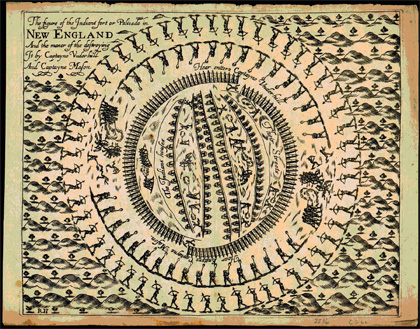
Apess was born in Colrain, Massachusetts near the Vermont border in 1798 of mixed-ancestry, a so-called “half-breed” who’s father may have been African American, but who’s mother was full-blooded Pequot Indian originally from southeastern Connecticut. The Pequots were the victims of the first English massacre, one that took place in Mystic, Connecticut in 1637 when a colonial militia surrounded a Pequot fort and killed 400 to 700 women, children and elderly (the able-bodied men were outside of the palisade scouting for the English force and thus spared until later hunted down and killed.)
I digress back two centuries to the first massacre of Indians on American soil only to lay the foundations for Apess’ subsequent activism as a voice for Indian rights. He was raised in terrible conditions, severely beaten by his grandmother at the age of four, raised as an unruly delinquent, raised as a foster child by white parents who despaired of his lying and thievery — traits he freely admits himself in his autobiography, A Native of theForest.He enlisted in a New York state militia regiment bound for the Canadian front during the War of 1812 and became the object of much teasing by older soldiers in his regiment who amused themselves by giving Apess liquor and encouraging his drunkenness. Following the War, Apess lived an itinerant existence throughout southern New England working as a cook and a laborer, eventually falling in love with a Pequot girl also of mixed-race, who reformed his ways and helped him sober up and continue his limited education. She gave birth, a family was started and in 1815 Apess was ordained as a Methodist minister. The historian Barry O’Connell at the University of Massachusetts wrote: “William Apess was a nobody. Born into poverty in 1798 in a tent in the woods of Colrain, Massachusetts, his parents of mixed Indian, white, and possibly African American blood, this babe had attached to him nearly every category that defined worthlessness in the United States.”
The Methodist tradition is one of the itinerant preacher who goes on the road to preach the word of God to whatever willing flock he can find along the way. Apess wrote and self-published A Son of the Forest, the first autobiography by an American Indian, and became increasingly focused on Indian rights and injustices.
In the spring of 1833 Apess, hearing about the thriving Wampanoag community in Mashpee, wrote to the Reverend Fish asking for an opportunity to visit and preach to his fellow Indians. Fish extended an invitation and Apess made his way to Cape Cod.
When Apess took the pulpit at the Old Indian Meetinghouse and began his sermon he became indignant as the lack of any native faces. The congregation was almost entirely white, comprised of worshippers from Cotuit and Santuit for the most part. Apess wrote:
“I turned to meet my Indian brethren and give them the hand of friendship; but I was greatly disappointed in the appearance of those who advanced. All the Indians I had ever seen were of a reddish color, sometimes approaching a yellow, but now, look to what quarter I would, most of those who were coming were pale faces, and, in my disappointment, it seemed to me that the hue of death sat upon their countenances. It seemed very strange to me that my brethren should have changed their natural color and become in every respect like white men.”
Apess finished his sermon, thanked the Reverend and immediately sought out the leaders of the tribe to seek an explanation for why their most cherished building, their church, had been taken over by the whites. The leaders of the Wampanoags, led by the popular Reverend Blind Joe Amos gathered, expressed their grievances with the white-imposed system of oversight, the utter lack of any relationship to the Reverend Fish, and a litany of grievances around white incursions onto Mashpee lands. Apess. obviously a man of words accustomed to persuasion with his tongue, was also a born leader, and he emerged from those first meetings with the tribe as an “adopted” son of Mashpee, granted the trust and authority to represent the Wampanoags in their future dealings with the whites.
As a bit of historical context, 1833 was a time of profound foment in American politics that saw a great deal of chafing between the southern states and the Federal government, a friction that would, three decades later, lead to the War Between the States. In South Carolina, the hotbed of American secessionism, the US Senator John C. Calhoun had led a bitter fight against Federal tariffs under the auspices of “nullication“a long-standing point of Constitutional law that defined the rights of the states to reject or “nullify” Federal legislation and mandates. Apess seized on the contemporary awareness of nullification and applied it to the situation in Mashpee, drafting a manifesto and statement of grievances that in essence said Mashpee was a sovereign nation established by the land grants of Richard Bourne and was in no way subject to the laws and oversight of any government body other than its own. E.g. Mashpee was not subject to the laws of the Commonwealth of Massachusetts.
A petition was drafted and presented to the legislature in Boston. Among its resolutions:
“Resolved: That we as a tribe will rule ourselves, and have the right so to do for all men are born free and Equal says the Constitution of the County.
“Resolved: That we will not permit any white man to come upon our plantation to cut or carry of [sic] wood or hay any other artickle with out our permission after the first of July next.
“Resolved: That we will put said resolutions in force after that date July next with the penalty of binding and throwing them from the plantation If they will not stay a way with out.”
A second petition was filed with Harvard calling for the removal of the Reverend Phineas Fish.
The reaction of the legislature was somewhat benign, but locally, one can imagine the reaction of the whites in Barnstable, Sandwich and Falmouth to the Wampanoag declaration of independence and the setting of a deadline of July 1, 1833 for all whites to evacuate Mashpee. In the Barnstable Patriot, the editor, one Sylvanus Bourne Phinney wrote that Apess had been distributing his pamphlet: “Experiences of Five Christian Indians of the Pequot Tribe” and stirring up some ugly emotions: “The teachings of this man are calculated to excite the distrust and jealousy of the inhabitants towards their present guardians and minister and with his pretensions to elevate them to what we all wish they might be, he will make them, in their present ill-prepared state for such preaching, ten times more turbulent, uncomfortable, unmanageable and unhappy than they are now.”
After the Wampanoag delegation led by Apess filed their petitions on Beacon Hill in June, 1833, they returned to the Cape “mistakenly supposing Governor Levi Lincoln approved of their reforms.” In fact, other than the local whites in the towns surrounding Mashpee, and the Reverend Phineas Fish, no one appeared to take the Wampanoags seriously.
Later that month the tribe notified the treasurer of the Board of Overseers, Obed Goodspeed, to turnover the plantation’s books and other papers. A tribal council was formally elected on June 25 and public notices were printed and displayed so that “said Resolutions be inforced.” On June 26, Reverend Fish was told “be on the Lookout for another home. We of no Indian that has been converted under your preaching and from 8 to 12 only have been your Constant Attenders. We are for peace rather than any thing else but we are satisfied we shall never enjoy it until we have our rights.”
This got the Reverend Fish’s attention. In panic at the unrest around him, the priggish clergyman wrote a letter to Governor Lincoln and had his predecessor’s son, Gideon Hawley, Jr., deliver it on horseback to Lincoln at the governor’s home in Worcester. Apess wrote afterwards that Fish wrote: “…the Indians were in open rebellion and that blood was likely to be shed .. It was reported and believed among us that he said we had armed ourselves and were prepared to carry all before us with tomahawk and scalping knife; that death and destruction, and all the horrors of a savage war, were impending; that of the white inhabitants some were already dead and the rest dreadfull alarmed! An awful picture indeed.”
The sovereign status of the Wampanoag tribe who lived in “Marshpee Plantation,” the praying town established for their benefit by Richard Bourne, is a fascinating story that persists in its telling through modern times as the tribe fought for Federal recognition, its ancestral lands, and its own cultural identity.
In the 18th century, in the aftermath of the King Philip War of 1675, the Wampanoags who lived in Mashpee were joined by members of other tribes, all seeking a community with a common language and practices. The tribe was making a transition from its traditional wetu style of hunter-gather living, moving between winter and summer encampments to seek shelter from the blizzards inland and to be near shellfish during the summer months. The English system of private property and the colonists’ insatiable appetite for land had boxed the tribe into the space defined for them by Richard Bourne, an arrangement known as an “entailment” that forbid the sale of any lands to outsiders without the unanimous consent of the tribe. The Church, so crucial to the formation of the concept of a “Praying Town,” continued to be the dominant social structure in Mashpee, pushing the tribe’s members to adopt English dress, learn English, convert to Christianity and integrate themselves with their non-native neighbors.
That “integration” led to some deplorable practices ranging from “debt slavery” where the Wampanoag were put into the debt of English merchants or farmers and then pressed into forced indenture to work those debts down to a general racism that . The practice of debt enslavement became so acute that the native preacher Simon Popmonet (a descendant of the sachem Paupmunnuck) complained to the legislature about the terrible practice which saw children and elderly alike pressed into unpaid labor. It was noted that a father and son, working off a debt, worked as a crew of a Nantucket whaling ship and for two consecutive three-year voyages forfeited their entire wages to the ship’s owners as part of their debt service.
The Anglicization of the tribe, the conversion to Christianity, the impact of war (many Wampanoags fought in the Revolutionary War), the terrible effects of alcohol and the high mortality of the whale fishery cut deeply into the male population. The gender imbalance — brought about the lasting after effects of the post-war retributions (a large number of Wampanoags were forcibly relocated to Bermuda), the impact of the Nantucket whaling fishery, and the general violent, short life-span of a 17th century male — left a void in the Mashpee society. Widows turned to the church and the tribe’s members began to intermarry with members of other tribes, African-Americans, even Hessian mercenaries who made their way to Mashpee after the end of the Revolutionary War.
The tribe that remained, several hundred at most, clustered together in three settlements — one near Ashumet Pond, another near the shores of Santuit Pond, and a third near Nantucket Sound and South Cape Beach. There was no form of government aside from the traditional tribal structure of sachems and sagamores. The rulers of the tribe were a board of white overseers, appointed first by Harvard College who provided for the tribe’s religious needs by educating and sending it a succession of ministers, and then the State. No Wampanoag served on the board of overseers. The overseers provided the tribe with a succession of preachers — all Congregational, the prevalent denomination of the English and the faith of the Society for the Propagation of the Gospel, the early movement led by Jonathan Edwards and John Eliot to convert “the poor blind Indians in New-England.”
The center of the tribe’s life was a meeting house constructed in the late 1670s after the conclusion of King Philip’s War on Briant’s Neck on the southern shore of Santuit Pond, not far from the ancient tribal village, herring run on the Santuit River, and the mound of the Trout Grave. The building was built by Richard Bourne’s son, Shearhashaub with the construction funded by the Williams Fund of Harvard College, the primary source of funds for the religious needs of Mashpee through the 19th century. The meetinghouse was rebuilt at one point, and in 1717 it was moved by oxcart to its present location on Route 28, the old Falmouth-Barnstable road about one mile west of the Santuit River, on a hill above the Mashpee River.
The pastors and preachers of Mashpee were:
Richard Bourne, 1670-1685
Simon Popmonet, 1685-1729
Joseph Bourne, 1729-1742
Gideon Hawley, 1758-1807
Phineas Fish, 1808-1833
“Blind Joe” Amos, 1810-1836
William Apess, 1833-1835
The last of the ministers subsidized by Harvard’s Williams Fund was Phineas Fish. He and his predecessors were provided for by the Corporation of Harvard College and were given the rights to a woodlot on the eastern side of town, a common parsonage arrangement in colonial times that permitted the minister to gain an income beyond the collection plate by selling pasturage or logging rights to others. That woodlot would prove to be the flash point of this story.
The 1700s were a time of complaint and friction by the Indians of Mashpee against the incursions of the white settlers that surrounded them on three sides. Delegations were sent to Boston to complain about debt slavery, white squatters, trespassing on Indian lands and other grievances. In 1762, Ezra Stiles, the president of Yale College, one might assume as a guest of the recently installed Hawley. In his journal he placed the population of Mashpee at 250, consisting of about 75 familiesscatteredthroughout the plantation living in “about 60 wigwams (Wetus) and 6 houses.” The Stiles map shows there was no village or other definiable concentrations of population, though there were pockets around Ashumet Pond, Santuit Pond and South Cape. The dwellings on Stiles map approximate the location of the so-called “ancient-ways” – the early paths.
Campisi writes in The Mashpee Indians, Tribe on Trial, “The map supports the view that the Mashpees were geographically, as well as socially isolated from the white settlers. The bulk of their residents as well as the church, the principal meeting place, were on the south side of the plantation.”
The parsonage, or home of the minister was located near the present day intersections of Route 28 and Route 130 near the Santuit River/Santuit line. Gideon Hawley’s home is near the gas station on the northwest corner of the intersection, located on a slice of land that the old maps indicates was actually part of Sandwich (for reasons unknown to this writer, along with another piece designated as Sandwich near where the Santuit River pours into Shoestring Bay. Phineas Fish, the minister who succeeded Hawley, made his home a bit to the north, just south of the Trout Mound.
Phineas Fish is the key player in the factors that led to the Woodlot Revolt of 1833. After graduating from Harvard in 1807 he was appointed as the official missionary and Congregationalist Minister of Mashpee by the overseers in 1809. He was granted an annual salary of $520, a $350 “settlement” fee and “as much meadow and pasture land, as shall be necessary to winter and summer.” According to Donald Nielsen in The Mashpee Indian Revolt of 1833, “The sale of wood from the parsonage woodlot brought him several hundred dollars more each year. Fish was assured a comfortable living on Mashpee land with money designated to help the Indians, yet he was in no way accountable to his Indian flock.”
The Reverend Fish was not popular with the Indians. As non-tribal residents came into town and intermarried with the old Wampanoag familes, they brought with them new denominations that threatened the Congregationalist hold over the Plantation. By the time Fish arrived in Mashpee the tribe had shifted their religious allegiances to the Baptists and an Indian preacher named Blind Joe Amos. Fish, from his pulpit in the Indian’s Meetinghouse, ministered to an increasingly white-flock, most of whom (one can assume) were residents of Cotuit. In reflecting on the Indian’s tergiversation from his ministry, Fish wrote that he had “survived” as many as seven different sectarian preachers and “felt pain in seeing these good houses used for the purposes of Baptist and Methodist meetings….the sectarian busy bodies now feel quite sure of demolishing the remnant of Congregationalism…Religion should be respectable and orderly. The Indians are given to excitement and revivalism.”
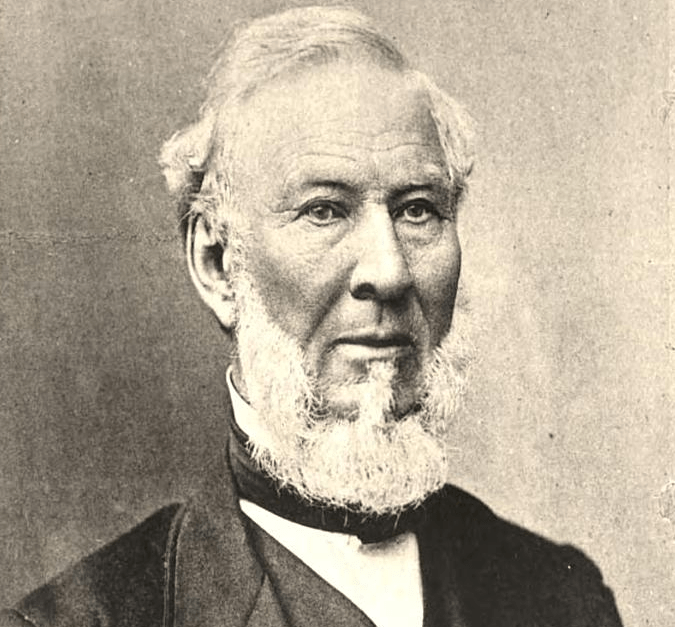
Blind Joe Amos
Fish’s religious differences and take over of the Meetinghouse was only one reason his presence in the town caused the tribe to resent him. A particular sore point was his decision to lease the logging rights of the woodlot to two Cotuit brothers, the Sampsons.
Thoreau in his account of his walk down the sandy peninsula, Cape Cod, wrote of the deforested wasteland that was the Cape in the 19th century. Deforestation to fuel the Sandwich Glass factory, to speed the evaporation of sea water for the production of sea salt, and the general sparse sandy soil made trees a premium on Cape Cod in the 19th century. Cut off from commerce, its economy based on fish, shellfish, the harvesting of salt hay, and the employment of its men as whalers and sailors, a commodity as basic as a cord of fire wood was a very valuable asset. The overseers of Mashpee “do not allow more wood to be carried to market, than can be spared; but it is for the general interest, that three or four hundred cords should be annual exported to Nantucket and other places.”
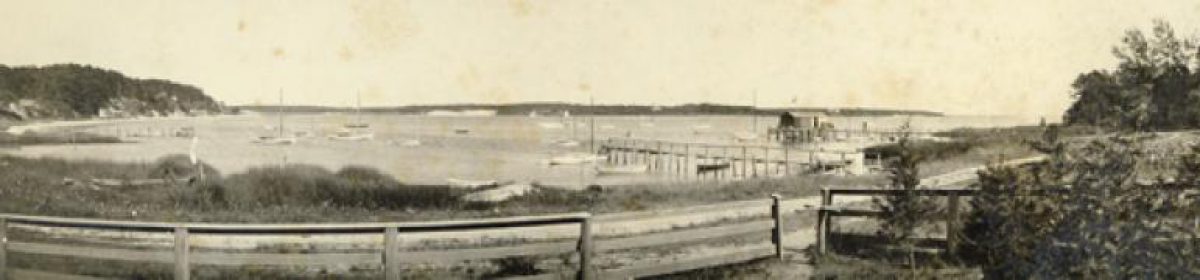
Old photographs of the Cotuit waterfront show immense stacks of cordwood on piers awaiting loading on packet schooners bound for Nantucket. Cordwood Lane which leads through the woods of Eagle Pond to Cotuit’s Inner Harbor is one vestige of the old cordwood trade. Grand Island or Oyster Harbors, was long a woodlot worked to supply Nantucket’s insatiable demand for fuel. If Thoreau found Cape Cod devoid of trees, then Nantucket was bald, a sandy moor that demanded huge amounts of wood for the whaling ships that needed to render whale blubber into whale oil on the big brick tryworks that sat amidships. Cotuit was perfectly positioned navigationally as the port of preference for the wood trade. With the prevailing breezes from the southwest in the summer and the northeast in the winter, a schooner could make the 25 mile voyage across Nantucket Sound on a single tack in each direction. The Reverend Fish’s woodlot, a scant two miles from Cotuit Bay, was perfectly positioned to supply that trade. The overseers had no problem with opening up Mashpee’s natural bounties to the whites, most of whom harbored resentment of the riches left untouched inside of Richard Bourne’s Praying Town. The overseers rented lands inside of Mashpee’s borders to the whites for the grazing of livestock, they auctioned off wood shares, permitted fishing and shellfishing on its streams and ponds, and, in Nielsen’s words, “the overseers believed there was plenty for all.”
It will take a better statistician than me to make the case that the 2013 Boston Red Sox are the best, or second best, or whatever best team in the history of the club. I can’t speak to anything first-hand experience back to 1967, when I was nine years old and playing bad first-base in the Georgetown, Massachusetts rec department’s Farm League (pre-Little League) using an antique pancake mitt handed down from my grandfather, a relic I hated at the time but really wish I had today. That Impossible Dream team will always be the most vivid. 1975 was frankly a blur. The 1986 Buckner team was the most evil in its wicked mental torments. The Curse-bursting 2004 team the most blessed. The 2007 the most capable. But this one….I don’t know, they just played wicked good and seemed to have fun and a showed lot of respect for the laundry.
Basking in the morning-after-glow of a great World Series game, everyone wants to roll over in bed,hug the lovable, bearded rascals and say, “I love you. Let’s do it again.” Sometime in the next few days the team will pile into the duck boats and parade around a happy city and Boston will have its moment finally after a baseball season that started fresh and raw and unknown in April and ended six months later the way the movies would have wanted it to.
Painting the house in April, on the ladder, WEEI kept me company on those chilly weekend afternoons with Joe Castiglione and Dave O’Brien calling the games in between Verizon Wireless and Shaw’s Supermarket Little Debbie Snack Cake ads. As I scraped and prepped I kept an ear tuned for that tell-tale rise in excitement in their voices and listened as a lot of new names made their debut .Would I have called it then? Would I have made the prediction they’d go all the way “from worst to first?” Of course not, I was thinking maybe they’d get the wildcard but not make it past Toronto or Detroit. I trusted the new manager, John Farrell, solely on the basis of his killer jaw-line and that calm Gary Cooper demeanor so calm and firmly assuring after the Howdy Doody persona of his ill-fated predecessor Bobby “Did You Know He Invented the Wrap?” Valentine.
Then the Brothers Tsarnaev did their heinous deeds.
Suddenly the Red Sox were carrying a lot more psychic weight than just trying to redeem themselves from the days of Chicken-and-Beer and their last place finish the year before. They came home from the road trip and one could feel the city latch onto them, beseeching them to make it okay, to bring back the calm rhythms of a sunny afternoon game in Fenway, to sing the songs and chant the chants they cheered and sang the year before and the year before that. The Red Sox couldn’t to carry the weight of the Marathon. They were happy to accept it and gracious in allowing Fenway to become the city’s church and place of mourning; but as John Lester said, the team didn’t have much to offer other than provide a diversion to get people’s minds off the mess.
Boston is a city of ghosts where nothing really changes, a place with a ring of road salt rime around the cuffs of its pants; a pissed-off, wind chapped, itchy skin, sleet smeared windshield, can-you-fucking-believe-they-closed-the-Hilltop? town that isn’t nearly as liberal as the rest of the country thinks it is, a college town that doesn’t love the students who infest it, a kind of ugly place that retreats into its clannish neighborhoods, scores an eight-ball of whizzer and looks down at the bandwagon yuppies in their pink hats who sing “Sweet Caroline” in the eighth inning.
That horrible song with no connection what-so-ever to Boston or baseball is never going away. When The Neil Himself showed up and sang the damn thing at the Post-Marathon mourning session I gave up my campaign to ban it and just thank edthe Baseball Gods that we don’t need to wave Surrender Towels like every other team’s fans seem to need to do along with ring cowbells and follow big LED jumbotron exhortations to Make. Some. Noise. It is said that Red Sox fans are the tenth player on the roster. This sentimental, formerly cursed nation that cheers from Woonsocket to Millinocket (and who, after breaking the Curse in 2004 lugged team gear and flowers to the graves of their dearly departed so they could join in the celebration too) these fans like the loud, crazed drunk I once watched in a black and orange knit wool Bruins cap sitting behind the visitors bullpen who taunted J.D. Drew non-stop for collecting too much salary, and then who scornfully caught, barehanded, a Yankee homer whacked at him by the despised A-Rod and then hucked it back onto the field without a second thought or spilling a single drop of his $8.50 cup of ‘Gansett.
I’m just glad to have the chance watch it all with my sons and my mother and my sister and my brother-in-law and nephews. Crowded around a television. Screaming and high-fiving. Drinking too much on a school night while layered in a #38 Schilling t-shirt with a Mike Lowell 2007 World Series MVP team jersey on over that, and a nasty smelly blue Red Sox hat speckled with bottom paint.
I doubt this fan will ever see a year of baseball like he saw in 2013 — a double-headed championship crown that started with the Cotuit Kettleers and ends with the Olde Towne Team triumphant.
And David Ortiz is getting a statue in front of Fenway. Just saying.
I may be a traditionalist when it comes to racing sailboats — I like them wooden, leaky and gaff-rigged — and I have bitched about how the America’s Cup needs to come back to Newport, Rhode Island and be raced in those oh-so-elegant 12-meters of my youth. But after spending a rapt half hour on the couch with my tablet and a half-hour of coverage from San Francisco Bay I take it all back. AC-72 catamarans are amazing things.
Catamarans have the reputation of being the jet-skis of the sailing world. The people who sail them tend to be adrenaline freaks who zip back and forth looking for speed and little else. The boats point into the wind like square-riggers, require elbow and knee pads and a crash helmet, and beg to be sailed while yelling “yee-hah.” They entered the America’s Cup under desperate circumstances in 1988 when Dennis Conner showed up in one to kick New Zealand’s ass after they showed up in a 90-foot mega yacht and convinced a judge to uphold the move away from 12-meters as perfectly legal under the terms of the “Deed of Gift” — the rules that govern the strange and venerable competition. Dennis and his catamaran sailed circles around the New Zealanders, the credibility of the America’s Cup hit an all-time low, and all semblance of dignity went out the window. But catamarans were in.
Not that the America’s Cup was ever a fair fight. As my buddy Charlie points out, the name of the game has been getting a technical edge from the very beginning when the American’s sent an overpowered schooner over to England to kick the best butts in the Royal British Yacht Squadron. Half the battles have been in the courts, with challengers and defenders contesting the ambiguous rules every chance they get and giving full credence to the cliche of the “sea lawyer.” Winged-keels, crews of ringers from foreign countries, billionaires with more bucks than brains … what’s not to love?
Whatever. I tip my hat to Larry Ellison for making it a total tech fest on Silicon Valley’s home waters. These boats represent the cutting edge of aquatic technology, use nothing but the wind to scream along at more than 35 mph, and thanks to overlaid graphics, helicopters, onboard Go-Pro helmet cams, and crazy color commentary that would be more in place in a UFC cage match, finally putting to rest Mark Twain’s old tired complaint that watching yacht racing is less exciting than watching paint dry or grass grow.
The US is behind — docked two races for cheating — and it’s do-or-die with them needing to win all of the remaining race to stay in the game.
Consider the state of the byline. The name of a writer on top of an article or blog post isn’t enough anymore to let readers know the implied qualifications of that author now that publishers are opening up their mastheads and page-views to unpaid contributors, consultants, thought-leaders and advertisers in what New York Times media critic David Carr recently called “an oven that makes its own food.”
Carr made that reference to Forbes.com and its decision to open its digital pages to external contributors, and in a brilliant revenue building move, to advertisers who pay to appear in an advertising channel Forbes calls BrandVoice, part of the current craze in digital advertising formats known as native advertising. Forbes isn’t the first nor the last online publisher to welcome contributions from witers other than their full-time staff of reports and editors. Nor is it the first to practice native advertising, formerly known as “advertorial” or “custom” publishing. The Huffington Post was founded as a cacophony of bylines and voices, all vying for attention and traffic in the “look-at-me” economy. For publishers it’s a sweet deal, letting them become Tom Sawyers who persuade others to paint the fence for them.
Bylines haven’t always been a given in journalism. Jack Shafer, writing for Reuters in 2012, offers up the interesting historical note that General Joseph Hooker demanded reporters covering his campaigns during the Civil War put their names on their stories so he could hold them accountable. Hooker insisted on bylines “as a means of attributing responsibility and blame for the publication of material he found inaccurate or dangerous to the Army of the Potomac.”
The purpose of a byline is to simply attribute a story to a writer: one part vanity, another part accountability. Bylines aren’t biographies of that writer, just a single three-word attribution (“By John Smith”) that imply that the words and fact and opinions that follow were written by that person (Shafer writes about the proliferation of fake bylines flowing from off-shore content farms, but that’s another story for another day). In the dinosaur days of mainstream print journalism there was an unspoken sense that if a publication granted a byline to a staff writer then that writer had a certain validation as being judged competent and experienced enough to grace the publication’s masthead and pages.
A degree of professionalism in an unlicensed craft was assumed if the byline appeared in the New York Times, Washington Post, Forbes or Time. Earning a byline from the Boston Globe implied a different level of professional quality and experience than a byline in the MetroWest Shopper. In short, a byline was a writer’s equivalent to a doctor or lawyer tacking MD or JD onto their name. It was hard to earn but ultimately the only public recognition a reporter received. It took me a long time to earn a Forbes byline. Now any extroverted hyper-social networker with a craving for a high Klout score and a taste for LinkedIn/Quora influence points can start bloviating for free and walk away with “Forbes Columnist” on their resume.
Today the appeal of giving it away for free to Forbes is simple — it’s a great resume inflator. Now any aspiring expert can add Forbes to their resume and point to some digital clips as proof. The mounting number of would-be pundits on LinkedIn who proclaim themselves to be Forbes columnists or contributors reminds me of people who send away for mail order coats of arms.
You can call it the democratization of the press, the breaching of the walls of conceit that doomed dinosaur journalism, the wall that said “we’re better than you” when it came to publishing the reader’s letters of complaint and disagreement, the walls that said the only persons qualified to put a word on paper were those deemed qualified to do so by the editor who hired them and paid them. Mastheads were tough to crack — ask any young journalist in the late 1970s who dreamed of breaking into the Washington Post and getting a seat at the same table as Woodward and Bernstein. Those seats were rare and hard to obtain, Ben Bradlee didn’t hand them out to K-street lobbyists and Congressional staffers. Today? Hey, if you’re willing to work for free and can string some words together into a coherent sentence, preferably with a provocative, link-bait point of view, then publishers are more than happy to give you a shot at OpEd immortality.
In this blurry world of “content marketing and native journalism,” it is getting harder to tell the reporters from the advertisers. The wall between the journalism and the ads is coming down, and Carr and others (like Andrew Sullivan) are lamenting what we’ve lost. Sure, the money is nice and helping publishers make payroll (or avoid paying it) — and some graphical efforts are being made to fence off the advertorial native stuff with tinted boxes, hairlines and little “sponsored by” tags — but the blurring issue is out there and it isn’t so much about segregating the paid words from the “real” words, it’s about the qualifications of the byline as well.
Bylines are a relatively new phenomenon in journalism. They rarely appeared in 19th century newspapers, and indeed many writers used pen-names to mask their identity, particularly on political polemics. Thomas Paine, in writing Common Sense, one of the most influential calls-to-revolution in the years leading up to the American Revolution, chose to mask his identity and byline the work as merely: “Written by an Englishman.”
As correspondents began to make a name for themselves and were prime draws for a newspaper during the lurid days of yellow journalism, when war correspondents like Richard Harding Davis and Ambrose Bierce were the stars of the press, bylines were marketing devices to build circulation. Some magazines don’t grant bylines at all: The Economist is the best known practitioner of the anonymous policy.
I’ve freelanced under pseudonyms — I got hired by Forbes when I wrote a try-out story about digital mapping in 1988 under a bogus name because I didn’t want my then-current employer to know (that story won second place in the Computer Press Association awards in 1988, so the validity of the byline didn’t have much to do with its credibility, though it was indeed a tacit deception on my part and Forbes’ on their readers. )I have ghostwritten books, and continue to freelance edit and write assorted articles and whitepapers anonymously for a few clients in the consulting and corporate world. They evidently like my assistance due to my background in the professional press, and I like the fees they pay. There are a lot of ex-journalists like me turning a good buck writing corporate journalism these days and I don’t begrudge them a penny.
The point of all of this is that the editorial authority of the old stalwarts is gone like their paper editions. They’re trading on fading memories of being brands that stood for something important but are losing their mojo to Buzzfeed and TMZ. Newsweek? Dead. Businessweek? Sold for a dollar to Bloomberg. Forbes? Still alive and flourishing thanks to its experimentation, but still attracting the ire of the Times and other media critics for pushing the limits and definitions of the first medium to get truly disrupted and overthrown by the digital revolution.
Book writing pays about a nickel an hour, so other than inflating one’s resume in this modern attention economy, why bother? Anyway, here’s three non-fiction book ideas that should be written but won’t be written by me:
1. The Seedy Underbelly of the Internet: someone needs to get into the semi-sleazy, ethically challenged, weird world of spammers, hate bloggers, affiliate marketers, SEO whores, search toolbar installers, pay-per-posters, belly-fat miracle advertisers that buzz away on the edges of the noblest ambitions of the Interwebs. This is the desperate world of the grifters who exploit every technical advance and loophole from permalinks and trackbacks to page rank and SERP. They are work-at-homers, con men and women who produce garish content-marketing blogs, conduct seminars on how you too can make a stack of cash from Facebook and Twitter, whoring out your content link blog, and play the affiliate marketing game. They put pictures of girls with cleavage on their fake avatars, invite you to be their LinkedIn friend, then send you a message extolling their polystyrene packaging plant in South Korea. They scrape your blog posts and call them their own. They run automated spam bots that write semi-coherent comments on your blog. They pick epic flame battles with other scammers and revel in being hated. These are the true geniuses of precision marketing.
I get depressed just thinking about researching that one.
2. Conference Whore: if I were a rich man, and had nothing to do all day, I would spend my time attending a full year’s worth of conferences and idea-fests like Davos, Burning Man, Demo, TED, a Microsoft Sharepoint convention in New Orleans, SIGGRAPH, Le Web, Forrester Consumer Experience, DrupalCon, CES …… A life spent in airport lounges, business class, fancy golf resorts on the edge of San Diego, Palm Springs, Tahoe, a world of registration tables, name tags hung around the neck, keynotes, panel discussions, calls to raise my hand if I’ve ever …., breakout sessions, hashtags and live-tweeting, questions from the audience (please wait for the microphone), networking events, happy hours, breakfast buffets, bio breaks. This would amazingly depressing — a year on the road tracking the idea circuit, a perpetual junket in the weird alternate reality of the face-to-face event. To make it doubly depressing, combine Conference Whore with the Underbelly pitch and do nothing but attend sleazy marketing seminars on how to make a million buying domain names ….
The year of living at conferences would be very unhealthy, probably worth 25 pounds in ass fat and would probably lead to some sort of psychological warping.
(search for “conference badges” on Flickr. Tara Hunt is amazing)
3. Ziff Knew Weeds: The rise of the tech press in the 70s and 80s hasn’t been written, but should, before the original old guard passes away. The title comes from my ex-boss, the late Bill Ziff, who was a super smart eccentric polymath who legend had it would strike up bizarre conversations with his employees about roadside weeds (he was an accomplished amateur botanist) .
From the first newletters and enthusiast bibles, to breakthrough pieces like Stewart Brand in Rolling Stone, the battling empires of Pat McGovern and Bill Ziff for dominance of the PC industry through PC World vs. PC Magazine, PC Week vs InfoWorld, MacWorld vs. MacWeek, Computerworld, Computershopper, Release 1.0 ….. the power of the tech press, a blend of geeks and old newspaper hacks and the sleazy tactics they deployed from dumpster diving in Silicon Valley to read Apple’s trash to bribing teen-age printers apprentices in Iowa with t-shirts to cough up the first copies of IBM’s user manuals, partying with Bill Gates at Comdex, refereeing epic pissing matches between boy wonders who would go onto become the richest men in the world, snorting coke in the review lab on deadline night …. The tech press of Boston and Silicon Valley chronicled the wild birth of an industry that changed the world, until they were waylaid by the Internet and put out of work by a new crop of gossipping gadget bloggers.
Anyway – there’s three free book ideas for anyone with the patience and gumption to tackle them.