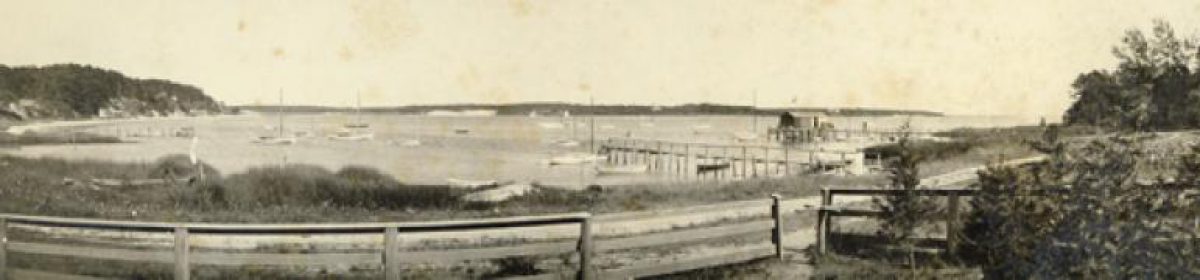
Cotuit Water Boil Notice Sept. 6

UPDATE: As of Tuesday 9/10, it is cool to resume drinking Cotit water

http://www.capecodonline.com/apps/pbcs.dll/article?AID=/20130909/NEWS11/130909716

The water department found e coli bacteria in the system so don’t drink the water without boiling it for at least a minute beforehand.

details are here

NYTimes: Hollywood’s Tanking Business Model

http://nyti.ms/17JGhdU

An interesting observation in a piece in the New York Times about Hollywood’s Summer of Flops (Lone Ranger, etc.) that states the obvious but is worth keeping in mind during this era of severe “digital disruption:”

“The instinct to retrench and overemphasize strategies that have worked in the past is a common problem in companies as they get bigger and have more to lose, particularly as technologies change. Polaroid and BlackBerry doubled down on their time-tested formulas despite market changes, suggesting that this behavior can undermine even the most successful companies. “The more successful and larger they become, the more antibodies they develop to doing anything new,” said Alan MacCormack, a Harvard Business School professor. “

“Because persuading an industry’s largest companies to experiment is challenging, smaller and more entrepreneurial companies are usually tasked with figuring out the next-generation business model.”

The biggest impediment to innovation is an installed base (to paraphrase Mitch Kapor), and management strategy consultants have made bank for decades advising the CEOs of the biggest companies on how to make the transition from an ailing cash cow to a refreshed, innovative stance that will drive growth and defend against upstart startups without the baggage of the old cow. The problem is, other than Apple’s resurrection by the Second Coming of Jobs, and the Gerstner rebuilding of IBM from big iron to big services …. what old brands have managed to deliver a second act?

The obvious solution for a lumbering dinosaur sitting on a big mound of money is to buy the next-generation start-ups and develop a sort of internal VC radar to identify the hot upstarts out on the edges of the industry and simply buy their IP and talent. The internal skunkworks model of delivering breakthrough innovation (innovation in my book is invention made commercial) may have worked at Lockheed and a few other rare cases, but these are dire times for big players, most of whom are watching formerly dominant players in mobile — Nokia and Blackberry — blow marketshare dominance down to the point of single digit irrelevance in a matter of two or three years.

It’s silly to try to oversimplify the reasons for big organization sclerosis, but in my experience it has more to do with organizational design, governance, quarter-to-quarter focus on earnings, and the self-preservation instincts of incumbent senior leadership. In other words, it’s not about ideas or magic insights, it’s about behavior and bureaucracy and the terror of possibly failing.

Thriving in a ‘PC-plus’ world: An interview with Lenovo CEO Yang Yuanqing | McKinsey & Company

http://www.mckinsey.com/insights/high_tech_telecoms_internet/thriving_in_a_pc-plus_world

Great interview from June by McKinsey’s Gordon Orr and Rik Kirkland  with Lenovo Chairman/CEO Yang Yuanqing. Genuinely great leader who was part of the original Lenovo crew from the mid-80s.  Probably the tech sector rock star, their version of our Bill Gates/Michael Dell rolled into one.

He makes some key points about Lenovo’s rise to #1 in the sagging PC industry.

1. The company followed a “protect and attack” strategy of protecting its enterprise/commercial business in the west while attacking in emerging markets, particularly Brazil and India through acquisitions and organic growth.

2. It diversified out of PCs into mobile early and has been a scrappy player inside of China’s fierce smartphone market.

3. It isn’t reluctant to invest in R&D to differentiate its products.

4. Being Number One is a self-fulfilling brand builder, as he put it: everyone knows the name of the tallest mountain in the world, but what’s the name of the second tallest?

yangyuanqinglenovo

What I’m reading, Labor Day weekend

My fellow Kettleer fan and baseball wiseman Jim D. loaned me “The Summer of Beer and Whiskey” by Edward Achorn. Faithful readers know my guilty pleasure is reading baseball books and this has been one of the best, introducing me to the history of the game in its earliest years after the Civil War, focusing on the 1883 pennant race between the St. Louis Browns and the Philadelphia Athletics. The title is appropriate. Some players were drunks, syphilitics, cheats, brawlers, racists and stars. All were colorful and all were hard men — playing barehanded, pitching until their arms could pitch no more, crashing through fences, and fighting for room to play in outfields mobbed with spectators.

The game was coming out of a low period of gambling and cheating., but showmen such as St. Louis owner Chris von der Ahe knew how to repackage the game for the working man by playing on their only day off (Sunday) and serving beer (he owned a bar and brewery). The result was the birth of the national pastime.

Second up, Alec Wilkinson writes about Cape Cod’s Great White Sharks in the September 9 issue of The New Yorker.  Shark porn is an industry unto itself, fueling the annual Shark Week, weirdness like Sharknado, and other oddities that play to whatever deep horror we have about the evils of the deep. I have a family member who has some sort of amazing Bloomberg terminal alert set to shark attacks, and not a day goes by without some forwarded link to a horror story about a decapitated abalone fisherman. Bottom line: “Don’t get out of the boat.”

Wilkinson tells the story about how Great Whites have always been around the Cape, killing a teenager in the 30s in Mattapoisett, freaking out Henry David Thoreau during his walk down the peninsula, and now coming back in droves to a diner stocked with a ton of grey seals who are booming thanks to the Marine Mammal Protection Act that made it highly illegal for commercial fishermen to keep their population down with an onboard .30-.30.

The piece focuses on the Ocearch expedition that just wrapped up its second summer off of Monomoy Island catching and tagging Great Whites aboard a specially equipped former Bering Sea crabber.  I printed out a copy from the New Yorker’s horrible digital edition and my son and I spent a happy half hour reading it together, me handing over each page to him as I finished them.

Feathered Winos

Every morning, after the sky brightens around 6 am, the birdfeeders get a visit from a mother turkey and her four toddling pullets. They come up Main Street from the direction of the Town Dock, enter the August-brown dead grass lawn and cross it together, in a strung out line — mother in the middle, two on each flank — pecking for stuff as they bob and amble across the driveway to the arbor.

The mother raids the hanging feeders, knocking down enough seed so the young ones can scratch and eat while she stands guard and peers around suspiciously, waiting for some predator to come out of nowhere and cause some carnage. They hang out for ten minutes, clean up the spilled seed (I’m reaching for an Onan reference here), then shuffle off the way they came, back into the woods behind the house where the local wildlife sanctuary seems to reside, including a very vocal owl, a murder of crows, an occasional covey of quail and the whiff of a skunk.

The turkeys visit every morning. The dog is insane with hatred. Squirrels were bad enough, chipmunks infuriating, but the turkeys confuse the dog, who senses something alien and dinosaurish about them that just isn’t right. The song birds stay away from the feeders while the turkeys are in residence, and flock back under the Concord grapes as soon as they move on.

Like the ospreys overhead, I never saw these birds until a few years ago. After being nearly wiped out during the Depression by hungry Cape Codders, they’ve made a comeback and gone from novelties to nuisances in some minds, one wit calling them “feathered winos staggering around our neighborhoods.”

They attack mail men. They charge children. They cross roads and cause little traffic jams. I want to go full Pilgrim  Localvore this November and eat one for Thanksgiving but I understand you can only shoot them with black powder, muzzle loading blunderbusses while wearing pointy shoes with pewter buckles on the third Tuesday of October no closer than 5 miles to the nearest dwelling.

image

Dude of the Day – Sir Adrian Paul Ghislain Carton de Wiart

Tip of the hat to Uncle Fester for finding the best first paragraph of any Wikipedia entry. Ever.

Sir Adrian Paul Ghislain Carton de Wiart (5 May 1880 – 5 June 1963) was a British Army officer of Belgian and Irish descent. He served in the Boer War, First World War, and Second World War; was shot in the face, head, stomach, ankle, leg, hip, and ear; survived two plane crashes; tunnelled out of a POW camp; and pulled off his own fingers when a doctor refused to amputate them. Describing his experiences in World War I, he wrote, “Frankly I had enjoyed the war.”

What is it about English tough guys taking off their own fingers? See Sir Ranulph Fiennes. “He sustained severe frostbite to the tips of all the fingers on his left hand, forcing him to abandon the attempt. On returning home, his surgeon insisted the necrotic fingertips be retained for several months before amputation, to allow regrowth of the remaining healthy tissue. Impatient at the pain the dying fingertips caused, Fiennes cut them off himself with a fretsaw,  just above where the blood and the soreness were.”

A fish out of water

I suck at swimming. I sort of flounder along in a feeble combination of side-stroke, breast-stroke, and head-up dog paddle that  does little more than keep me from drowning. A deep abiding phobia of aquatic critters has given me the same attitude towards swimming that many sailors from days of yore had about falling aboard: ’tis better to just drown than suffer.

Shark attacks, feral crabs, electric torpedos, and most recently jellyfish have persuaded me that it is better to float atop the briny deeps than dive in and try to consort with the dolphins. This means I will never compete in an Ironman Triathlon or pose a credible threat to Michael Phelps.

A couple weekends ago I did a cannonball off the deck of the boat and spent some time scrubbing the slime off of the waterline. I’m quite vain about having a dirty bottom, though I don’t have the lung capacity to dive under and hack away at the barnacles — it’s just the waterline that I’m vain about.

I finished my scrubbing and climbed up the ladder to towel myself off. Something was wrong. Very oddly and specifically wrong. Wrong in a line that began on my forehead, wrapped under my chin, over my shoulder, around my back and most wrongly — up inside of the leg of my bathing suit to that area of anatomy colloquially known as the “taint.”

Somehow I had wrapped a long jellyfish stinger around my face and body and up inside of my shorts.  Toweling it only made it fire all of its evil little poison injectors deeper into my skin. I half-seriously requested that someone urinate on me (as that is apparently the official lifeguard cure in Australia where they have jellyfish that will kill you in a nanosecond) but there were no volunteers.

I spent the rest of the afternoon sitting in the stands of a baseball game in itchy burning agony, telling everyone in earshot that I had been stung on my privates by a jellyfish. Woe was me.

So it was with apprehension that I walked down to Riley’s Beach the next morning to participate in a group swim across the channel to Sampson’s Island in a surprise birthday celebration of my good friend Chris’ 60th. About 125 Cotusions of all ages snuck down to where Chris performed his weekly Sunday morning swim across the narrow channel, laying in wait to leap out and surprise him. Some Russian-sounding fishermen casting off the beach were overwhelmed by the flash mob, but one started chuckling with approval when we all yelled “SURPRISE” and began singing the Russian version of “Happy Birthday” as we sang the English version.

cjacksonisland

The plan was to swim the 100 yards across the channel, emerge, eat a donut and drink a cup of coffee, pose for a photo and then swim back. I didn’t have the heart to tell everybody that I had been stung the day before in those same waters, so I let the first wave hit the drink and followed on their heels, figuring they would clear a path over the best brown shark fishing hole on the southside of Cape Cod (they don’t bite but they are big). I bobbed along, sort of happy to be getting some exercise, but not pacing myself and getting a flutter kick’s worth of churning feet in my face from the vanguard of swimmers clearing a path in front of me. All was well until I hit the  current racing out the channel and started to get swept into Nantucket Sound. It was time for every man for himself. I churned extra hard, probing below me with my feet where the brown sharks lived, reaching for some sand to stand on.

Out of the water at last, I sucked in my gut, lost all self-consciousness over my extreme farmer’s tan, and hit the Dunkin Donuts coffee before the other 124 swimmers mobbed the table. A half hour of socializing, posing for a group photo, and I was back in the water for the return trip to the mainland.

And so ends my official swim of 2013, to be followed on New Year’s Day by the traditional Cotuit plunge.

Quaking Sands of Technology

So everyone has heard of Creative Destruction, the phenomenon of change that destroys incumbents and gives birth to insurgents, a repeating and accelerating cycle of technology killing its commercial antecedents while opening opportunity to a new generation of attackers. Richard Foster, a director at McKinsey, wrote a book in 2001 about the trend, finding in his research that the average tenure of the S&P 500 was shrinking from 61 years in the late fifties to 18 years today. Gone are Kodak, Palm, Compaq.

The fall of Research in Motion — aka Blackberry — is stomach churning to contemplate if you’re the CEO of a technology company over ten years old. According to the New York Times the company owned half of the smartphone market in 201?. That’s 50% market share a mere three years ago. Now, as the company dies under the assault of the iPhone and Android, it is “exploring strategic options” … aka looking for a buyer.

Jean-Louis Gassee, the ex-Apple exec, told the Times that “Buying Blackberry is necrophilia.”

From status symbol to relic in only a few years. Obviously somebody at RIM was either:

a) complacent and had the hubris that the market share was eternal or …

b) blind to the signs of technical disruption that were going to trash their business model (touch screens, app stores, media & entertainment ecosystems) …

or c) cocksure that IT departments at big companies would see the upstarts at Apple and Google for the insecure, hackable toys they were and stand by Blackberry’s vaunted BES secure server technology

Then the President bitched he wanted to use an iPhone and suddenly every corporate drone in America was pounding at the doors of IT demanding iPhone support.

If the Blackberry can blow the dominance of a market in just three years, then who is next? The minicomputer industry wheezed along for at least a decade after the introduction of the PC. The shift to solid state from analog took a decade to crush the old guard in vacuum tube monitors and spinning hard drives.  Intel’s fat and happy ownership of microprocessors is getting slapped around by ARM and aggressive competitors like Qualcomm. Microsoft? Well, that’s a tale for another day, but don’t count out the corporate inertia that is propelling that beast forward (and don’t discount the potential of the Xbox, the most remarkable accidental asset in MSFT’s arsenal). PCs are dying, just getting diversified and pushed hard into the emerging markets but I think I’ve bought my last laptop (as I am writing this on a Nexus 7 tablet with a bluetooth keyboard).

The old strategic imperative to keep 70% of the business in the cash cows, 20% in incremental improvements and 10% in bet-the-farm-over-the-horizon initiatives is a death sentence in this days of agile ready-fire-aim startups with nothing to lose and everything to gain. Innovation — the darling buzzword of management consultants in the last decade — can’t be performed by committee nor Powerpoint. For some of the technically driven behemoths acquisitions are the solution, buying up the Waze’s and Tumblr’s and hoping the integration process doesn’t squelch the spark that made those companies so hot to begin with.

Over dinner a few months ago with the CEO of Acquia, Tom Erickson, he told me he was drawn to the irresistible combination of SaaS, Cloud and Open Source. All three trends are massive disruptors that wiser people than me knew were coming over a decade ago. But the companies making the most of those disruptions are the ones with nothing to lose. As Mitch Kapor once said, the biggest impediment to progress is an installed base.