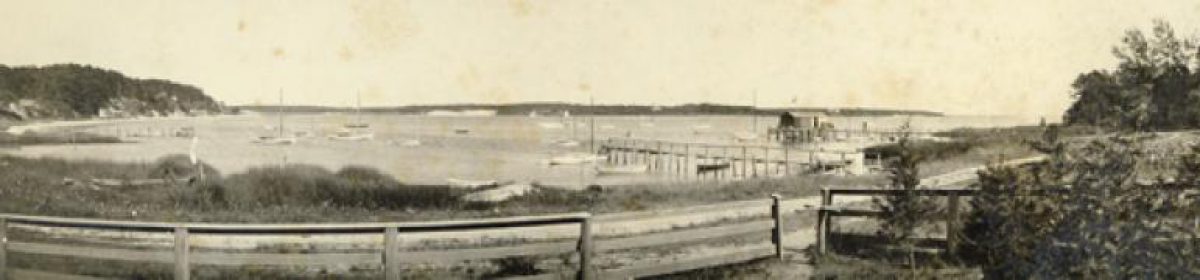
Boat is launched

Back from Venice and I felt the urge to get aquatic asap. So John Peck from Peck’s Boats arrived at 7:30 am and took away the boat on his trailer for a launch at the ramp at Prince’s Cove. I took the motorboat for insurance, in case the Yanmar wouldn’t start and it needed a tow back to Cotuit.

No problem. John bled the fuel system and after ten minutes of messing around I was backing out of the slip and cruising, sans mast, back to the Cotuit town down where another guy helped me step the mast and re-rig the yacht. Afternoon cruise around Grand Island with a six-pack of Sierra Nevada and all is well with the world.

[flickrvideo]http://www.flickr.com/photos/churbuck/4670054044/in/photostream/[/flickrvideo]

John has some very cool trailer/winch set ups. The man is a hydraulic genius. He used to stuff my 25′ Wianno Senior into a two-bay garage every year.

Days of two-part epoxy and VOCs

As the grandson of a boat builder and the great-great-grandson of a whaling captain, boats sort of go with the territory around here and verge towards a sort of floating genetic disorder that can’t be helped. With the spring peepers peeping in their vernal pools and the ospreys circling the harbor, it’s time to get ready for the season ahead.

A couple weeks ago I played hooky one morning and did the most important errand of the year — the annual renewal of the mooring permits. If I miss the March 31 deadline the mooring is lost forever. These things are arguably the single most valuable part of a Cape Cod maritime lifestyle. No mooring. No boat. Or at least, no easy boat, just a lifetime of trailers and boat ramps. Twas not always this way. Prior to the great landrush of the 1970s the locals just tossed in a mushroom anchor with a length of chain and spliced rope and buoy and that was that. Then the tragedy of the commons occurred and the regulators stepped in. I nailed three moorings. One for the motorboat, one for the sailboat, and one for the skiff.

That’s just the beginning of the ordeal. A couple weekends ago I climbed onto the big boat with a box of razor blades and cut off the white boat condom. This was like opening King Tut’s tomb. I left the hatches open for the winter air to circulate through the bilge and cabin and keep the stench of mildew down. All was well. No water in the keel well. Batteries were run down. So I hooked up a trickle charger and started the process of bringing the thing back to life.

Oh the length of the to-do list for a fleet of boats. The motorboat needs a new registration, the engine is idling weird, the steering is tight and binding. The skeg of the dinghy needs to be re-epoxied and the transom is delaminating. A block of ice trashed the stern of my scull, the Empacher and that means peeling off the deck and getting inside with some Fiberglas and resin and then going through the tedious act of filling in the gel coat on the outside of the hull. Rigging needs replacing. Winches need to be broken down, repacked and greased. Do I want to drop a few thousand on a GPS chart plotter mounted on the binnacle? Do I really need that nice Edson destroyer wheel on the motorboat? (I bought a stainless steel knock off and all is well).

Bottom paint, that great toxic mess that I’ve breathed in and out for forty years, accounting no doubt for my short term memory issues and onery children, is now easily $100 a gallon and rising. Out come the rollers. The Tyvek painters suit. My son get deputized and winds up getting so much blue on him that my other son observes that he looks like he has had carnal knowledge with a Smurf.

The dogs get paint on them. The shell driveway gets paint on it. Paint on the iPod dock. Paint everywhere.

Hands stink of paint thinner.  Making a roast chicken and realizing as it is eaten that the dominant spice is not thyme but ablative bottom paint and thinner. Going into business meetings on Monday with green fingers is a very professional statement. Trashing every pair of pants I own with two part epoxy and gel coat repair goo means I look perpetually trashed.

Then there are matters mechanical. A decade of use on the old Honda four-stroke and its multiple trips to the local mechanic who shakes his head and advises me “that engine doesn’t owe you anything, time for another.” Well another costs $7,000 and I’d rather invest that in other things: like mortgages and taxes. So back the old Honda goes for another round of organ transplants and resuscitation.  If it was a human there would be picketers standing around it urging me and the mechanic to pull the plug.

Aside from the mechanics, I do most of the work myself. Boat yards are evil expensive, so when it comes time to  change propeller shaft anodes, repack stuffing boxes, sand and varnish rub rails — I do it and I don’t mind it. I fire up the Grundig YachtBoy radio, tune into a Sox pre-season game, and listen to Joe Castiglione call a game that doesn’t matter far away in Fort Myers. Son comes out and wants to listen to his weird electronic trance music. We bicker. I feel old……

Dinghy needs a new rub rail and the transom is delaminating. Need clamps. Need WEST epoxy. Need new NiCADS for the cordless drill. Weekends are an endless round of trips to the hardware store, marine supply, mechanic and PC for yet another Amazon order…..

But it’s spring and I am back in the water. The rowing machine is about to fall silent and the scull will live again. The motorboat is back on its mooring, bobbing off of the landing, and the big sloop awaits the completion of the town dock project so the riggers can drop the mast into the step and send me on my way.

Now to find that sail cover and get it to the local canvas guy …..

First motorboat ride and swim of 2010

Saturday and the sun was beaming down and melting the grey snowdrifts. The boat looked lonely. I put the battery on a charger, emptied last season’s remaining gasoline into a jerry can, and refilled the tank with three gallons of new gas and a shot of ethanol treatment.

Backed up to the trailer, connected the hitch, and 500 yards later was backing down a snow covered ramp into Cotuit Bay. I pushed off with an oar, anchored in deeper water, and for three minutes coaxed the dormant Honda back to life with the choke and throttle. When I was 100 percent sure it wouldn’t fart out when I was in the middle of the harbor I came back into the beach, loaded the two terriers aboard, and took off for Dead Neck, the barrier island at the head of the bay.

As my son said when he declined my offer to accompany me, “You are only doing this so you can say you are the first to do it.”

That was not the motivation. Anyway, there is a simple thrill to doing this in February:

[flickrvideo]http://www.flickr.com/photos/churbuck/4375122789/[/flickrvideo]

I anchored near Cupid’s Cove, the ancient inlet (now clamming cove) out to Nantucket Sound, careful to keep the boat off the beach so I wouldn’t have to push it off if the tide went out. I offloaded the dogs (who went into immediate mania and starting biting my boots) and satisfied the boat would be there when returned, headed off for a complete circumperambulation of the Island.

I brought a garbage bag and scavenged all the plastic I could find from the wrack line where the moon tides had deposited it.   There was more man-made trash on the inside, bayside of the island, reflective of where the people are in the winter and where the prevailing northerly winds blow from

Around the Point of the island (which received a bit of a trim from the dredge this winter to widen the channel) and down the outside of the beach, flawless and without footprints, just the overwash signs of high tides and winter storms. After a half mile of walking with the wind in the sun I took off my coat. The trash bag was getting full. Halfway down the beach and I popped up on a dune to see if the boat was still where it was supposed to be. It was.

And onwards down to Osterville and the Wianno Cut, where the dredged spoils from the Cotuit end of the island were pumped to shore up the dwindling beach in front of Bunny Mellon’s house.

Without some beachgrass that too will wash away, thanks to the jetties built 100 years ago that now block the natural ebb and flow of the coastal sands.  I sat down for a second, patted the dogs on the head, and then headed back towards the boat.

The dogs and I crossed the island at Cupid’s Cove, where some ice still lingered, and with our bag of trash made it back to the boat. Which was now riding at anchor in much deeper water than I left it. The solutions were:

a. undress , wade out, start boat, return to beach and get dressed again

b. take off boots and socks and attempt to roll jeans up above knees

c. just wade out, flood the boots, and climb aboard and then cruise back home at warp speed before hypothermia set in

I opted for plan C and soaked my self right up to the belt line. flopped into the boat, emptying the seawater out of the boots and onto my face. I was very happy to be the only person on the water at this point as an audience would not have been appreciated.

I phoned home, told my son to meet me at the ramp with the trailer, and fifteen minutes was back home in the shower.

So ended a good beach walk and motorboat ride in February.

Shrinkwrap

Taking advantage of the last clement temperatures of the fall, I sacrificed my lunch hour to the wrapping and decommissioning of my sailboat for the winter ahead.  This is my first “considerable” piece of Fiberglas, and it hulks, ominous and white, in the nook between the old tin garages, propped up by four stands, a big block of wood beneath its keel. The plastic came in a big hernia-inducing roll, and was melted onto the boat with a heat gun that roared like a horror movie sound effect. The tactile pleasures of ironing out wrinkles with a jet of blue propane is up there with the fun of popping bubble wrap until you remember that bubble wrap doesn’t melt and stick to your skin like magma.

My buddies Jim and Bruce did the hard work, changing the oil in the diesel Yanmar engine and flushing the water system with pink non-toxic antifreeze. All hatches are opened, all drawers, doors, companionways, lazarettes and bilges have been exposed to the dessicating winter air and now it sits, drum-like and pulsing in the gusts of wind, a white plastic reminder that the days are about to get longer and I will be afloat in five months or so.

Time lapse shipping

I found this time-lapse video on gCaptain.com, one of my favorite nautical blogs. This was made by a Houston Ship Channel pilot, Lou Vest (who is an amazing photographer) by setting a Nikon D300 to take a photo every six-seconds.

[flickrvideo]http://www.flickr.com/photos/oneeighteen/2733197801/[/flickrvideo]

A true captain

The cliche of a ship’s captain being the last to step off the slanted, sinking deck into the lifeboats; the person who “goes down with the ship.”  The stand-tall, imperious embodiment of leadership personified. Remember Captain Sullenberger walking the flooded aisle of his Airbus as it sank gently into the January Hudson? Checking twice for straggler passengers?

Now in the Gulf of Aden we have Massachusetts Maritime Academy graduate, Captain Richard Phillips of Underhill, Vermont selflessly offering himself to a band of Somali pirates so the crew of the Maersk Alabama could go free.

A family member told the Cape Cod Times:

“”What I understand is that he offered himself as the hostage,” she said. “That is what he would do. It’s just who he is and his response as a captain.”

Imagine the scene as the desperate pirates sit in a lifeboat, out of gas, floating listlessly in water and this arrives, the U.S.S. Bainbridge?

Break out the Depends.

Ditty Bags

Since it felt like spring today I actually started messing around with the boats, getting ready to launch the motorboat for some spring clamming and not looking forward to launching and rigging the new boat (more on that later). Boat work means dragging out the tools, so out came the ditty bag. I don’t know the etymology of the word “ditty” – but there is a good treatise on the subject by Louis Bartos, an Alaskan sailmarker. Clifford Ashley wrote about them, and gives instructions on how to make one. Some of the eyelet work and draw-string/ handle/lanyard knots cited by Ashley are very creative works of art.

As a kid learning sailing I was impressed when the sailing instructors and grown-ups came down to the beach with their ditty bags – canvas totes filled with tools for working on the rigging of boats. Bob Boden, John Peck, and some of the saltier people in the village had very well stocked ditty bags. At a minimum, a good rigger’s kit consists of:

  • A block of beeswax for waxing linen thread used in whipping, or finishing lines (aka ropes)
  • A fid, or marlinespike, for forcing open the strands of a line when splicing
  • A rigging knife – generally a blunt tipped, fairly stout blade, often with a marlinespike included
  • A sailor’s palm: a leather strap with a thumb hole and a metal base, think of a industrial thimble for pushing needles
  • Sailmaker needles: very big, sometimes three-sided, kept in a old tobacco tin with a cotton ball soaked in 3-in-1 oil to keep them from rusting
  • Marline – tarred twine that smells like nothing else in the world. Marline is the most salty, nautical smell I can think of. Lapsang Souchong tea tastes like marline smells.

I load my ditty bag up with some additional tools, including a special fid for splicing braided lines, an awl, a swaging tool for compressing wire cable sleeves, rubber mallet, and a small compartmentalized box filled with cotter pins, washers, and assorted stainless steel and silicon bronze hardware for random boat repairs. I use a canvas bag I bought from my local sailmaker, Squeateague Sailmakers in Cataumet near Buzzard’s Bay. It was made in India for Green Mountain Products, and is basically a white, mildewed rectangular tote with leather sewn around the handles and a ton of outside sleeves and pockets for easy access to tools and stuff. I use it a few times a year, when I need to splice lines, rig boats, or feel salty.

Last winter, at a local boat builders’ boatshow in Hyannis, I couldn’t resist picking up a new bag, one of the more clever conveyances I’ve ever seen. This is a Nantucket “Diddy Bagg“, The owner of the company was pretty enthusiastic and did a great demonstration of how the bag could be converted into nearly a dozen different configurations. I bought one on the spot, but have yet to do anything with it. It reminds me of that children’s book when the kangaroo needed more pockets and the man made her an apron with tons of little places to tuck stuff away. As they old timers said, “A place for everything and everything in its place.”

If I were really over the top and made a living as a rigger, my bag would have some esoteric tools like a seam rubber for creasing canvas, a wooden mallet and a caulking iron for laying oakum into seams, and a worm-and-parcel rig for covering manila hemp lines. There aren’t many riggers left who can do those old skills, but there is a small community of knot and marlinespike seamanship geeks online who share some interesting work and techniques. In a future post I’ll post a list of rigging suppliers, knot workers, and other marlinespike seamanship links that I’ve been stowing in my del.icio.us account. I’ve also started a new folder in my Google Reader of nautical blogs. More on that later too.

Knotsman: Clifford Ashley 1881-1947

I thought I’d write more under the “seamanship” tag and start an informal series of profiles and vignettes on all things nautical, maritime and marlinespike.

In the mid-1960s it was fashionable to wear a Turk’s Head rope bracelet around one’s wrist. The bracelets were loose when slipped on in June, and tight, greenish-grey and smelly by September when they had to come off around Columbus Day. I’d sit in the classroom during Indian Summer and sniff mine, to remind myself of sailing and harbor life with the faint odor of clams, black mud, and old salt. Mrs. Shaps and Reid Higgins could tie them. Mrs. Shaps kept a spool of 1/8th cotton line in a bag and tied the Turk’s Heads while sunning herself at Loop Beach. Mister Higgins could tie very ornate, mathematical knots. Some were long tubes of precise layovers and unders that fit over the end of a curved catboat tiller. Robert Oldale, a friend from Wild Harbor and a scientist at the United States Geological Survey in Woods Hole specialized in sennits and bell pulls, beckets and button knots.

The king of knots was the late Clifford Warren Ashley. Born in New Bedford, his Ashley Book of Knots
stands as the masterpiece in marlinespike seamanship and knots: the craft of the sailor and the rigger, the tradesman and the teamster. The author Ashley was also an artist and illustrator, trained in the Brandywine School founded by Howard Pyle in Delaware. Pyle’s style and influence can be seen in the work of his students such as

N.C. Wyeth. and his love for seascapes such as Pyle’s masterpiece, Treasure Island, was passed to Ashley, who own experiences at sea as crew on a New Bedford whaler made his work among the most credible and accurate of any marine artist. Critic/blogger Paul Giambatta writes:

“He, of all the illustrators who painted wooden ships and iron men, really knew his subjects well from having lived with them all of his life. I think it’s what sets him apart from the others who painted ships and the men who sailed and worked them. Whether his illustrations have been derived from photos or sketched from life, it’s Ashley’s conviction and confidence that gives his work its power and credulity.”

His work on knots is truly encyclopedic, with dozens of variations on the same theme continuing diligently page by page, with Ashley’s precise but wonderful little illustrations enlivening tangles of bights and loops and tag ends being woven into a monkey’s fist or hangman’s noose. Serving and parceling – the art of covering rope with twine and tar to preserve a ship’s manila stays against the elements – is well covered, as is caulking, embroidery knots, buttons and splices. If it can be tied, it can be found in Ashley, who himself is credited with the invention of Ashley’s Stopper Knot.

Ashley returned from Delaware to live and work in the New Bedford/Fairhaven area during the twilight of the American whaling fishery, shipping out on one of the last true whaling expeditions to sail from New Bedford. His paintings are well represented on the walls of the New Bedford Whaling Museum (I am a soon to lapse member). The whaling museum just went very Web 2.0, launching a blog, Flickr stream, and twitter presence.

I’ve have followed Ashley and have managed to pull off some of his knots. I can tie most of the major sailing knots – bowline, square, reef, clove hitch, half-hitch, figure-8, sheetbend, sheepshank and monkey’s fist. For splices I can do: eye, back, short, and long. For decorative I have tied a turk’s head, a few sennits, and a crown knot, but never anything very pretty. I replaced the broken zipper pulls on my nine year-old EMS backpack with little monkey’s fists which work much better than the original equipment.

Past posts on marlinespike seamanship:

Next I’ll take a look at my ditty bag – a knot-tyer’s “toolbox”


Sure sign I have spring fever … 3 sailing vids

It must  be just a few weeks from spring because I have been obsessing about sailing. In this case, fast sailing. My buddy David R.  and I share a love for extreme sailboats. He’s having a couple of Paper Jet 14 kits put together this winter at a local boat yard; that’s a single-handed trapeze dinghy styled on the Australian skiff concept. If I were to sail one of these I would need to start yoga classes now and wear goalie pads.  David found the boat  in a recent edition of WoodenBoat magazine — which typically drools over 100 year old antique boats and not little rocket ships. Oh to be 14 again.

Then I found this hydrofoil. I once delivered a 60′ plywood ocean-going catamaran from Cape Cod to Florida in November and it was the most frightening experience in my young life.  This “boat” is flying at 47 knots (1 kn = 1.15 mph, ergo this boat is going 54 mph). People die doing this stuff. Where’s Kevin Costner with his gills when you need him?

Finally, it is still winter. Before I die I want to ride in an iceboat. But not one that sinks.