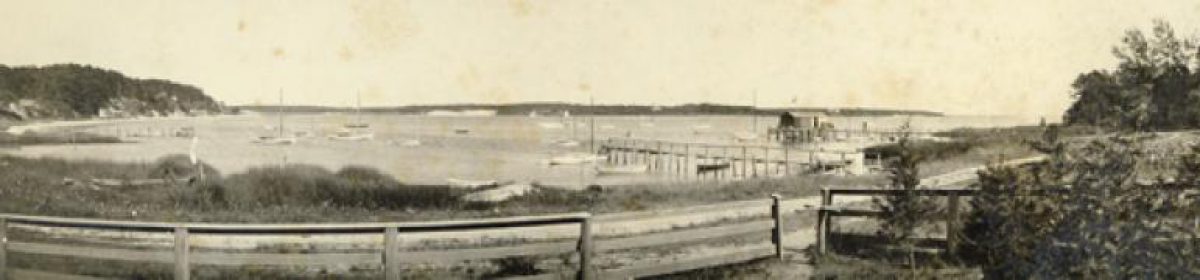
I’m a former political reporter and statehouse bureau chief for the Lawrence Eagle-Tribune, a daily newspaper covering the Merrimack Valley along the Massachusetts and New Hampshire border. In the early 1980s I covered elections for every position from local school committees and boards of selectmen to state representatives, US Congress, the US Senate, and in 1985, the US Presidency.
I enjoyed the beat and did my level best to be as objective as possible in my reporting, fact-checking candidate claims, and always offering candidates a chance to respond to, or rebut, claims made by their opponents. However being Massachusetts, the dominance of the Democratic Party made some of the races feel like foregone conclusions, whereas over the border in New Hampshire, the Republican Party was dominant: neither state would have been considered a “swing” state, however both had a mixture of elected officials from both parties.
As I got to know the candidates I realized the minority party was less than eager to trust me or respond to my questions for the single reason that on the eve of the election the paper would publish on its editorial page its endorsements. Almost without exception the candidates it blessed were local Democrats. I assume the endorsements were handed down by the owner/publisher and that was the power of owning a newspaper personified, so I kept my mouth shut because otherwise there was never any whiff of interference with my coverage. But those endorsements made my job harder, not easier, and trying to argue my independence to a skeptical candidate and their handlers was ultimately what drove me out of political journalism and into the business and technology beats.
Being young and naive I couldn’t comprehend why, in a job where the concept of objectivity and fairness were paramount, the newspaper would suspend its neutrality and tell its readers who to vote for. Sure, I understand the history of American journalism where most cities were covered by multiple newspapers competing for the same readers, most blatantly and openly aligned with one party or the other. As a voter, the idea that I would register as anything other than an Independent seemed to me to be a biased career blunder beyond comprehension. While covering the 1984 New Hampshire presidential primaries I watched top tier political reporters like Walter Robinson at the Boston Globe, or David Broder at the Washington Post go out of their way to refuse even a free cup of coffee offered to them at a candidate’s event. Some journalists, I believe, even felt that political reporters should not vote at all to keep themselves objectively centered.
Last week the owners of the Los Angeles Times and the Washington Post told their editorial boards not to endorse a candidate in this election. The outrage in the comments sections, the vows to cancel subscriptions, the accusations of billionaire cowardice and perfidy made me realize how far journalism has drifted from the core principle of objectivity to opinion. Seriously, does any editorial board believe its endorsement is going to change any intelligent voter’s mind when it comes to casting their ballot? I have no problem with a columnist stating a preference for a candidate or political position. I have no problem with readers writing letters or posting comments with their opinions. But when the nearly always anonymous editorial political endorsements are published as the preference of the news organization as a whole, that’s where the public’s trust in journalism begins to erode.
150 years before the sinking of the Bayesian, a super yacht sank at anchor in New York harbor, killing her wealthy owner and his guests
In the department of history-repeating-itself, here is a strange historical coincidence from the realm of current events, maritime history and 19th century American yachting: two super yachts capsize and sink at anchor, only a few hundred yards from shore, killing their wealthy owners, guests, and crew when a summer squall overwhelmed them. The story of the two catastrophes dominated the news for weeks.
This is the story of the Mohawk and the Bayesian: two super yacht tragedies that killed their wealthy owners a century and a half apart.
Front page of the New York Times, July 21, 1876
In which I meet Michael Lynch
The story begins with a personal connection. In the late 1990s, in the Forbes.com newsroom on the corner of 5th Avenue and 16th Street in New York City, I met the founder of a UK company called Autonomy — Michael Lynch — and was introduced for the first time to the obscure work of an 18th century English Presbyterian minister and statistician, Thomas Bayes, who allegedly was interested in probability in order to prove the validity of the biblical miracles. The founder and CEO of Autonomy was Michael Lynch, a computer scientist who had applied Bayses’ Theorem to the nascent data science of search that was emerging at the time with the introduction of DEC’s Alta Vista search engine, and would eventually be dominated by Google.
Lynch and his colleagues were at Forbes.com due to the invitation of Om Malik, then the top tech reporter in the newsroom. I remember very little about the substance of the meeting other than being thoroughly confounded by the math behind Bayes’ Theorem which I won’t attempt to summarize in lay terms here, other than to say it has to do with conditional probabilities and avoiding the “base-rate” fallacy. I remember saying something so mathematically ignorant that I annoyed Lynch and his colleagues, so I shut up and let Om finish his interview. Whatever 18th century logic enlightened Autonomy, evidently Hewlett Packard’s short-stint CEO, Leo Apotheker, was impressed enough to acquire the company in 2011 for $11.7 billion.
The honeymoon was brief as HP promptly wrote off $8.8 billion the following year claiming ut had been duped by “serious accounting improprieties” and “outright misrepresentations.” (I subsequently wrote an opinion piece for GigaOm in 2011 ((Om Malik’s former tech news publication)) in which I compared the behavior of HP’s board of directors to a “shit fight in the monkey cage at the zoo.” )
The years of litigation that followed the HP-Autonomy acquisition rivaled the long-standing law suit at the heart of the plot of Charles Dickens’ novel Bleak House that itself was based on a real and infamous 56-year legal battle over a contested will. Lynch was put under house arrest in San Francisco. There were trials in California and trials in London. People went to jail. Civil suits abounded.
In June of 2024, a dozen years after the deal went down, Lynch was found not guilty and released from house arrest.
Naturally the man wanted to celebrate his innocence and freedom, and like any good tycoon worth his salt, Lynch invited his lawyer, his banker, and family to join him on his 56-meter (184 ft.) super yacht — the Bayesian — for a celebratory cruise around Sicily’s Aeolian Islands, a stark and strangely beautiful landscape familiar to fans of the Italian movie L’avventura.
On August 19 the yacht was riding at anchor off the Sicilian port of Porticello, east of Palermo, when shortly before dawn it was struck by a severe squall that knocked it over on its side, causing it to flood and sink in 50 meters (160 feet) of water. Lynch, his daughter, and five others were killed in the catastrophe, suffocated in the cabins of the Baysesian where they were trapped.
As it happened during the slowest news month of the year, the sinking was this summer’s maritime Titanic disaster served with the usual side helping of schadenfreude over a ultra high net worth tragedy with a tinge of nautical superstition. It was as if a vengeful Neptune climbed out of the Mediterranean and unleashed the Kraken on the hapless Bayesian.
The Mohawk-Bayesian Parallels
Both yachts the Mohawk and the Baysesian were designed specifically as luxury yachts and were not converted commercial vessels. Both capsized and quickly sank at anchor, knocked down by a sudden summer squall. The owners and their guests died in both cases. Both yachts were equipped with a retractable keel or centerboard. One yacht had its sails up. The other did not. Both yachts were under the command of a professional captain and crew, and in both cases, the crews and captains were immediately blamed for the catastrophe.
The Bayesian sinking is gradually revealing the facts of the matter as divers examine the wreck on the bottom of the Mediterranean , but the yacht still lies on the bottom, awaiting salvage and an uncertain future. The aftermath of the Mohawk disaster had a lasting impact on naval architecture and the definition of what makes an ocean-going yacht safe and seaworthy. She was salvaged and went on to many years of service under a new name, serving the government in surveying Nantucket Shoals in the 1890s.
The Gilded Age of Yachting
The Civil War enriched the new robber baron class of America with wealth accumulated from munitions, uniforms, boots, railroads, steamships, petroleum, coal, and steel. The last quarter of the 19th century saw the rapid, and ostentatious rise of America’s first super-wealthy class — the original “leisure class”— of Americans who competed in the markets during the week and on the waters of Block Island Sound on the weekends, celebrity tycoons who measured their success by comparing the size of their Newport “cottages,” Manhattan town houses, and sailing yachts.
Yacht racing started before the war when some of the 19th century’s early nautical tycoons who had made their fortunes in shipping, whaling, and the opium trade, touted the speed of their clipper ships, then the fastest, most extreme ships in the world, racing from Boston and New York around Cape Horn to San Francisco. The rivalries between the great clipper ships were avidly followed in the newspapers, interest peaking during the California Gold Rush when clipper ships like the Flying Cloud cut the usual six month voyage in half to ninety days by 1854. The New York Yacht Club was founded in 1844 out of a Hoboken club house or “station,” which soon relocated to Staten Island. The club made a name for itself in 1851 when a syndicate of its members commissioned the schooner-yacht America, which crossed the Atlantic to win the “One Hundred Sovereign Cup” at the annual regatta of the British Royal Yacht Squadron. That cup went on to be renamed the “America’s Cup” and the New York Yacht Club successfully defended it against all challenges until 1983, one of the greatest winning streaks in the history of sport.
Yachting took off after the war as a favorite pastime of the absurdly wealthy. Competitive passions ran as deep as their pockets, and the members of the New York Yacht Club began to commission new yachts that stretched the limits of naval architecture. In 1866 the 21-year old heir to the New York Herald, James Gordon Bennett Jr., won the first trans-Atlantic race in the schooner yacht Henrietta. Bennett went on to become vice-commodore of the New York Yacht Club (NYYC).
In 1875, a young textile tycoon named William T. Garner succeeded Bennett as Vice Commodore of the NYYC. Garner commissioned the construction of what the New York Times called “the largest sailing yacht in the world”: the 140-foot long, thirty wide, shallow-draft (seven feet) centerboard schooner yacht Mohawk.
Everything about the Mohawk was grand and extreme. The design was a “skimmer” hull designed for fast performance downwind. The yacht carried 20,000 square yards of sail on two masts with everything flying. Superlatives are a big deal for owners of mega yachts. Keep in mind that nearly 150 years later, news reports erroneously reported the Bayesian was in the Guinness Book of World records for having the tallest mast at 237 feet (it did not, that record is held by the Mirabella V at 295 feet, but the Bayesian did have the tallest aluminum mast).
To stay stable, both yachts were ballasted with iron or lead. They both had retractable “keels.” The Mohawk carried about 50 tons of lead ingots in her bilges and a 30 by 14 foot centerboard that was lowered at sea for upwind stability and traction going to windward. The Bayesian was fitted with a retractable keel that was also lowered when sailing.
The Mohawk was so radical a design that critics were quick to doubt its safety under sail, writing letters to the newspapers and yachting magazines of the day warning that such an extreme design was doomed to fail. One of those critics was Garner’s predecessor as vice-commodore of the NYYC: James Gordon Bennett. “Some remarks which appeared in The Times on Sept. 21, and which seemed to indicate the necessity for a trial of centre-board yachts in rough water, drew forth a quick response from Vice Commodore Garner.”
Putting the Mohawk to the test
Vice Commodore William T. Garner invited four hundred of his closest friends to join him and his wife, Mary Marcellite Thorn Garner, for the launching of the Mohawk at the J.B. and J.D. Van Deusen shipyard at Greenpoint, Brooklyn on June 10, 1875. She was the last ship designed by Joseph B. Van Deusen, boatbuilder to the tycoons of the day, a graduate of William H. Webb’s Shipbuilding Academy, then and now one of the world’s preeminent schools of naval architecture.
The Mohawk was christened by Mary Garner with a bottle of champagne. The New York Times wrote of the occasion: “The yacht was in gala trim, being decked with lines of pennants reaching from the deck to the mastheads. As the new yacht glided off the wave into the river there was a grand salute of steam-whistles from all the steam-craft in the neighborhood, and the spectators on the board and on shore set up round after round of cheering.”
The schooner-yacht Mohawk under sail.
In August 1875 the Mohawk made her debut in the annual summer cruise of the New York Yacht Club, sailing around Newport, Rhode Island to observe the other club members’ yacht competing for the Garner Cup which her owner had sponsored. The following month “some remarks which appeared in The Times on September 21, and which seemed to indicate the necessity for a trial of centre-board yachts in rough water, drew forth a quick response from Vice Conmodore Garner. On the same day he made an offer in writing to sail, during the following month, upon any day when an eight-knot breeze, or upward, was blowing, any yacht, keel or centre-board, twenty miles to windward and back outside of Sandy Hook Lightship.”
Vice Commodore William T. Garner (top) and James Gordon Bennett Jr.
Garner’s challenge drew the interest of James Gordon Bennett Jr., who proposed upping the purse from $1,000 to $5,000 or $10,000 and a race date during the last half of November, a very boisterous and often windy time of year to be match racing in the Atlantic Ocean. Garner and Bennett exchanged letters and finally a date was set for Tuesday, October 26, 1875 for the Mohawk to face Bennett’s Dauntless. The Times wrote, “The day of the race came in black and lowering. The sky was overcast, and there was a strong wind blowing and a rather heavy seaway. After a briskly contested race, the Dauntless came in the victor.”
James Gordon Bennett’s Dauntless crossing the finish line ahead of William Garner’s Mohawk, Oct. 26, 1875
The Capsizing of the Mohawk
On Staten Island, south of the present ferry terminal, is the neighborhood of Stapleton. Garner and his wife lived in a grand mansion on Staten Island, which conveniently was close to the New York Yacht Club’s waterfront clubhouse on the Stapleton shores of New York Harbor, north of the present day Verrazano Narrows Bridge.
The former Garner home
On the afternoon of Thursday, July 20th, 1876, Garner, his wife Mary, and five guests — including Miss Edith May, sister of James Gordon Bennett Jr.’s fiancé Miss Ida May* — boarded the Mohawk as she lay at anchor close to the New York Yacht Club’s Stapleton “station.” The yacht club acquired a dozen seaside “stations” from New York Harbor to Newport to serve its members during their annual summer cruise. There were two such clubhouses on Staten Island, the first was established in 1868, followed by a grander one sometime later in the 19th century.
The New York Yacht Club’s first Staten Island Station, circa 1868
The second Staten Island “station” of the NYYC
Garner and his party went aboard the Mohawk at four in the afternoon with plans for a brief sail around the lower bay. Dinner was brought aboard from the club-house, with plans to dine aboard at 7 p.m. It was a typical late summer day’s afternoon on New York Harbor, with a rising wind blowing from the west-southwest and an ominous band of black clouds gathering over New Jersey, a portent of a predictable late afternoon thunderstorm that is so typical for the region. Other boats that were moored near the Mohawk began to close their hatches and take down their awnings in anticipation for the “sharp squall” coming their way, but the captain of the Mohawk — Oliver P. Rowland — ordered the schooner’s crew to hoist sail and make preparation to weigh anchor.
The New York Times reported the approaching storm was so obvious that onlookers standing on the yacht club dock 500 yards away were concerned to see the Mohawk riding at anchor with sails fully set and luffing. A small boat was dispatched by the yacht Countess of Dufferin (owned by Major Charles Gifford, Vice Commodore of the Royal Canadian Yacht Club) to warn Captain Rowland of the impending squall. The warning came too late. When a few rain drops began to spatter the decks of the Mohawk the guests went below to the salon to seek shelter.
“…before the boat [from the Countess of Dufferin] had reached her she capsized….When the first gust hit her vast broadside of canvas lay at right angles to the wind, and received the full force of it, keeling her ever to leeward, but not with sufficient force to capsize her. A moment later came another and stronger blast, throwing the ill-fated vessel on her beam ends, with all the weight of her superabundant canvass [sic] dragging in the water, and acting as a dead weight against her righting.” The New York Times, July 21, 1876 p.1
Why the Mohawk capsized
The crew of the Mohawk had hoisted her sails while the ship was at anchor just moments before the squall rolled over the hills of Staten Island and across the Stapleton anchorage. Being late in the afternoon in July, temperatures and humidity were probably high and the crew of the yacht had opened hatches, vents, and portholes to try to get some fresh air inside to offset the stagnant smell of the bilge. The crew and spectators all blamed Captain Rowland for setting too much sail. Rowland blamed the crew for not uncleating the sheets, or ropes, that trim the two mainsails and three jibs, and claimed (before fleeing the scene of the disaster) the tail of his coat had jammed into one of the mainsail’s blocks, making it impossible for him to pay out the mainsheet of the Mohawk’s mainsail. The center board — an immense slab of oak, thirty-feet long and fourteen-feet high — was in the raised position inside of its “trunk” when the capsize occurred. Centerboarders generally keep their board up at the mooring to keep the boat from “sailing”, preferring to let it swing freely in the wind so the boat can skate sideways rather than dig in and sail up tight on the anchor chain or line.
What doomed the Mohawk wasn’t the jammed mainsheet so much as the lead ingots in her bilges. Unsecured, hundreds of the heavy lead ingots slid to leeward along with anything not screwed down inside of the cabin. The falling lead shifted the boat’s physics irrevocably to port, and by the time the sheets could be freed the sails were already filling with water.
The Mohawk’s owner, Garner, drowned when he jumped down the companionway from the cockpit to the salon and was blasted inside by a gush of harbor water down the steep stairs. His wife was pinned under a heavy piece of furniture and drowned along with her husband, her brother Frost Thorn Jr., Miss Adele Hunter, 28, two cooks and a cabin boy. Seven people died on the Mohawk in a matter of minutes, as the schooner quickly filled with water and sank below the green water.
The ship the critics deemed too extreme and unsafe to sail was gone before leaving her mooring. Boats immediately put out from the yacht club pier and other yachts moored near the stricken vessel sent their boats to assist, but after ten minutes, all efforts to rescue the trapped souls in the cabin of the Mohawk ceased and the scene turned into a salvage operation. A steam tug was hailed, a line put on the submerged hulk, and the Mohawk was ignominiously dragged around the northeastern point of Staten Island and onto a 20-foot deep shoal off Allen’s Point at the mouth of the Kill Von Kull, where, when the tide ebbed, it was hoped the bodies of the dead could be recovered.
The funeral of Vice Commodore and Mrs. Garner, and her brother Frost Thorn Jr.
The Inquest
Two days after the calamity the front page of the New York Times broke the news that seven, not six people had died aboard the Mohawk. Found in the cabin with the other deceased was Mrs. Garner’s brother Frost Thorn, Jr.
The second sentence in the Times’ story found the captain of the Mohawk guilty: “The Sailing Master, Rowland, was denounced on all sides for incompetency and as a man who was utterly unfit for his position.”
Rowland, unhinged from the catastrophe, compounded his predicament by fleeing the scene. When he was eventually brought before a judge he was exonerated after proving it was the crew’s mishandling of the lines and anchor procedure that caused the ship to founder, a ship the judge agreed was improperly designed, rigged, and ballasted. And with that the trend which began after the Civil War when the sport of yachting began to accelerate through the conversion of working schooners into palatial toys came to a halt. A number of naval architects, including Nathaniel Herreshoff of Bristol, Rhode Island, weighed in on the matter of safety in yacht design, eschewing the trends towards beamier, shallower hulls in favor of deep-keeled cutters typical of the English pilot cutters.
These deep-keeled yachts, personified by the English cutters Madge and Clara, were touted as safe and extremely capable craft by the yachting writers of the late 19th century such as C.P. Kunhardt. Extreme hulls, and immense rigs continued to be popular, especially the extreme catboat designs of C.C. Manley which were raced out of Boston and Quincy up until World War, and the “sandbaggers” of New York Harbor which literally used bags of sand shifted from side to side to stabilize their huge sails against the power of the wind.
The sandbagger E.Z. Sloat
A wonderful resource about 19th century yacht design is the SailcraftBlog which goes into great depth about the history of extreme yacht and racing dinghy design.
The Aftermath
The Mohawk tragedy was soon followed by another sailing disaster, the capsize of the Rambler on Cayuga Lake, one of the Finger Lakes of upstate New York.
From the Cortland Democrat, August 25: Ithaca, N.Y. Aug. 21. Yesterday morning a party of gentlemen set out from the village for an excursion upon the Lake, in the Yacht, “Rambler.” There were some twenty-nine persons in the party at the time of starting, the wind was high and strong. After having proceeded down the lake some four or five miles, and seeing the threatening danger of sailing further, the excursionists concluded to put into “Goodwins,” and tacking ship, a flaw struck the craft before she had got headway upon her and in an instant she capsized. Some were under the cuddy at the time, but marvelously escaped from a terrible death by scrambling out and climbing up and out upon the bottom of the vessell as she went over. Of course as is usual in such cases, every man looked after his own safety, and not until the most of them had secured a temporary place of safety upon the bottom of the craft was it known that three of their number had been lost, whose names were, James KING, Patrick GARVEY and Jacob LICK. Several smaller boats set off from the shore and rescued the remainder of the party from their perilous situations. All efforts to recover the bodies of the unfortunate three proved fruitless, while the Yacht was being righted up. The search was continued while the Yacht was being sailed home, with a portion of the excursionists, and the remainder went ashore and took the train. Great excitement prevailed throughout the village during all of yesterday. A large body of persons are busily engaged to-day in dragging for the bodies of the unfortunate men, but little hopes are entertained of their recovery, as the depth of the water where they were supposed to have sunk, is something like four hundred feet.
A decade later, in 1887, the centerboard sloop Mystery ran aground and capsized off of Canarsie, Brooklyn in Jamaica Bay, killing 23 people returning from a chowder party on Ruffle Island.
These maritime disasters were blamed on everything from extreme and unsafe yacht designs, to inept captains, and even the decline of professional sailors aboard yachts during the “Corinthian” movement towards purely amateur racing. Whatever the cause — the sea has always been and always will be capricious and dangerous — the lurid accounts of helpless women and children being trapped inside of flooded cabins contributed to a movement in yacht design away from the extreme limits of naval architecture and physics towards comfort and stability.
As for the modern tragedy of the Bayesian, it is worth noting that immediately following the sinking of the mega-yacht off of Sicily, Giovanni Costantino CEO of The Italian Sea Group, the conglomerate that owns the shipyard that built the yacht — Perini Navi — declared the yacht was unsinkable and placed the blame on the captain and crew, saying in a video statement they should have been alert to the weather conditions and had the craft secured and in a condition to withstand the sudden fury of the sea.
Only time and the courts will tell. The captain has wisely lawyered up and as divers complete their investigation and an inquest is convened, perhaps the cause of the Baysesian’s sinking will be known. Was it the design of the yacht, it’s extraordinarily tall mast, wide beam, and retractable keel that contributed to the sinking? Or just bad luck and a fluke of mother nature?
* As an irresistible aside, it has to be noted that “Gordon Bennett” was a popular Cockney expletive in the late 19th century, a slang exclamation doubtlessly earned when James Gordon Bennett managed to end his engagement to Miss Carolyn May, sister of the Mohawk victim Miss Edith May, after arriving to dinner at her parent’s home inebriated . He urinated in the fireplace in full view of one and alland the wedding was called off.
The county dredge Sand Shifter appeared off the west end of Sampson’s Island in late September in preparation for yet more dredging of the Cotuit channel. Operations will begin October 3 and conclude by November 13.
The dredged spoils will be carried via floating pipe down the Seapuit River to replenish the east end of Dead Neck.
Storm Drain Improvements: Old Shore Road and Clamshell Cove Road
On Monday evening, Sept. 30, the town of Barnstable’s Department of Public Works shared preliminary plans to improve road run-off conditions on Old Shore and Clamshell Cove roads. Work will commence in the fall of 2025, and is funded by a federal grant from the US Department of Agriculture in order to improve water quality and shell fishing in Cotuit and Shoestring Bays.
New in-ground catch basins will be installed to capture the first inch of rainfall and reduce the amount of sediments carried down hill into the bays during storms.
My nephew Alex “Bruddy” Cincotta passed away after a car accident in early July. This my eulogy to him:
We are gathered here today to celebrate the life and mourn the passing of a young, but unforgettable Cotuit character, Alexander Churbuck Cincotta. Some of us knew him as a son, others as a brother, a grandson, godson, cousin, classmate, or a friend. I knew him as a nephew.
Alex was born on May 7, 1996, in Brockton, Massachusetts. He was the son of James Cincotta and my sister, Julie Churbuck Cincotta. He grew up here in Cotuit, on Sampsons Mill Road near the powerlines which he roamed on his dirt bike to the constant distress of the Barnstable Police department. He attended Cotuit Elementary School. He learned to fish, clam, and sail on the waters of Cotuit Bay. After a few years living with his parents in Florida he returned to Cotuit seven years ago and eventually started his own carpentry business.
Because his brother Nick pronounced “brother” as “Bruddy,” the family called him that with great affection, even after both boys grew up to be young men. When the family moved to Stuart, Alex and Nick went native and turned into accomplished hunters, spearfishermen and exemplary examples of that unique American species known as the Florida Man. Fearless, they thought nothing of crossing the Gulf Stream in an open boat to fish in the Bahamas or coming home from the Everglades with an assortment of alligators, snakes, and wild boars to the surprise and consternation of Jim and Julie.
Forgive me for jumping around in the telling of Bruddy’s life story. This is less of a chronology but more of a series of episodes, so bear with me please while I catalogue a few of Bruddy’s many talents and passions. For Bruddy wasn’t a mere hobbyist, but more of a fanatic who dove headfirst into everything he did in his life.
The food category begins with Bruddy the cook and gourmand. When he was a toddler, his hero was Emeril La Gasse, the TV chef from Fall River. At the age of three Bruddy figured out the rice cooker at 2 in the morning, and like Emeril, wasn’t afraid to “kick it up a notch” whenever he got behind the stove. Bruddy loved to cook. Whether it was stuffed quahogs or lobsters, home-made sausage, a brisket in the smoker, or a 2 a.m. feast for his friends in the outdoors kitchen in Stuart, Alex channeled his inner Emeril whenever he had the chance. Many a time he would stop by my house with the latest creation from his smoker. Text messages from the aisles of Costco would arrive asking, “Hey Uncle Dave, want me to pick you up a pork belly?”
Bruddy the child chef was followed by Bruddy the award-winning gardener who took the blue ribbon at the Barnstable County Fair for his zucchini when he was seven years old. Inspired by the green thumbs of his grandfather and grandmother, Nick and Sandy Nickerson, Bruddy always planted and tended a massive garden behind the house on Sampson Mill Road.
Zucchini’s success led to Alex the chicken farmer. I have no idea what inspired him to expand his little farm from vegetables to chickens, but when he approached me to see if he could take possession of the old Chatfield chicken coop behind the house on Main Street, Daphne and I were more than happy to see the little shack put to good use before it fell apart. Bruddy arrived one afternoon with his mother’s little boat trailer, a couple of strong friends, a bunch of rope and somehow managed to winch the thing onto the trailer and drag it down Main Street in the middle of the day, shingles flying off the sides as he drove away. As he pulled out of the driveway, he rolled down the window of his truck, leaned out and asked me a question for which I had no answer: “Hey Uncle Dave. Why did the chicken coop cross the road?”
Bruddy’s chicken operation expanded into a chicken paradise with a couple dozen fine hens and a magnificent rooster named Frank who I assumed was named after Frank Perdue, the king of chickens who looked like a chicken.
I saved empty egg cartons for Alex, and in return I received many fresh eggs straight from the old chicken coop. One grey winter’s day Alex came by with two dozen eggs and it was apparent that I either needed to adjust my eating habits and welcome a lot more eggs into my diet or share my cholesterol count with him and beg him to find another willing recipient. Alex suggested we find a recipe that called for a lot of eggs, so we pulled out the cookbooks and discovered Julia Child’s Mastering the Art of French Cooking and her recipe for a cheese souffle. Leave it to the French to find a way to transform a lot of eggs and cheese into something, as Alex put it, “I could eat forever but probably shouldn’t.” No eggs ever tasted better than his did in that magnificent mess.
The great chicken endeavor was a display of Alex’s singlemindedness that turned what the typical hipster would have considered a hobby into Bruddy’s obsession, a project which, if a movie was made of it, would have been titled “Ol’ Yeller with Feathers.” The drama of Alex and his chickens was breathtaking.
Hawks would find their way inside of the chicken run and Alex would run out of the house prepared to do battle. Crows got in on the banquet, and Alex would have to catch and release them too. Every varmint and critter in Cotuit and Santuit wanted to eat Bruddy’s chickens. When I asked Alex what the difference between a varmint and critter was, he replied, “You can eat a critter. A varmint you can’t.” Now I know.
Fences were repaired, holes were patched. Alas, finally, sadly, even Frank the Rooster became a victim after a fox chewed through the cupola of the coop and ran amuck inside. Dear Bruddy tenderly nursed his prize rooster, mortally wounded in defense of the flock. He bandaged Frank’s wounds, made splints for his broken bones, and rushed him off-Cape to an emergency veterinary hospital for surgery.
There he called Jim and Julie in Florida to ask for their credit card number to pay the vet’s bill. What’s $3,000 to save a beloved pet you can eat? But alas, Frank succumbed to his injuries on the operating room table (the vet forgave the bill) and the noble bird was brought home and buried with full honors in front of the coop he defended so valiantly.
I think I can confidently state that will be the only time I’ll ever write a condolence note for the loss of a rooster.
Then there was Bruddy the waterman. He had a 100-ton captain’s license, was certified as a diesel mechanic, a marine electronics technician, and knew more about the art of Fiberglas and gel coat repair than anyone I’ve known. He majored in marine technology at Broward College in Florida, and whenever I was stumped about some boat repair or another, Alex was the person I turned to for help. In the Churbuck-Cincotta tradition, he, like me and his mother Julie, put in his time at the HyLine, even sailing under my old captain, John Lynch, on the Canal cruises. I wear Alex’s old HyLine jacket to this day like some sort of merit badge.
Chef, gardener, chicken farmer, mariner. Alex didn’t tinker or dabble. Alex didn’t have hobbies. He had projects. Once Bruddy set his mind to something it became a Rain Man level obsession. I’ll miss the way his face would light up whenever he shared the progress of his latest venture.
It is said de mortuis nil nisi bonum – that one should not speak ill of the dead — but Alex — like some of us, me included — was not without his demons nor flaws. For a long time, Alex struggled with addiction and was deeply ashamed of his lapses and stumbles. Many of you here today suffered alongside him, desperate to help, to encourage, to counsel, to cure him of the burdens that undermined him and set him back time and again. As someone once said of Alex, “If he wasn’t so nice it would be so much easier to be mad at him.”
Like so many of us here this morning, I tried to offer him advice. After his spectacular “bad idea” on the Fourth of July when he blew up the port-a-potty at Town Dock, I paid him a visit and tried to cheer him up with some encouraging words. You can do it Alex. You can take control of your actions and put the past behind you. Hollow words seemed to be a waste of breath as I said them out loud. But Alex listened and he tried to own his problems …. but he also blamed them on his genetics, arguing that he was born into the Churbuck branch of the bureau of Alcohol, Tobacco, and Fireworks. I took exception to his theory and tried to persuade him we weren’t living in the 1600s when predestined damnation was a convenient excuse for one’s sins. Alex told me he was cursed and that the fix was in as far as his bad behavior was concerned. I disagreed. I always saw the promise inside of the problems.
I admire him for naming his boat the Bad Idea and sticking two exploding firecrackers on both sides of the hull as an act of contrition in case there was any confusion in Cotuit over what “bad idea” he was referring to. I tried to persuade him that he had a lifetime of opportunities to turn his life around, even going so far as to sneak into a stack of books I sent him a copy of Ralph Waldo Emerson’s essay on Self-Reliance.
I think he appreciated my reading recommendations, and one day after the affair of the porta-potty was in the past he asked me to recommend some more.
“Uncle Dave,” he said, “The book on chickens was great and I learned a lot. The one about the shipwreck full of gold was amazing. And the one about fighting Nazi’s in Greenland was awesome too. But that Ralph Waldo guy – I mean I get it …. Be true to yourself and don’t give into peer pressure and be your own person. But why did he have to beat the point to death over and over for 50 pages?”
I don’t know Alex. I wish I had an answer to that question. And I wish I knew why the chicken coop crossed the road. I like to think that when Alex passed away, he was greeted in the great beyond by his pets, like the old Count in the Sicilian novel The Leopard who, as he lay in a delirium on his death bed, was greeted by all his favorite pets at the gates of heaven. Now, whenever I see a chicken, I’m going to think of proud Frank, defender of the roost, greeting Alex with a rousing cock-a-doodle-doo as he goes on in our memories as our dear brother Bruddy, one of a kind.
Cotuit author Christopher White has published a beautiful essay on the state of the Cape’s bays and harbors in the April 2024 issue of Cape Cod Life magazine. He uses the Association to Preserve Cape Cod’s annual “state of the waters” report as a news hook, and then weaves in the story of Dr. Stanley Cobb’s famous letter to the editor of the Barnstable Patriot after a helicopter from the Cape Cod Mosquito Control Project sprayed DDT over the beach of his house on Cotuit’s Narrows to put some now-and-then context into the pernicious problem of overdevelopment and the slow motion natural disaster happening before our lives over the course of a single life-time.
I’m honored he quoted some of my past thoughts about what has been lost in our waters over the course of my life. I need to correct myself, of making the prediction back in 2012 that I would never see a pufferfish in Cotuit again.
Once I caught a puffer fish (the only one I’ve ever seen on the Cape and which I doubt I’ll ever see again) which my grandfather tickled to puff up before unhooking and tossing it back overboard.”
Last summer I took my grandson Thomas fishing on a boat in Cotuit Harbor for the first time.
Leave it to a fish to teach me to stop being such a dour doubting Thomas when it comes believing another pufferfish won’t come along ever again. Fishermen are hopelessly hopeful that just one more cast will prove to be the one.
The following is my personal opinion as a voter in the Cotuit Fire District and does not reflect the opinion of the Cotuit Fire District’s Board of Water Commissioners. It is offered as one voters editorial opinion about a procedural matter that will come before the District’s voters this weekend.
This Saturday the voters of the Cotuit Fire District will be asked to vote in a special meeting to determine the fate of the former Cotuit Elementary School. The meeting is at 1 pm in the Community Hall of the Cotuit Federated Church located at 40 School Street. Only voters registered to vote in Precinct 7 of the Town of Barnstable are qualified to vote. (I don’t know if non-voters will be admitted to the hall to speak or observe.)
Two articles are on the warrant. The first article on the agenda is to authorize the Cotuit Fire District to spend up to $1.1 million demolish the school. A “yes” vote is a vote to demolish. This article is recommended by the Prudential Committee.
A “no” vote then moves the meeting to consider the second article, which is more or less the same article a majority of the voters approved at the 2021 Annual District Meeting that was held in the gym of the school.
The second article is on the warrant because of a citizen petition circulated by the Cotuit Community Center , a nonprofit group advocating for more time to study possible re-uses of the sixty-nine year-old school and its potential as a village community center. The article asks the Fire District to:
(1) “study the feasibility and estimate the cost of restoring and rehabilitating all or a portion of the former….school….for the use of the District residents, funding a professional analysis of the building for potential reuse and potential recreational and other uses of the grounds…”
(2) Study the cost of demolition of the property and the restoration of the site to a natural state; and
(3) “to hold a Special District Meeting to allow voters to determine the District course of action related to the school property, by request of a Citizen Petition.
A “yes” vote on Article 2 is not a commitment to spend money to renovate the old building. No sum of money is included, just a request to give the school some more time to be professionally studied and inform the district’s voters of the facts, costs, options and possible uses for the structure. A yes vote will cost the district some money next year to maintain the property but it won’t fix any serious problems or repair things like leaky roofs or pay for a new heating system. The Prudential Committee does not recommend this article.
I’m voting “no”on the first article and “yes” on the second .
I feel the Prudential Committee hasn’t followed through with the vote to re-open the district space needs study approved at the 2021 Annual District Meeting.
Article 17 of the 2021 warrant states:
“Upon motion duly made and seconded, the District voted to transfer and appropriate a sum $207,500 from Certified Free Cash to: (1) Re-open and fund the District Space Needs project to include consideration of the School Property at 140 Old Oyster Road comprising the School Building and surrounding 8.5 acres in the Study findings; (2) Define the cost of implementing the recommendations of Space Need study and any other specific use of the School Property as determined by the Prudential Committee and/or its delegates; (3) define the cost of demolishing the School Building and returning the area to a green field; (4) fund the cost of a Special District Meeting to determine the District course of action related to the School Property. Passed by a majority.
The Prudential Committee’s first duty to the district as defined by the By-Laws of the Cotuit Fire District[1], Article V, Section 1 is spend the funds approved by the voters at the Annual District Meeting:
“Section 1: It shall be the duty of the Prudential Committee to insure that funds, raised and/or borrowed by the District, are expended for the purposes set forth in the warrant and articles enacted by the District.
I believe the Prudential Committee is acting in good faith and not trying to “pull a fast one” or “pocket veto” the original vote. There was no reason to reopen an expensive study of the school until the school belonged to the district and the deed was transferred to the town. The transfer took more than two years to complete. The official transfer happened only last fall, so to commission a study before the deal was done would have been imprudent. The three commissioners have stated they have the right to not spend the $207,500 approved by the voters.
The Prudential Committee relied on a five-year old survey of the property that was commissioned by the the town’s asset management committee. Delivered in 2019, the “Habeeb Report” estimated it would cost the town around $4 million estimate to renovate the school back to a school. The demolition estimates the 2021 vote to reopen the Fire District’s space needs study asked for, have been estimated from the Habeeb Report’s estimate and the actual cost of the demolition of the Marstons Mills elementary school last year (around $750,000).
As soon as the school became the property of the Fire District, the Prudential Committee convened a meeting at Freedom Hall to hear proposals for alternative uses of the buildings. The committee asked for budgets and financial plans to support any proposals, but receiving none, decided to recommend demolition, save the $207,500 authorized in 2021 to study future uses of the buildings, and apply that money to the demolition.
On multiple occasions at its monthly public meetings, the committee has rejected repeated requests to commission a new study — not a new assessment of the condition of the building but a full survey of the community to see what the public would like to see happen there and how to pay for it. Such a study would be performed by a professional consulting firm with the experience and insight gained from working on similar situations.
The voters asked for that study in 2021 to gather the facts and sentiments of the residents of Cotuit to help decide the future of the property. This weekend the voters will meet to decide the fate of the school based on a set of outdated facts, incomplete information, and what has been a demo-or-die attitude that the school is too far gone and insignificant to save.
What is a Prudential Committee? The Fire District has three commissions or committees, each with three elected members serving staggered three-year terms: Fire, Water, and Prudential. The responsibility of the Prudential Committee is essentially to be the voice of “prudence” and ensure the best interests of the district’s residents by overseeing the district’s finances with the treasurer, maintain Freedom Hall, and manage the street lights in the village.
The Prudential Committee is recommending demolition, and not fulfilling the request of the voters in 2021 to commission a study, because it believes it has enough information to make an informed decision about the future of the school. I think the grey area in the bylaws about who has the final say on what the district spends — either the voters or the Prudential Committee — comes from Article II, Section 3 of the District By-Laws, under the heading of “Finances”:
“Article II Section 3: No money shall be paid from the treasury of the District, except for the repayment of notes or bonds or other financial obligations incurred as above provided, and interest in same, without the written approval of the Prudential Committee or[emphasis mine] by vote of the district.”
For all I know the Prudential Committee — both present and past — has exercised its discretion to not spend voter allocated funds if they feel they can save the district some money. Just because a warrant article is passed with a specific dollar figure for a project, doesn’t mean that figure has to be spent, in fact one would expect the PruComm to be as frugal and possible and minimize the expenditure of tax dollars if it can negotiate a better deal on a project,
I hope the district’s attorney or someone expert in the nuances of municipal finance and law will explain the discretionary spending power of the PruComm versus the will of the voters expressed by passing a warrant article. I know I’m not the only person mystified as to why 2021’s vote on Article 17 hasn’t been fulfilled despite repeated requests to do so, then I think the District may need to amend its bylaws to clarify the authority of the Prudential Committee to interpret the outcome of a vote on its own and decide whether to fulfill it as discussed, debated and voted by the district at its regular annual meeting or decide to table it, return it to the warrant at the next meeting to ask the voters to cancel it or modify it, etc.
I think the question we need to ask on Saturday isn’t so much to demolish or not demolish the school– but why we are voting on a weekend afternoon in early May and taking time away from painting a boat, jigging for squid, or planting our garden to make a decision that was supposed to be informed by a new professional study approved three years ago by the voters. Yes, that vote three years ago directed the PruComm to call a special meeting to determine the fate of the school, and so the topic has been called out on its own and not included on the warrant for this year’s Annual District Meeting. The timing, the venue, and the rush to spend up to $1 million without the facts the voters asked for seems misguided to me.
Ask yourself if the way this decision is coming to a conclusion feels a bit as if the pro-demolition forces who voted against Article 17 in 2021 have managed to nullify the decision made by a majority three years ago. Ask yourself if you are okay with destroying a substantial building and turning it into a piece of open space because a three-person committee decided the alternatives don’t feel viable enough or within the limited realm of the District’s presently defined purposes — fire services, water, Freedom Hall, streetlights — to even spend the money to study the situation.
I think the question to answer before the decision is made is this : who has the ultimate authority to expend funds? The voters or the Prudential Committee? The acts of the Massachusetts legislature that established the Fire District in 1926 don’t spell out such superseding power to the Prudential Committee [2]. I believe the word “or” in Article II Section 3 of the district by-laws needs to be clarified. “…without the written approval of the Prudential Committee or by vote of the district.”
I am concerned if we rush down the path to demolition at Saturday’s special meeting that we the people will be blessing a dangerous precedent whereby any future warrant article passed by a majority of the District’s voters could be nullified simply through inaction — aka a “pocket veto” — by a future Prudential Committee.
I respect that the purpose of a prudential committee is to apply “prudence” to the governance and budget of the Cotuit Fire District and I respect the judgment of the three members of the current committee. They have —along with the special school subcommittee (of which I was a member) — given a great deal of time and discussion to the future of the school and securing it to first and foremost to protect the district’s drinking water supply (The school is located 800 feet from the well known as “Station 3”).
I know a lot of people want the building torn down and others are upset the town isn’t paying to do so. After initially being in favor of a village/community center, I’m on the fence now and haven’t made up my mind yet because I believe either the school lives on as a vital part of what makes Cotuit the place it is; or it becomes a memory for the hundreds of village residents who were educated there, or, like me, sent their kids there to be educated in the community where they lived. If we hang onto the school it will mean higher taxes. Liability insurance. A new heating system. A new roof. A new septic system. Annual maintenance and utilities. For the district to become a landlord and lease it to some unknown tenant — say a school, non-profit, or business — will mean going to the state legislature to expand the district’s enabling legislation. But once it’s gone it’s gone and I’m concerned a future generation will be asked to fund some unforeseen project that could have been fulfilled by the school and someone will stand up and ask, “What were those fools thinking when they tore down a perfectly good building.”
I recommend the district takes another year and spends up to $35,o00 to maintain the building for a little while longer, and pony up the money to pay for a professional study that considers the future possibilities for the building and offers some creative solutions to making it an asset and not a liability. And please: we must stop letting it deteriorate. It’s a shame how the building has been abandoned and allowed to deteriorate while the deed transfer wound its way through the lawyers and multiple readings by the town council. Volunteered offers to by concerned residents to help clean up the grounds have been denied because the powers that be have deemed the place to be a health hazard and liability.
As I finish my first term as an elected Fire District official and get a first-hand lesson in local government. I’m not editorializing about the school as a water commissioner, but as a resident who has always been a supporter of the Fire District as an important sovereign definition of the village that defines how the village is managed by the villagers participating in the last pure form of participatory democracy we have left. Without a strong district and committed voters who care enough about it to turn out for its election and meetings, who watch the meetings on Zoom, who show up at Freedom Hall to ask questions … then we risk losing our only opportunity to show up and decide for ourselves.
Please share your thoughts in the comment section below:
On New Year’s Day I threw a turkey in the oven and took my son to see The Boys in the Boat; George Clooney’s movie adapted from Daniel James Brown’s bestseller. The theater was packed. This surprised me, probably because it was only the second time since Covid that I’ve been inside a movie theater. Yes I loved the book and long before it was published knew (and missed) the story of the University of Washington junior varsity’s victory at the 1936 Berlin Olympics from the research I did on The Book of Rowing in the mid-1980s. Both my step-brother and my daughter’s godfather rowed for UW, and I’ve visited the Conibear Shellhouse several times, as well as the old Pocock boat shop.
So I had a reason for being there in theater number three, wedged into a seat beside my son sharing a tub of popcorn and some peanut M&Ms. But what had inspired a couple hundred other people to be there? The holiday? The popularity of Brown’s book? The fact that another best seller, Laura Hillenbrand’s Unbroken, also featured a protagonist — the runner Louis Zamperini — who competed in the so-called “Hitler Olympics” on the same American Olympic team as Jesse Owens? Were they all rowers or the parents of rowers, or former rowers like myself?
I can confidently say there has never been a good movie made about rowing, nor a single rowing scene in any movie or television show that manages to depict actual actors rowing a boat without the use of experienced doubles and trick shots. Rowing has to beone of the most tedious spectator sports. There’s an absence of action, just the monotonous metronomic heaving and ho-ing of some strong young men who know no “moves” other than the four-part sequence of catch-drive-finish-recovery.
There are no bicycle kicks, penalty shots, or Hail Mary passes in rowing. The only thing that changes over the six minutes of a 2,000 meter race is changing distance between the boats and the facial expressions of their crews, most of whom finish the race in an exceptionally exhausted state characterized by anoxia, lactic acid poisoning of the quadriceps, and occasional vomitus. The most exciting and insightful line in The Boys in the Boat, is when U Washington crew coach Al Ulbrichtson tells the squad “Eight-man crew is the most difficult team sport in the world. The average human body is just not meant for such things. It’s just not capable of such things.“
Most popular sports celebrate the unpredictable surprises of exceptionally talented individuals as much as the team they play for. Rowers pull an oar 200 times during a typical race. Each and every one of those 200 strokes is the same as the stroke before and the stroke that follows., except done at different rates per minute, with a racing pace around 36 strokes per minute and sprints going into the mid-40s . The rowers sit facing astern and never dare look out of the boat, eyes locked on the back of the rower in front of them.
The boat starts with all eight blades submerged and locked into the catch position. It weighs 200 pounds, is 60-foot long, one foot wide, and has a round bottom. The eight rowers and coxswain weigh 1,700 pounds. The rowers sit on seats with wheels set in metal tracks. Their feet are strapped into special shoes that can be torn open with a single tug should the shell ever capsize and. They hold a 12-foot carbon fiber oar locked into a swiveling oar lock hung a few feet out over the water. When the oars are out of the water, the blades dripping and swinging forward in perfect unison, the rowers roll astern on their wheeled seats calmly and composed, “recovering” before the snap and explosive drive of the catch when their legs are compressed in a tight sitting squat and their bodies lock into a chain of back, shoulders and straight arms, their hold on the oars through the fingertips in a claw-li
Simply sitting in a long, needle-shaped boat without capsizing is enough to make a novice clench the oar handle with white knuckles, but to row decently with seven other rowers generally takes at least three or four months of daily practice. To row perfectly, on camera, with zero prior experience is nothing short of a miracle, yet the actors who portray the 1936 UW crew did just that in a feat no other rowing film has ever managed to accomplish. One has to give credit to Clooney and the screenwriters who adapted the book for resisting the Hollywood urge to embellish the facts with some faux rowing drama and investing in the time it took to teach the cast how to actually row. No one catches a crab and dives overboard. Boats don’t collide or smash into docks.
Yes there is the obligatory love interest, and the film doesn’t begin to capture the true essence of Brown’s story of Joe Rantz, the impoverished young man who toils in the timberlands of the Pacific Northwest and struggles to make it through college on his own. As a piece of nostalgia the movie made me choke up due to the boat — the Husky Clipper — the same type of Pocock shell I learned how to row in fifty years ago on the choppy waters of North Andover’s Lake Cochichewick. Only a few years later I’d be rowing in a fiberglass shell, and few years later in college in the first carbon fiber shell. Those long varnished needles of wood flexed and creaked and cracked and flew through the water on occasion when me and three other wet, miserable teenagers managed to pull together and make it move well enough to make us want to make it do it again.
Brownie passed away this week. He was a great friend, a surrogate father, and as salty a man as there has ever been. My condolences to his family.
(his obituary as published in the Worcester Telegram)
Retired U.S. Chief Magistrate Judge, Charles Brown Swartwood III, known to all as Brownie, died peacefully in Boston, Massachusetts on November 16, 2023.
Brownie devoted his working career to public service and the law. Brownie was employed by the Worcester law firm of Mountain, Dearborn, & Whiting, where he developed and maintained an active trial practice in both State and Federal Courts. In 1993, Brownie was appointed the first full-time U.S. Magistrate Judge assigned to the U.S. District Court in Worcester. He served as the Chief Magistrate Judge from 2005 to his retirement in 2006 from the Federal Court. He then went to work at JAMS in Boston as a mediator, arbitrator, and case evaluator. In 2009, Brownie was appointed by Governor Patrick as Chairman of the Massachusetts State Ethics Commission, where he served until his term expired in 2013.
Brownie was born to Charles B. Swartwood, Jr. and Beulah Washburn on March 3, 1938, in Wellsville, New York and lived in Ithaca, New York while his father obtained his undergraduate and law degrees from Cornell University, before the family finally settled in Elmira, New York. Brownie’s paternal Dutch ancestors were early settlers of New Amsterdam. His paternal grandfather was a New York State County Judge and his father was a New York State Supreme Court Judge. Brownie’s maternal English ancestors (Washburn) were early settlers of the Massachusetts Bay Colony who eventually settled in Worcester, where they were involved in manufacturing and public service.
Brownie was a member of many clubs in Worcester and Boston and a life-long member of the Cotuit Mosquito Yacht Club. Brownie’s real home and heart were in Cotuit, where he was the third generation of both his mother’s and father’s families to spend summers there and where he was an avid racer of Cotuit Skiffs and Wianno Seniors. Cotuit is where he discarded his bowtie and polished shoes in exchange for a faded orange bathing suit and no shoes at all. Brownie’s idea of a quick sail could easily last 8 hours. After his racing days were over, he spent more than 40 days a summer sailing his Swedish Sloop: “Halve Maen.”
Brownie didn’t suffer fools, but he always had time for a friend in need and the great Judge Swartwood rarely judged. He was a brilliant conversationalist and storyteller; dinners around the table could go on for hours and feel like minutes. After his retirement, he could be found most mornings with his friends at the Coop, most afternoons coercing anyone he could find to sail with him, and most evenings around the great dining table in Cotuit. He earned the name Nono to his grandchildren because he would shake his finger at them, admonishing, “NO! NO!”. While they quickly learned that his bark was worse than his bite, the name stuck.
Brownie attended the Park School in Brookline, the Hotchkiss School, from which he and three others were dismissed for borrowing the school jeep for a midnight ride; graduated in 1957 from Hebron Academy (Maine); in 1961 from Brown University; and in 1964 from the Boston University School of Law.
Brownie is survived by his daughter Hellie, her husband Malcolm Carley, and their three children: Sam and Sam’s wife Nikita, Ali, and Will; his son Alexander and his wife Cindy and their three children: Charlie, Sophie, and Whit; his son Thayer and his wife Heather and their twin sons: Auggie and Ham; his long-time companion, Heidi Baracsi; and his former wife, Judith Swartwood. Brownie’s first wife, Gaysie Curtis, died at age 29 and was the mother of his two oldest children. Additionally, Brownie was the oldest of six children; two of Brownie’s brothers, Peter and Jonathan, predeceased him, and he is survived by his sister, Caroline Blash and her husband Bill, his brother Slater and his wife Kathryn, his sister Penny Brewer, and many cousins, nieces, and nephews.
In lieu of flowers, donations in his memory can be made to the Association of the Cotuit Mosquito Yacht Club for the enjoyment and future of Cotuit skiff sailing. (Checks payable to ACMYC and mailed to ACMYC, PO Box 1605, Cotuit, MA 02635 or online at http://www.acmyc.org/ Memo: in memory of Brownie Swartwood).
Different methods of oyster propagation explained by the National Estuarine Research Reserve System
How can oyster farming peacefully co-exist with waterfront property owners and reduce nitrogen levels in coastal ecosystems? A research project conducted by Dr. Dan Rogers of Stonehill College with the help of the Falmouth shellfish constable at the Waquoit Bay National Estuarine Research Reserve gathered data and resulted in the publication of a “A Best Practices Guide for Nitrogen Remediation using Oyster Aquaculture.”
If you’re contemplating writing a letter to the Town of Barnstable to support the 175-year tradition of commercial oyster farming in the Three Bays estuary, but want more facts to support your opinion, I recommend the paper linked above.
To get a sense of the type of arguments and exaggerated claims wielded by waterfront property owners in the name of preserving their property values, I suggest reading this letter by Chris Matteo, president of the North Carolina Shellfish Growers Association, refuting the claims made by a retired judge who moved to the coast wanted to protect his view.
No oyster farmer is wanting to ruin a sunset view. In fact, we love them too. But here’s the thing… you don’t own the viewshed. You don’t even lease it. In fact, the shellfish industry made a good faith effort to negotiate some parameters with DCM for floating structures before that effort was blown up by ignorant NIMBY folks. At any time, an oyster farmer could have simply purchased an old rusty barge of any size and anchored it on ones’ lease and conducted farming activities aboard. Still can. If you were a judge, read up on maritime law. If you’re bold enough, I suggest you try to change it. Good luck! (Basically, there is nothing you can do to someone anchoring in your viewshed, even if they keep smelly shrimp heads on board baking in the sun, just to spoil your sunset cocktails).
Chris Matteo, March 2, 2022 from a letter to the editor of Carteret Country News-Times
The town of Barnstable can put this issue to rest for once and for all by taking the following steps:
Encourage aquaculture in the new local comprehensive plan (LCP) now under development by the planning department. The most recent LCP (dated 2010) devoted one paragraph to aquaculture and stated: “As these same coastal areas become more desirable for recreational users, conflicts have arisen. This conflict must be examined and resolved through a thoughtful public process.”
Educate real estate agents, builders, and owners of waterfront property about the benefits of aquaculture and recreational shellfishing to preserve property values and restore compromised waters in front of their homes