I’d pay for this

Ez-Pass Airport Security – Forbes.com

So that’s where Steve Brill went ….

“Don’t expect Thursday’s foiled terror plot in London to ground the U.S. government’s Ez-pass style security program for frequent travelers.”And that’s good news for Steve Brill, the media entrepreneur who’s now running a security business geared to frequent business fliers. His company, Verified Identity Pass, a screening service that’s created an express lane at airport security posts for pre-screened passengers deemed safe by the government, has effectively been cleared to take off past its initial successful test run in Orlando, Fla. Already, it’s proved enormously popular with customers.

Schneier on Security: Last Week’s Terrorism Arrests

Schneier on Security: Last Week’s Terrorism Arrests

I became a Bruce Schneier fan while running the website for CSO Magazine at IDG last year (CSOonline.com). He has some smart things to say about the current state of affairs at airport security stations. In the past few days I’ve heard everything conversationally from a call for a national ID with pre-clearance for known good travellers, to the insane notion of a special airline for undesirables.
Schneier blogs:

“The new airplane security measures focus on that plot, because authorities believe they have not captured everyone involved. It’s reasonable to assume that a few lone plotters, knowing their compatriots are in jail and fearing their own arrest, would try to finish the job on their own. The authorities are not being public with the details — much of the “explosive liquid” story doesn’t hang together — but the excessive security measures seem prudent.”But only temporarily. Banning box cutters since 9/11, or taking off our shoes since Richard Reid, has not made us any safer. And a long-term prohibition against liquid carry-ons won’t make us safer, either. It’s not just that there are ways around the rules, it’s that focusing on tactics is a losing proposition.”

Back to work

Today is the day most people quit their jobs. According to an old USA Today factoid I recall reading, the top reason for quitting a job is dread over returning to work following a vacation.

I am heading back to Raleigh tomorrow morning and dreading the security checks more than anything else.  No toothpaste. No saline solution for my contact lenses. The local drug store is going to benefit at my expense. So, RTP this week, New York next, and back into the swing of things.

Jerry Garcia – Father of Open Source

Yesterday was the anniversary of Jerry Garcia’s death. I met him once, backstage at the Oakland Coliseum in 1988 during the Grateful Dead’s New Year’s Eve show, and we talked about banjo playing, Steve Martin, and his fondness for Forbes Magazine. A very nice man.

I was in a conference room at CompuServe’s headquarters in Columbus, Ohio when I heard the news and I had to excuse myself from the meeting to collect my thoughts. It was also the day of Netscape’s IPO. Ironic that I was in the bastion of closed online systems and mourning the death of the Godfather of OpenSource.

I had been a Dead Head since a friend left me a copy of Mars Hotel he “borrowed” from an older brother. I was in my formative years in terms of music taste and one song on that album — Unbroken Chain — mystified me enough to propel me to start buying every Dead album I could get my hands on. This was in the very early 1970s, when the band was arguably at their zenith, and I was old enough to wish I was a hippie, but young enough to know I wasn’t. In August of 1976 — thirty years ago — I saw my first Dead show at Colt Park in Hartford. It was chaotic, amazing, and the beginning of a fondness that hasn’t passed yet.

In the mid-80s I found a BBS called the Brokedown Palace where Dead Heads posted ASCII files of the shows they owned and the shows they wanted. You could download other Dead Heads’ lists, see what they had, and propose a trade. It was strictly honor system. The preferred media were Maxell Gold 90 minute tapes. So I invested in a dual deck cassette recorder and started swapping, finding along the way one of my best friends, Ben Lipman, who was a senior at Milton Academy and thought it very funny he was swapping tapes with a writer at a business magazine with two babies in a Boston apartment.

The process was simple. You’d identify the ten tapes (two per show generally) from another trader’s list which were usually annotated in terms of their quality and “generation” or the degrees of separation away from the original recording. A first generation tape was one recorded either directly by a taper — who was a fan who purchased a ticket for a special section set aside by the band. There, in the company of other tapers, they would use a Sony D5 or D6 and stick a forest of microphones up in the air on telescoping poles. Very coveted were so-called Betty Boards, or tapes made by a woman who worked for the sound crew and were directly patched off of the band’s soundboard.

An email would be sent to the person you wanted to trade to, and they in turn would look at your catalogue. select ten they wanted, and off you went to the store to buy a box of Maxells. For a day or two you’d copy your tapes to the blanks, provide the set lists, stick everything back in the box, wrap it up, and snail mail it off. A few more days would go by and like a miracle a box of tapes would arrive in your mailbox. I never once was screwed in the transaction.
A compendium to all the Grateful Dead’s concerts, DeadBase, was compiled by some Dartmouth geeks. It became my bible, ranking every song, every concert, every set list.
I accumulated well over 500 cassettes which I still have today, slowly rotting in the attic, but the source of covetous fascination by my son’s friends, all of whom are Dead Heads in their own right. The band decided to release their own recordings under the Dick’s Picks label, and I think there are about 50 live shows now available on CD. Definitely not as fun as the old Brokedown Palace days, or trading on the W.E.L.L., but the quality can’t be argued with.

The Dead were the first band to encourage their fans to record shows and share them. As Garcia said, when the band was done with the music it was the fan’s to share. The only rule was no selling or profiteering and the fans were self-policing, criticizing anyone who tried to sell bootlegs.

Other bands followed suit — notably (and ironically because of their lead role in criticizing Napster) Metallica and Phish. The advent of digital recording technology and the ride of the Internet, specifically Brewster Kahle’s archive.org sparked a renaissance in the past decade, leading to the controversial decision to shut down the availability of shows through archive.org a year ago.

So, why is Jerry Garcia the god-father of OpenSouce? It’s pretty simple — Garcia’s support of profit-free trading marked a breakthrough in the music world in terms of intellectual property rights. The engineering-geek slant of many of the fans (the W.E.L.L. was dominated by it’s Dead conferences, many of the participants were Valley engineers) permeated the tape-trading culture.

This post was sparked by J.P. Rangaswami’s “about” page at Confused of Calcutta.

“…given that my thoughts on opensource were probably more driven by Jerry Garcia than by Raymond or Stallman or Torvalds et al.”

The sharing ethic that drove the development of the computing industry in the 60s and 70s (see John Markoff’s What the Dormouse Said) evolved into the shareware movement of the late 80s and eventually was a driver behind the Free Software Foundation, the formation of the General Public License, and today is, it may be argued, the basis of the OpenSource movement. Stewart Brand, the founder of the W.E.L.L., uttered the famous quote at the first Hacker’s Conference:

“”Information Wants To Be Free. Information also wants to be expensive. Information wants to be free because it has become so cheap to distribute, copy, and recombine—too cheap to meter. It wants to be expensive because it can be immeasurably valuable to the recipient. That tension will not go away. It leads to endless wrenching debate about price, copyright, ‘intellectual property’, the moral rightness of casual distribution, because each round of new devices makes the tension worse, not better.”

When launching Forbes.com in 1994, there was intense debate about whether or not to lock the content behind a subscription wall. I stuck to my guns that we needed to be free and big, not paid and small, and philosophically my instincts were driven by Captain Trips more than anything else.

Thoughts on Floyd

I’ve been in denial since last Saturday’s release of the second test of Floyd Landis’ sample which confirmed elevated testosterone levels after his epic ride on stage 17 of the Tour de France when he put himself back into contention after bonking the day before.

I had the same reaction in 2004 when Tyler Hamilton was banned from cycling following the results of his Athens Olympic blood test that showed someone else’s blood in his body. It’s a naive reaction on my part, a childish tendency to want to believe in heroes and give the benefit of the doubt, the old innocent-until-proven-guilty high sentiments that cynically seem to get dashed time and time again. Being the resident cycling fanatic, everyone aware of the Landis affair has asked me my thoughts, given my bipolar sadness and exultation during the Tour. At first I wanted to give Floyd the benefit of the doubt, now …

I love cycling, I think it is a magnificent sport, one that is incredibly dramatic in its alliances between rivals, its subtle strategy, and its superhuman demands on the riders. But …. there’s no denying the sport is rotten with doping, and while I wouldn’t begrude a rider an Advil to assuage an ache, I can’t condone EPO, testoterone, blood packing, and the other sophisticated techniques that are outright cheats and shortcuts around hardwork and training.

Will I continue to follow the sport? Yes. I believe there are clean cyclists in the sport. Perhaps the Landis debacle will persuade the remaining cyclists that there is no way to get away with doping, no way to dodge the labs, and the sport will return to some form of purity that it perhaps — as historians of the sport will point out — never existed.

We all want heroes, but in Floyd’s case, the story was too good to be true. I hope he exonerates himself, but I fear he’s going the way of Tyler Hamilton, proposing outlandish excuses while he name remains tarnished to the end.

Tips for working during vacation

Yes, I am on “vacation.” One of those do-nothing, go-nowhere vacations which is my favorite kind given that I do live on Cape Cod, it is August, and the price is right. I’ve rarely, if ever, been able to completely go off the grid during a holiday. The classic was 1998, when my wife and I spent two weeks in France to celebrate my 40th birthday. I was at Forbes.com working with the managing editor and one of the top reporters to uncover the Stephen Glass hoax at the New Republic (later turned into a movie Shattered Glass). Right up to the moment I had to catch a cab to Newark for the flight we were in crazy mode trying to get the facts quadrupled checked. I continued to work by cell phone right up to take off, landed in Paris, got back online, and kabloom, the story hit the fan over the weekend, causing a front page sensation in the NYT and global press.

My wife was not amused as I stayed glued to a phone. I wanted to be in the newsroom, but there was no way I could detach myself from the story.

So vacation has always meant for me a fully charged cellphone, occasional breaks back into conference calls, and a lot of email scanning with an occasional reply if the subject warrants an immediate response. This five day break is no different. Forthcoming product announcements, long-standing conference calls, and the blog that never sleeps (not this one, Lenovo’s Design Matters) keeps me working two, maybe three hours a day. While the workplace psychologists may caution us worker bees to completely unplug, the reality is few people can afford to. So, here is how to cope and decompress at the same time.

1. Just say no. Not every mail needs a reply, not every conference call needs to be dialed into. People will understand.

2. Fight your fires, not your inbox. Scan subject lines, look for the exclamation points and red text, and make terse replies, not lengthy ones.

3. Do it all early in the morning and late in the evening. Compress the work into blocks. Don’t spread it through the day.
4. The cellphone is the leash. Laptops don’t work when there is sand in the keyboard: a cellphone in the beach bag is fine. Turn the ringer off — bring an index card with conference call in numbers, put on the Borg headset, hit mute, and listen. When you have to talk the rest of the call will have to put up with the background sounds of seagulls and jetskis. Too bad.

5. Don’t feel sorry for yourself. No one likes a whiner. You’re guaranteed to be very bored and very left alone in retirement, so don’t get resentful that work creeps into vacation — there are no hard and fast lines left in life.
6. Noble sentiments of fully disconnecting and decompressing are just sentiments.

7. And set your autoreply and voice mail messages ….

Roger McNamee, Bono buy a piece of Forbes

GigaOM : » Roger McNamee, Bono buy a piece of Forbes

Om writes:

“Nevertheless, there was one man, who is missing from all the headlines – Tim Forbes. He was the real driver of the online strategy and a true believer. A tip of the hat to him would be in order, for that digital strategy has become a viable exit strategy as The Times points out.”

Amen to that. Tim is the reason Forbes.com exists, thrives, and started in the first place and he stuck with it with a level of committment unseen in traditional media. Caught up with him in Berlin last month and he’s as passionate about online publishing today as he was in 1995.

One Hundred Years of Cotuit Skiffs

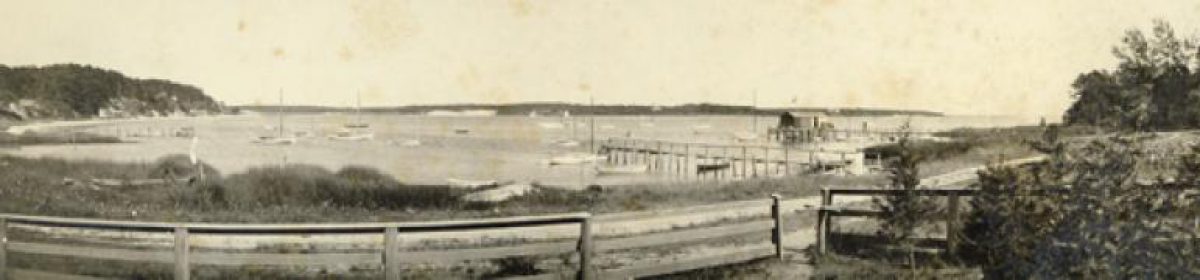
This past weekend marked the celebration of the 100th anniversary of the oldest continuously operated youth yacht club in the United States: the Cotuit Mosquito Yacht Club. A weekend of races culminated with a parade of the fleet in order of sail numbers throughout Cotuit Bay out into Nantucket Sound and then back again. I was very happy to participate albeit in hampered circumstances.

The CMYC was founded in 1906 by a group of teenagers who wanted to race their boats around the harbor. The rules were simple — voting members had to be under the age of 25 and unmarried. Their boats were flatbottomed skiffs designed by a gentleman named Stanley Butler, an innovator who made every boat faster than its predecessor, building an inexpensive, exciting design that has never caught on anywhere other than Cotuit.

The original name of the design was Mosquito, hence the “M” in CMYC. Today the boats are simply referred to as Cotuit Skiffs.

Here’s my speech to the dinner on Saturday night. Apologies for the long post.

“Happy 100th to you all.

Here’s to our great-grandchildren celebrating this club’s bicentennial in 2106, in the same boats, in the same harbor, with the same late starts.

Before I begin I want to apologize for introducing an alien force into the skiff fleet.

I’m not talking about plywood bottoms. The WEST system. The Fiberglas skiff. Not the custom of sailing around with our shorts pulled half way down our butts . None of these things were my fault.

I want to apologize for introducing Doctor Dan to the Cotuit Skiff thirty years ago.

Kidding Dan. Just kidding. It’s perfectly normal to own four skiffs. Not it’s not. Yes it is.

When Chris Jackson asked me if I’d like to say a few words tonight I was flattered because I haven’t been a part of the fleet since the early 90s when I hung up my sailing shoes.

I thought I’d talk about the reason i wound up in a Cotuit Skiff and that is thanks to my grandfather: Henry Chatfield Churbuck.

A few of you here tonight knew Chat. He built 13 Cotuit Skiffs. I don’t think he was a skiff racer. His name isn’t engraved on any trophies. He preferred his big catboat, the Vas Ist Los, which he took Cub Scout Pack 52 out for sails on in the late 40s and 50s.

Chat passed away in 1967 from a bad heart. But I knew him a little, and have a few vivid memories of the man, of sitting in his lap and helping him drive his Buick, of watching him launch spoons into water glasses during Sunday dinner, his cat named Willy that ran away every spring to live at the Santuit herring run, his naps in a wheelbarrow parked in the shade of the grape arbor.

He was the only grandson of a great sailor, Thomas Chatfield, my great great grandfather the whaling captain, who i assumed taught him how to sail.

During the Depression Chat needed a job. So he talked his way onto a carpenter’s crew at Camp Edwards, buildings barracks for the army.

On his first day he had no idea what he was doing, and a man named Bucky Botello — who lived next door to this art center in the house at the head of the driveway asked him: “Have you ever done this before?”

Chat said he hadn’t a clue, so Bucky taught him how to frame and saved his job. That was the beginning of a life-long friendship and career working with wood.

Chat joined the Coast Guard reserve in World War II and built wooden cases for glass meteorological instruments used by the Navy. Chat built the boxes in the shop and my grandmother lined them with velvet and padding.

That work, a victory garden, and a chicken coop kept the family going through the war.

After the war Chat decided to try his hand at boat building. The skiff fleet needed some help, demand was high, the shop was set up for woodworking, so he teamed up with Deke Crosby, Joe Burlingame and started building skiffs.

The first batch was a failure. There wasn’t enough rocker in the bottoms, so he took them back and recut them.

I own two of his boats. Number 36 — the Snafu II, which my father Tony raced, sold to the Wrights and then bought back for me and my brothers and sister in 1969. Number 19, the old Hayai, owned by the Scheers, which I had rebuilt in 2000 and which I have yet to get to go fast, perhaps because i renamed it the Chugworm, after the nasty nickname bestowed on my father by one of the Sinclaires.

Tommy Burgess sails number 12. The Morrill’s own one. Peter Field’s Dolphin and on and on. Most are still sailing today, restored out of the love of their owners, whom I like to think take some special pride in sailing a Churbuck.

Only a privileged few of you, John Peck and his daughters, the Bodens, Conrad, and Dan Del Vecchio, know what it is like to sail in a skiff built by someone in your family or by your own hands.

I can’t begin to tell you the joy I felt last Sunday, drifting at the back end of the fleet in the Biggest Skiff Race Ever, with my daughter and son aboard a boat built by my grandfather.

That sort of thing is too special to take for granted, and without getting too sentimental, I think we’re in the presence of something rare in this world, a very simple but beautiful thing made out of Atlantic white cedar, oak, spruce, canvas, and bronze.

To those of you who stuck by your skiffs in the darkest days of the fleet — the late sixties and seventies — here’s to you. When a big fleet was eight boats. When Day Sailors came and went. And Lasers came and went. We stuck by our skiffs, held them together with Marine Tex and can after can of Woolsey paint.

And then a miracle happened.

I don’t know what it was. I don’t know how it happened. Maybe it was Kip Gould’s Fiberglas skiff. Maybe it was Art Paine. Or Conrad Geyser. Or modern materials like epoxy and plywood. But eight boats turned into sixty-six in the span of twenty years, guaranteeing the most beautiful thing in this village will survive at least another hundred years, rounding the same buoys, in the same harbor, starting the same races an hour late like they do today.

And then, as now, the most precious sight of all for me won’t be the size of the fleet or the trophies won, but the sight of a teenager on a Wednesday morning, giving his or her all to win a Junior Series, accomplishing something my grandfather, Henry Chatfield Churbuck said to me the day i came back from crewing with Evie Jackson in my first skiff race (where i learned several new words i can’t say tonight).

“If you can sail a Cotuit Skiff, you can sail anything!”

Have a good night.
Vacation commenced 34 minutes ago

See you in ten days!