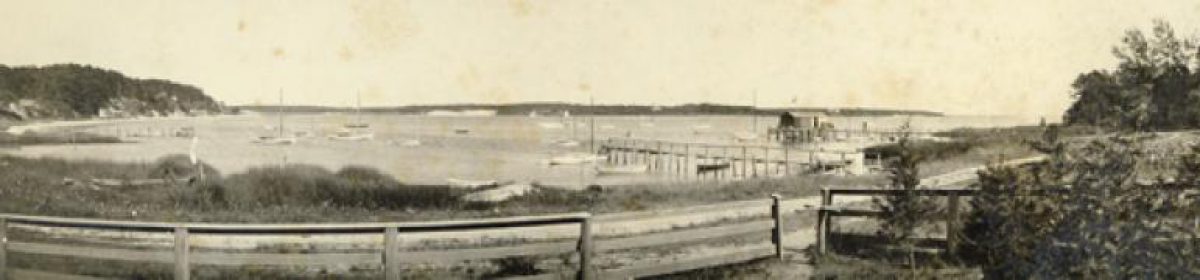
Popponesset Dredging update

The county dredge is off of the entrance to Popponesset Bay. This update from the town of Mashpee:

False albacore

A nice way to ring in fall. A big false albacore caught off the end of the Cotuit channel on the first cast.

The Winterpoor

George Michelsen Foy is a friend and near neighbor who is one of the best novelists I’ve read  when it comes to portraying life on Cape Cod. I’m a fan of his maritime writing, especially his novel Mettle, and his nonfiction writing about the sea such as Run the Storm (about the El Faro disaster) and Finding North. His latest novel is The Winterpoor (2025, Sea Crow Press). It’s a timely, sad, and compelling elegy to those Cape Codders who live on the margins of the mansions and the resorts; the homeless, the poor, and the lost souls pulled down by the peninsula’s rush to the bottom as developers, realtors, planners, and politicians line their pockets and milk the place to death.

The book is a delight for anyone who grew up in Barnstable, affectionately name checking local characters and places with a true inside eye. The story stars a moonshine distilling artist, a Big Lebowski hero named Murdo Cahoon Peters with deep roots in the town,  on a quest to restore the houseboat barge of a forgotten artist, to end a dead marriage, save a raccoon, and befriend a lost boy falling through the cracks.  

The chapters are interspersed with poetic digressions into the death of a salt pond and the seasonal cycle of migration and spawning of flounders, eels, fiddler crabs, and Arctic Terns.  Foy laments the Rape of the Cape without belaboring the obvious and lets the corrupt machinations of the Real Estate Lobby and the bumbling management of the town — especially the village of Hyannis — speak for itself.

The Winterpoor brought back memories of John Casey’s 1989 National Book Award winning novel Spartina, and then exceeded it.  Reading it from cover to cover on the last day of summer made me shudder at the coming cold, and grateful to live in a place as beautiful and fragile as I do.

The Winterpoor can be purchased direct from the publisher, Sea Crow Press or Amazon. George signed copies last Friday, (9/19/25) at Titcomb’s Bookshop, 432 Route 6A in Sandwich, MA.

The Shantar Islands’ tidal vortices and location of the wrecks of the Phoenix and Ocean Wave

On October 11, 1858 two American whaling ships — the Phoenix of Nantucket and the Ocean Wave of New Bedford — came to anchor a mile west of Elbow Island (Ostrov Medvezhiy – Bear Island) a few miles off of the northernmost mainland of Manchurian China. They were sailing together, preparing to leave the Shantar Islands in the Sea of Okhotsk after a summer whaling around the Shantars for bowhead whales.

The Shantars have some of the world’s most extreme tides — with one high and one low tide every day rising as high as 46 feet or 14 meters. These tides produce raging currents between the islands in the archipelago, creating whirlpools and tidal rips that make navigation very dangerous.

This photo taken by NASA in 2021 is a beautiful shot of the archipelago and includes Elbow Island, where the Phoenix went ashore in a surprise blizzard that blew in from the northwest across the Gulf of Uda; and the Pinnacle Rocks, where the Ocean Wave was destroyed while trying to flee the blizzard in a desperate attempt to find shelter at Feklistova Island.

Wreckage from the Ocean Wave was found the following summer, in 1859 when the whaling fleet returned. All were lost. The crew of the Phoenix went ashore on Elbow Island, built a cabin, and half the crew was led to the mainland by the ship’s captain, Bethuel Gifford Handy of Cotuitport, while the other half wintered on the island. The following summer every man was rescued and taken aboard ships in the returning fleet.

The NASA website explains the tidal vortices and the factors that produced them.

As the strong tides and currents flow through straits in the Shantar Islands, they encounter rocky outcrops, headlands, capes, and small islands that disrupt the laminar flow. This can create chains of spiral eddies that rotate in alternate directions as they form. These chains are known as vortex streets or von Kármán vortices

More about the story of the wrecks of the Phoenix and the Ocean Wave will be forthcoming in my new book: The Marginal Sea: Shipwreck and Survival on Siberia’s Sea of Okhotsk. My agent, John Rudolph at Dystel, Goderich & Bourret will be shopping the book for publication this fall. For a copy of the proposal contact Mattie Townson at mtownson@dystel.com.

The Marginal Sea – now to find a publisher

My agent John Rudolph and I have been polishing the publishing proposal for The Marginal Sea, my book about the wreck of the Phoenix in 1858. Earlier this month the agency — Dystel, Goderich & Bourret included the book in its quarterly newsletter of new books it will be bringing to market. Here’s hoping it finds a publisher.