Reprints of The Reminiscences of Captain Thomas Chatfield for sale

My cousin Tom Field kindly alerted me to this discover on Amazon: a custom publisher called “Forgotten Books” has scraped my transcription of Captain Thomas Chatfield’s Reminscences (I assume, since I invested hours in 2006 to type the manuscript and share it as pages on this blog while living the lonely-man life in Durham, NC) and is offering paper copies for $13.57.

51sau7a6mzl-_sx331_bo1204203200_

I’m excited someone offers this service. When I looked into a custom publishing run ten years ago the cost per copy was over $50. This is a great alternative to schlepping disks to a local printer and will allow me to get some copies into the hands of the next generation of nieces and nephews with Chatfield DNA.


The Charles W. Morgan Comes to P-Town

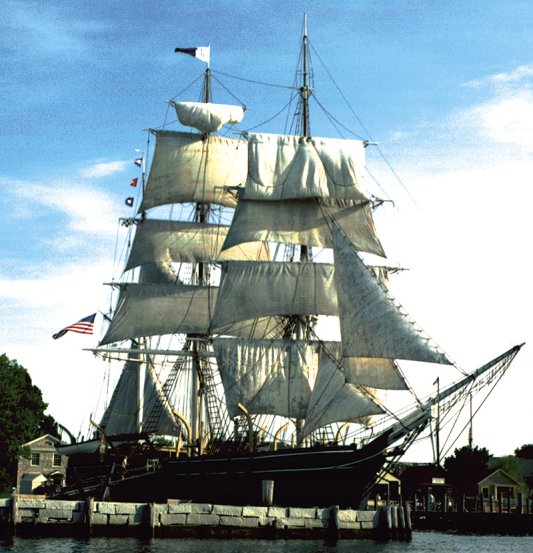
I NEVER go to Provincetown in the summer. In 56 years the thought of driving a distance equivalent to a trip to Boston, down perilous two-lanes of distracting tourist drivers to visit the clogged streets of the zoo that is P-Town has never even crossed my mind. But yesterday, in lieu of beating over to Martha’s Vineyard in southwesterly breezes gusting to 30 knots, I easily agreed with the suggestion we show my daughter’s boyfriend the “real Cape” and head to the outermost tip of the peninsula. As we walked down from the parking lot behind the high school at the Pilgrim Monument I looked out over the harbor for the masts of the Charles W. Morgan, the oldest floating commercial vessel in the United States, the last of the wooden whaling ships, recently restored at Mystic Seaport and now on its 38th voyage, the first time it has sailed in decades.

“I knew there was a reason he agreed to do this,” said my wife, long ago having resigned herself to a lonely marriage of antisocial, agoraphobic behavior by me, the man-who-does-not-dance. There were masts abounding, but none of a New Bedford whaling ship. I had followed the progress of the Morgan from Mystic up to Buzzards Bay and then through the Cape Cod Canal, and knew she would be in Provincetown.  I’ve been aboard the ship a few times in the past at Mystic Seaport, where she has been the main attraction since 1941, but always assumed she was just an exhibit, too fragile to risk the sea.
The six of us walked to the end of the town pier, bustling with little shops, visitors arriving from Boston on the fast ferry, charter captains hosing off their decks and getting ready for their next set of sports. At the very end of the quay was a replica of a merchantman from the 1700s — a Mayflowerish sort of thing — and a not very pretty schooner, but no Morgan. A big inflated sperm whale was tethered down, nose into the southwest wind pushing white caps out in the bay into the Wellfleet and Truro shores.

“There’s a ship,” my daughter said. Out of the harbor, on the other side of the little flat-sided lighthouse at the tip of Long Point, were the masts of a bark-rigged ship slowly sailing in from Cape Cod Bay.

It was the Morgan, returning from a day sail out to Stellwagen Bank, a fertile marine sanctuary a few miles north of Race Point where right whales and finbacks cavort all summer. The ship was in port for some sort of whale awareness event, and around the inflated whale on the pier stood an helpful young woman answering questions about the state of the whale preservation movement. The exhibit had a sense of apology about it, that yes, this was a magnificent ship that embodied a rich part of America’s maritime past, but all those whales the Morgan helped slaughter were, well…..in the past when people didn’t know any better and petroleum hadn’t been discovered yet.

The ship rounded Long Point and tacked around into the wind to pick up a mooring a half mile off the end of the pier. She was not coming dockside. I was a little disappointed, the sight of an actual whaler riding at anchor was such an anachronism I turned to my son and said, “Imagine hiding in the bushes in Samoa in 1850 and seeing that arrive and drop anchor.”

“With a crew of syphilitic, dregs-of-New-England sailors,” he cracked wisely. The rest of my entourage was profoundly bored by the fact that a piece of American history was riding at its anchor in front of them in the same harbor where the Mayflower arrived in the late fall of 1620. They headed back to the insanity of Commercial Street where a man in an orange skirt and orange cat-in-the-hat hat was riding bicycle hawking tickets to an appearance by Baltimore’s pencil-moustached auteur and director of Pink Flamingos, John Waters. My son and I sat on edge of the pier, legs dangling down, and appreciated the view. Being a pedantic bore, I started the history lesson of the Morgan.

She was built in New Bedford in 1841, at the height of the American whaling fishery, a time when Nantucket and New Bedford whaling ships were exploring every corner of the Pacific from New Zealand to the Arctic, from Baja to the Okhotsk Sea of Siberia. This was the world of Herman Melville which he captured in the two books that made him a best selling author — Oomoo and Typee — an account of his voyage to the South Pacific and desertion with another sailor to live among the Polynesians.  This was a time when New England whalers were the most well-traveled people in the world.  Pushing  into uncharted waters — literally — at huge risk and discomfort to fill their holds with whale oil, bone and baleen.

The ships were slow. Built big and heavy to hold a lot of barrels of oil, a crew of 35 men, and the brick fireplace — or “try works” — that sat amidships where the big blankets of whale blubber were cut into chunks and rendered over the flames into big iron kettles into oil like big blobs of fishy Crisco. The decks were soaked in oil: slippery, rancid, foul and treacherous.  Only the Captain and the officers got rich. They worked for the ship owners — the Coffins of Nantucket or the Howlands of New Bedford — and received a share, or fraction of the profits. The crews were drunks and petty thieves, sea sick farm boys, Wampanoags and Pequots trying to work off debts, escaped slaves, Irish immigrants, veterans of the War of 1812. The only things that kept them in line were the fists of the officers and their ignorance of celestial navigation. Oh there were mutinies, but for most whaling voyages — generally lasting three years — the biggest risk was falling overboard, being killed by an angry whale, or merely suffering an accident on deck in a pre-OSHA era.

The Morgan was of a classic type of ship; a couple thousand were built in Mattapoisett and New Bedford. This is the type of ship the Pequod — Captain Ahab’s ship in Moby Dick — was. Melville wrote in the novel, published in 1851 — ten years after the launching of the Morgan: 

… a rare old craft…She was a ship of the old school, rather small if anything; with an old fashioned claw-footed look about her. Long seasoned and weather-stained in the typhoons and calms of all four oceans, her old hull‘s complexion was darkened like a French grenadier‘s, who has alike fought in Egypt and Siberia. Her venerable bows looked bearded. Her masts…stood stiffly up like the spines of the three old kings of Cologne. Her ancient decks were worn and wrinkled, like the pilgrim-worshipped flag-stone in Canterbury Cathedral where Beckett bled. But to all these her old antiquities, were added new and marvellous features, pertaining to the wild business that for more than half a century she had followed…She was apparelled like any barbaric Ethiopian emperor, his neck heavy with pendants of polished ivory. She was a thing of trophies. A cannibal of a craft, tricking herself forth in the chased bones of her enemies. All round, her unpanelled, open bulwarks were garnished like one continuous jaw, with the long sharp teeth of the Sperm Whale, inserted there for pins, to fasten her old hempen thews and tendons to. Those thews ran not through base blocks of land wood, but deftly travelled over sheaves of sea-ivory. Scorning a turnstile wheel at her reverend helm, she sported there a tiller; and that tiller was in one mass, curiously carved from the long narrow lower jaw of her hereditary foe…A noble craft, but somehow a most melancholy! All noble things are touched with that.”

The Morgan escaped the fate of most whaling ships. A lot were lost at sea, sunk by storms, wrecked on uncharted reefs, driven onto lee-shores, unable to beat their way to the open sea. One, the Essex, was rammed and sunk by a pissed-off whale.  A bunch were lost in the arctic, done in by greedy crews who overstayed their welcome and were frozen into the pack ice. The Civil War took its toll when the “Great Stone Fleet” — about 40 whaling ships — were filled with rocks and scuttled by the Union Navy in an attempt to blockade Charleston, South Carolina. The end of the age of sail and the rise of steam did in the rest, but somehow the Morgan escaped the wrecker and even found a second career in the early silent movie era as a prop in three movies. She was rotting in New Bedford harbor in 1924 when a steamer caught fire and nearly destroyed her in the process. The fire — which was extinguished by the firemen of Fairhaven — raised awareness that the Morgan should be preserved, and eventually the one-legged Colonel Edward Howland Robinson Green, son of the notorious “witch of Wall Street,” Hetty Green, was persuaded to pay to have her restored and towed to his seaside mansion in Dartmouth, Mass. where she was pulled into the mud and put on display.
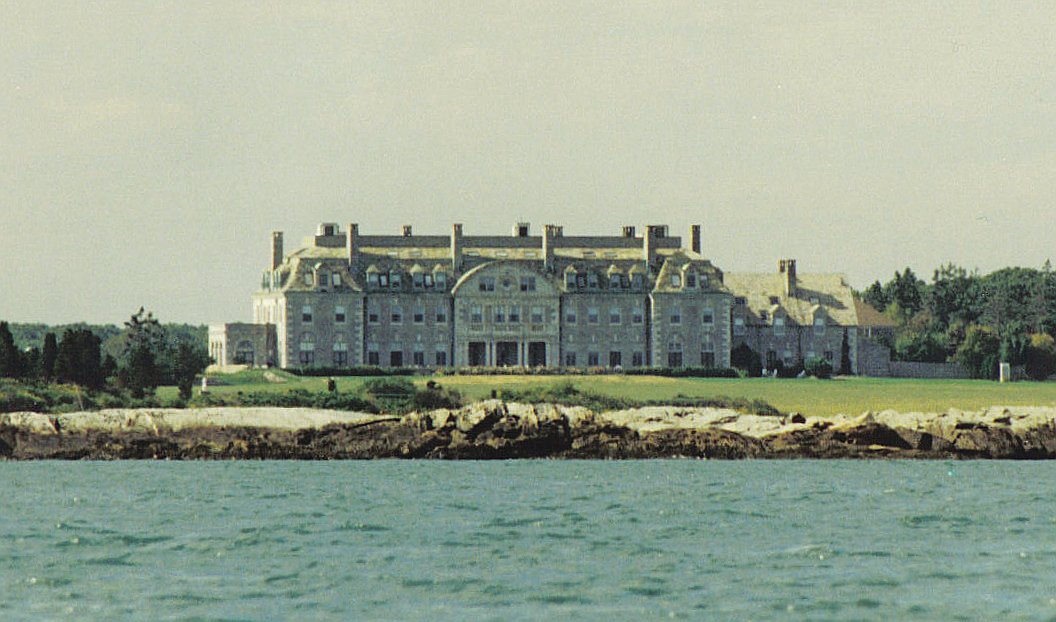
Green, who lost his leg in childhood when his miserly mother refused to pay a doctor to set a broken bone, was the heir to the great Howland whaling fortune and kept the Morgan in decent shape until his death in 1934. Four years later the Great Hurricane of 1938 demolished New Bedford and the Morgan was damaged.

In 1941 she was dug out of her mud and sand berth, towed back into New Bedford harbor, patched up, and eventually towed to Mystic, Connecticut to become the nucleus for Mystic Seaport, an amazing maritime museum (where I spent many month in the late 1970s while majoring in American maritime history at Yale).

She was patched up and put into another muddy berth, and over the years millions of visitors explored her decks and learned about the amazing history of whaling. But she never sailed again.

Occasionally they’d unfurl her big sails at the dock — sometimes one could see them luffing uselessly as they sped by in a car on Route 95 — but she was basically beached. I never expected the Morgan to sail again.  A few years ago, at the Coastweeks rowing regatta, my son and I explored the Seaport after my race. It was his first visit and we had a lot of fun exploring the exhibits, the old rope walk, the sheds of catboats and sharpies, skipjacks and pinkys. The Morgan was in dry dock to be rebuilt from the keel up. We were able to go aboard even though work was being done, and poked around the decks, me droning on about his great-great-great-grandfather Thomas Chatfield’s ship, the Massachusetts, and speculating what life must have been like for a Cotuit man in his early 20s to be given command of a 100-foot long ship and sail it from Edgartown to Siberia and back. And then do it four more times before the outbreak of the Civil War.

So yes, there’s an ancestral connection to these ships. A reminder that somewhere in my DNA is the stuff that made a man run away from home, go to sea, and live a life killing huge beasts in strange oceans on a floating fireplace.

The fact I actually saw one of those ships under sail yesterday — not being ceremoniously towed around like the USS Constitution is every summer  (the Constitution is the oldest floating American ship, the Morgan the oldest commercial one) but actually sailing— was very emotional and more than worth the long drive from Cotuit to see. I’d give a lot to experience such a thing. A few years ago I organized an expedition of a couple dozen friends down to Newport to sail a pair of America’s Cup 12-meters, and those five minutes I spent at the big wheel made me smile all over.

The Morgan heads to Boston, then back through the Canal. She’ll be n display at the Massachusetts Maritime Academy on July 26 and 27.

Moby Trek: Mission Failure

Last fall the New Bedford Whaling Museum sent an email to the membership inviting them to read in the 13th annual Moby Dick marathon in early January.

Dork that I am, I signed up for a slot and was told on the automated voice response system that I would get a confirmation in early December.

I didn’t get a confirmation until last week, on Monday, and I was informed by the nice lady that my reading time was 5:20 am on Sunday January 4 (today) and that I needed to arrive at least an hour beforehand. Let’s see. 4:20 am in New Bedford. Need to find a parking place by 4 am. New Bedford is 45 miles from Cotuit. So …. Wake up at 3 am on the last night of the holiday break to read ten minutes from an assuredly great novel that was the ruination of its author and wasn’t “discovered” until 1920, many decades after his death?

I asked family what they would do and they all said I was an idiot and none would come to watch me be an idiot. Then I asked Uncle Fester who said, and I quote from the IM exchange:

“Are you f%^king kidding me? Loser! That’s worse that being a Trekkie going to a ComicCon. Reading Moby Dick from the deck of a whaling ship in the dark in front of other Moby Dick Trekkies. I’ll only respect you if you do it dressed as Spock.”

Not having a Spock suit, but getting Fester’s point, I slept in this morning and am glad for it. There was only one passage I wanted to read, and that is the piece I read at my father’s funeral in 1980.

Here it is:

“Round the world! There is much in that sound to inspire proud feelings; but whereto does all that circumnavigation conduct? Only through numberless perils to the very point whence we started, where those that we left behind secure, were all the time before us.

Were this world an endless plain, and by sailing eastward we could for ever reach new distances, and discover sights more sweet and strange than any Cyclades or Islands of King Solomon, then there were promise in the voyage. But in pursuit of those far mysteries we dream of, or in tormented chase of that demon phantom that, some time or other, swims before all human hearts; while chasing such over this round globe, they either lead us on in barren mazes or midway leave us whelmed.”

Chatfield papers: primary research

I went to Nantucket on Monday to revive the stalled Captain Chatfield project which I started with great enthusiasm in the spring of 2006. To recap, I transcribed the reminiscences of my great-great-grandfather, Captain Thomas Chatfield, and got them into “digital” form by manually retyping them over the course of many lonely evenings in Raleigh, North Carolina. When I finished I considered turning to his Civil War letters, but somehow the amateur historian in me wanted to focus from the beginning, on something more interesting than transcription. I wanted to do some research.

When I was in college in the 1970s I seriously considered majoring and going on to graduate school in American maritime history. I have an abiding passion for 19th century commercial maritime history, particularly shellfishing, coastal trade, and American yacht design. Historians like Howard Chappelle were my heroes and I wrote a very good paper (for a sophomore) on the development of the New Haven Sharpie which recently resurfaced when a correspondent asked me to sign a copy for his brother who was building one of the oyster skiffs. Unfortunately commercial reality diverted me from my dream of becoming a professor of maritime history but I continue to read whatever I can get my hands on and am a true sucker for a maritime museum like the New Bedford Whaling Museum or Mystic Seaport.

One discipline that was pounded into my head at Yale was the supremacy of primary research: going to the archives, the registry of deeds, the hall of records, the clerk of courts, and reading the Grantee/Grantor books, the plats, the marriage and death certificates. The first time I had it pushed on me was in my first American History course when the assignment was a straight forward project around the Boston Massacre. Here was a seminal event in the history of the country and I had to read the court records and the accounts of the witnesses, the defense of John Quincy Adams …. I was hooked. I became a total library rat, digging for the letters, the first-person accounts, the official record and turning my back on some other historian’s neat and pat condensation of events.

So I arrived at the Nantucket Whaling Museum and the docent asked if I wanted a tour. I asked for the library and was told I was in the wrong building altogether and needed to walk across town, over the cobblestoned streets to the Nantucket Historical Association housed in an annex attached to the Quaker Meetinghouse. Reader’s of Nathaniel Philbrick’s, In the Heart of the Sea will be familiar with the role the Quakers played in founding the Nantucket whaling industry. For a short time in the early 19th century, Nantucket was arguably the most prosperous, wealthy, and wordly place in the world, with the possible exception of London. Nantucket whalers were exploring the South Pacific, the first white men to arrive on many islands only explored a few decades earlier by Cook. They brought back great rewards for their risks, amassing (and saving with their thrift) huge fortunes some of which survive, much diminished in some old Massachusetts family fortunes. As I poked my head into the meetinghouse I thought, “This was the Sand Hill Road of the 1820s. Imagine the voyages planned, the losses mourned, and the profits celebrated on those hard benches.”

The library of the NHA is a little place: a few tables, a nice skylight, a curator’s office and a librarian’s station by the glass door. I didn’t have an appointment and felt bad about intruding, but I explained my mission to the librarian – I wanted to get some information about the Ship Massachusetts, its fate, and, if possible, the whereabouts of its logs, the “diaries” maintained by the captain (my ancestor) and his officers. The challenge of the reminiscences is that they are a narrative written to Chatfield’s four daughters, and as such are certainly bowdlerized to some extent to spare their young sensibilities. More maddening is the variance in place names and in some instances, what appears to be the coining of new place names like the “Friendly Islands” or “Mucktoe Bay.” My goal is to correlate Chatfield’s stories and remembrances with the precision of the logs. The first challenge is to locate those logs – some of which my father discovered in a trunk in the early 1970s and promptly donated to the Kendall Whaling Museum in Sharon, Massachusetts. Those logs had been given to the captain’s daughters who used them as scrapbooks, pasting newspaper clippings and illustrations from magazines over the accounts of the voyages! Kendall paid to have them restored, microfilmed and provided them a secure, climate controlled shelf. I thought my father had also given some of the material to Nantucket (he died in 1980), but wasn’t sure. I remember him ruing the loss or undiscovery of the log of the final voyage before the Civil War, the last whaling voyage Chatfield made before enlisting in the Union Navy.

The librarian checked her records and asked, to my delight, if I would like to read the log of the 1856 voyage. She asked another researcher to go down into the vault, handed me a pair of white cotton gloves and a mechanical pencil (pens are a total horror in the general vicinity of any rare book or manuscript).

The researcher returned with a manila box. I opened it up and set the log on the plastic lectern cradle. Immediately upon opening I realized why my father had never located it. It had been donated to the NHA by George Folger and the flyleaf carried the name of William Folger, the First Mate of that voyage.

I asked the librarian who was recorded as the log keeper. She looked it up on her database and replied it was indeed Folger. So, what I was about to read was maintained not by Chatfield, but by his first mate. That was normal for most whaling ships.

Folger had the typical “spidery” penmanship seen in 19th century manuscripts. The writing was legible, but difficult to comprehend in the early going, especially abbreviations and numbers. I turned on my ThinkPad and opened the transcribed reminiscences, searched for September 28, 1856, and got in synch with the log, following along and taking notes as I proceeded, entering the daily position into a spreadsheet for plotting later in Google Earth. Those observations were annotated as being either estimated through “dead reckoning” (D=RxT) or by “OBS” or observation, with “LUN” noted if the longitude was calculated using the “lunar” method. A typical entry is divided into three segments or periods of time: “Commenced”, or the first part of the day, “Middle Part” and “Latter Part”. The course, the wind speed, and any chores are noted.

The entry for October 4, 1856 is typical of 90% of all entries:

“Saturday Oct 4

These 24 hours begins with a moderate breeze from the WSW steering E by S

Middle part squally from the SW. Latter part fine breeze from the SW steering by the wind. Sail in sight. DR 39.55N 72.5W”

And so on and so forth for many pages. What catches the reader’s eye are the “whale stamps” — drawings of a whale’s tail flukes to indicate the sighting of a whale. Many fishermen keep detailed logs of their catches, and whalers were no different, using the margin marks to quickly scan a log for the good parts, the chase and killing of a whale.

One mark was unique, as it carried the carefully printed letters “B” and “M.” The librarian, curator and I spent 15 minutes speculating on its origin, finally agreeing that it may mean “boatswain mate” as some entries indicated which boat chased or caught the whale.

I also found this curious icon next to an entry about the capture and killing of an ocean sunfish, or mola mola. Indeed, this is what a sunfish looks like. The reminiscences carry none of these details, of men being washed overboard to their deaths, or drunken fights among the crew. But then the log has none of the narrative excitement of catching a whale through a hole in the Arctic ice pack as told by my great-great grandfather. The two versions need to be merged.

I only had four hours to spend on the log before needing to leave for some late lunch and my son’s soccer game (my ostensible reason for being on the island). The chowder was an affront – the glue/paste version – but the library time was well spent. I need to return at least one more time to continue transcribing the latitude and longitude coordinates. I think the possibilities of producing an interesting .kmz file for Google Earth are limitless and could make the combination of the very readable reminiscences, the dry but factual log, and the graphical wonder of a cartographic interface very compelling in terms of an educational tool about a very dangerous, very profitable, and very anachronistic industry.

There is something remarkably stimulating about precise historical research with no apparent profit motive, just the subtle awe of holding history (the log, after all, has been around the world) written by a very brave man of whom I know very little. Dry as it may sound, sitting in one place for a few hours wearing cotton gloves and carefully turning pages, it was actually very exciting.

I leave you with Dec 9, 1857:

“Portuguese named John Enos fell overboard, the other saved himself by clinging to the bearer. Luffed the ship to the wind immediately, but it being so rugged and dark at the time did not think it prudent to lower a boat as it was impossible to do it with any safety. He said the man could swim, I heard a faint cry once in the night. Could not descern (sic) anything. Kept on our course with heavy hearts as it was beyond the power of man to do anything for him. “

A Cotuit Slideshow


cotuitbay

Originally uploaded by dchurbuck.

Thought I’d show off some recent scans.

About the header …

My attempts to avoid any graphical design on this blog went out the window last night when I fired up the scanner and started playing historical preservationist by running a stack of old family photos through the machine.

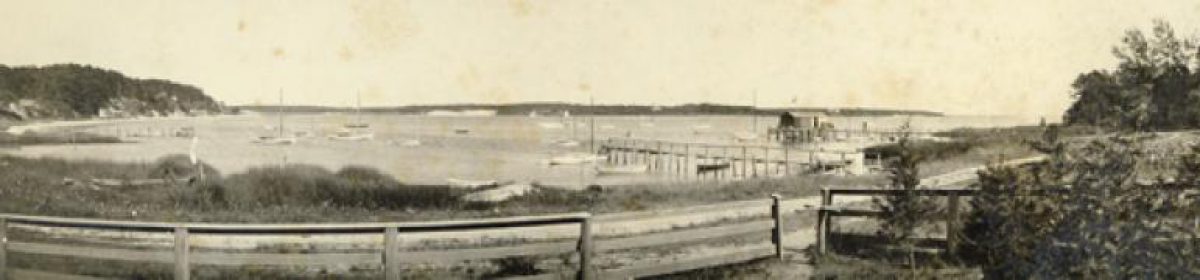
I came across an awesome horizontal panorama shot of Cotuit Bay taken around the turn of the century before the summer folks trashed the place and the village was a working port. This shot was taken, I assume, from the current site of Conrad Geyser’s organic garden looking east towards Osterville’s Grand Island (now some of the world’s most expensive real estate known as Oyster Harbors). The wharves and docks in the foreground are just stubs in the mud today, the old sloops and skiffs are long gone. Today this is a crowded mess of plastic boats and McMansions.

I live about 500 feet away. Here is a shot of my great uncle Thomas Fisher, a MIT civil engineer who I named my youngest son, Fisher, after. He’s sitting on what looks like an early version of the Cotuit Skiff. This shot was taken on the same beach as the panorama in the header graphic. right about where the “O” in “.com” is.

Over the years all the photo albums have been divvied up and spread to the winds. I’m issuing a challenge to all siblings and relatives that if they give me their old photos I’ll give them back a DVD stuffed with ALL of the the collection. One well meaning person, to my horror, has been trimming old photos to fit into frames. ARRRGGGGH! This stuff is priceless, at least to me and my family.

Captain Thomas Chatfield


Captain Thomas Chatfield

Originally uploaded by dchurbuck.

At home in Cotuit, here is the man in all his glory. According to the handwritten note on the back of the picture, this was taken in 1910, twelve years before his death.

I’ve scanned and uploaded a good number of photos into my Flickr account. Now the project moves onto the second phase of correcting the scanned war letters. When that is done I will need to decide how to treat the letters vis a vis the Reminiscences and whether to annotate the narrative with the details found in the epistolary account, or keep them separate and standalone.

Then I’ll move everything to Blurb, mock up the book itself, import the high res scans and finish the facsimile portion of the project before moving onto the primary research with the ship’s logs to determine the path of his voyages. That research will lead me to a Google Map tour, more contextual research (I want to learn more about the Gold Rush and Civil War is particular, having studied the whale fishery extensively in college.)

Then, when all the contextual research is finished, time to think about the book and getting it published. This is a very rewarding project personally and the antidote to a career obsessed with internet marketing.

There is a “Chatfield” photo set on my Flickr account to be found here.

The War Letters of Captain Thomas Chatfield

I just scanned the letters by Captain Thomas Chatfield, written between 1863 and 1865 while he was stationed on the Gulf coast of Florida as an Acting Master in the U.S. Navy. Most of these letters were written to his wife, Florentine (Handy) and some to his daughter Mildred (Millie).

The PDF is 6 megabytes is size. And can be downloaded here. 

I need to clean up the RTF file and convert the file into live text. I take back what I said about the scanner earlier, I just saved myself three months of work!

The end of the Chatfield Manuscript is posted

I’ve come to the end of the transcription process with very mixed emotions, but now I have another long road ahead of me in transcribing Chatfield’s letters to his wife Florentine during the Civil War years.

Anyway, the entire reminiscences are now done and I’ll post a word document for anyone who wants to read it in one take rather than skip from one web page to the next.

I can’t wait to start the primary research project. I’ll seek out his original ship’s logs from the Massachusetts at the Kendall Whaling Museum and thus be better able to cross-correlate the place names during the Pacific whaling fishery sections. A lot of the place names are misspelled or lost to time, so there is a lot of work to go before this can be put into accurate historical context.

The huge shame is that these reminiscences only cover his life to the age of 34. After that, little is known. At least there is nothing like this written record.

“You are all familiar with the life I have led during the last forty years, so I will not allude to it. The writing of the story has been a labor of love, and I have had much pleasure in doing it. Old memories have crowded upon me, and I have found it difficult to avoid making tedious by recording minor incidents common to all seafaring men.

“With all my love, I am your father ….

“AD 1905”