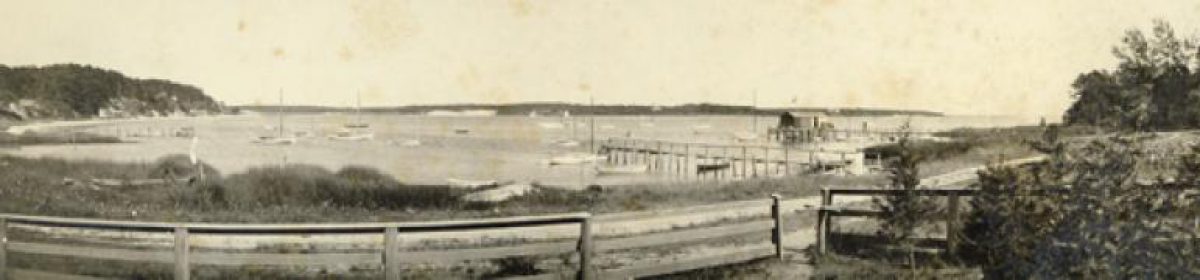
Photo by The Register, 12/86 In December 1986 the Cotuit Inn was demolished to make way for ten new condominiums. The building came down despite the best efforts of a group of villagers who banded together as the Cotuit Inn Appeal Group who hired a lawyer to challenge the Zoning Board of Appeals’ approval of … Continue reading “The Struggle for Historic Districts in Cotuit: Lessons Learned”
Photo by The Register, 12/86
In December 1986 the Cotuit Inn was demolished to make way for ten new condominiums. The building came down despite the best efforts of a group of villagers who banded together as the Cotuit Inn Appeal Group who hired a lawyer to challenge the Zoning Board of Appeals’ approval of the project. Ultimately the permit to convert the 150-year old inn into residential apartments was upheld by Barnstable Superior Court and finally, by the state Appeals Court. When the building was found to be in disrepair with no viable foundation, the demolition was approved.
That battle to save the old inn kicked off a movement in the village to preserve Cotuit’s remaining open space and historical character. It was a movement of both conservation and preservation that sparked the founding of the Barnstable Land Trust, and the saving of Crocker Neck and Bell Farm. It also inspired the political activism of several villagers, four of whom went on to represent Cotuit on the newly formed town council. It also sparked an effort in 1987 by local historians to inventory Cotuit’s historic homes and place them on the National Register of Historic Places.
The threatened loss of the inn also revived the moribund Cotuit-Santuit Civic Association.
In April 1985, the Barnstable board of selectmen appointed seven members to a Cotuit-Santuit historic study committee. In all probability that study committee was the basis of the 1987 inventory of the village’s historic homes that led to their inclusion on the National Register of Historic Places. The members were:
Paul Noonan, chairman
Paul Grover, representing the Cape Cod Board of Realtors
Harriet Ropes Cabot. a professional architectural historian
Frederic Claussen, Barnstable County Registrar of Deeds
Anne Lloyd,
Beatrice K. Williams, president of the Historical Society of Santuit and Cotuit
Henry Walcott, former president of the HSSC
John Klimm was the board of selectmen’s representative to the committee.
In July of 1986, the Barnstable Patriot reported the board of selectmen had “renamed…members of the Cotuit Historic District study committee.” The outcome of that committee’s work is unclear. It was the first of many historic study committees to take a swing at persuading the village of the benefits of a Local Historic District.
1991
The purpose and fate of the 1986 group is unknown but in July of 1991 the town council approved the formation of a new Cotuit local historic study committee:
The Register, August 1, 1991 p. 9
1992
Less than a year later in March, 1992, at a public meeting convened at Freedom Hall, the study group, chaired by Edson Scudder, went down in flames when “A straw vote held at the end of the evening to give an indication to the amount of support, or lack of, gained all but a few opposed and no more than five registering in favor.”
Carol Lyall, a member of the study committee said, “If it’s going to create divisiveness in the community, it’s not going to go much further … the study committee isn’t interested in fighting it out.”
The Patriot wrote that the formation of the study group was “based on a positive response to a 1988 survey indicating a desire for the formation of a historic district.” Later the paper would report the initiative failed because “no guidelines were prepared and people had no idea what was being considered.
The village’s two town councilors — Jaci Barton and Paul Noonan — were split on the idea (Barton for/Noonan opposed), leading the Patriot to write: “With the two from Cotuit cancelling each other out, the decision would be left to other councilors not associated with the village.”
1993-1996: The study group regroups
After quickly going down in flames in 1992, the historic district study group added new members, “two of whom had been very opposed to the initial presentation.” In 1993 the revived study group convened a similar public meeting, one that “met with a much more favorable response…..paving the way for the study committee to draft up formal guidelines for a district” (BP 1996.08.01).
In 1995, the study committee seemed to be making progress. The Patriot’s David Still II wrote on January 19, 1995: “In stark contrast to the overwhelming opposition voice to the idea three years ago, the give and take at the Santuit/Cotuit Civic Association on a proposed historic district for that village raised concerns that the study committee had not gone far enough.”
“The plan discussed Tuesday night focused on the village center and left untouched the Route 28 corridor, which many in attendance at Freedom Hall considered a major oversight.”
Around this time I was named to the study group, invited to join by Jim Gould.
In 1996 the study committee held two public meetings. Committee member Carol Lyall told the Patriot, “that there were three general attitudes toward the district: those who want it, those who agree with the concept but have concerns about the details, and those against it.”
The committee created some literature about the proposal, trying to head off some of the most hot-headed opponents by saying a district would increase property values, decrease the involvement of the Cape Cod Commission on historic issues, and place control of the village in the hands of the villagers.
Because one opponent had stood up at a public meeting and defiantly proclaimed he’d paint his house pink just to exercise his First Amendment right to free expression, the committee’s literature stated:
Our concern isn’t if a house is painted pink or where the tulips are planted, but what happens to a house when it changes hands. For that’s when houses get torn down.”
Then your’s truly gets quoted by the newspaper talking out of both sides of my mouth:
Committee member David Churbuck, who was opposed to the historic district concept back in 1993, said that the issue of houses being torn down seems to be one of the major issues. On whether or not a historic district comes to pass in Cotuit, Churbuck says he remains ambivalent, but he is reserving judgement on the proposed guidelines until he has more of an opportunity to discuss them with his fellow committee members.
Barnstable Patriot, August 1, 1996, page 8
A week after that story was published — in the August 8, 1996 edition of the Patriot — came the news that the study committee had pulled the plug on the idea and was disbanding.
Barnstable Patriot, August 8, 1996
The Aftermath
With no Local Historic District, the village has depended on the Town of Barnstable Historical Commission and the Cape Cod Commission to preserve the village’s historic homes. The results have been mixed.
Cotuit Parsonage
In 2005 the Cape Cod Commission approved the demolition of the first Cotuit Parsonage, built in the early 1800s (located across the street from the Historical Society of Santuit and Cotuit at 1151 Main Street), after the Souza family made the case for a hardship exemption to demolish the structure due to the deleterious impact of moisture trapped by vinyl siding. Both the town and the CCC approved the request with the request that the new building conform to mid-19th century architectural styles.
Hezekiah Coleman House
In 2006, the Hezekiah Coleman House at 756 Main Street (across from the east end of Coolidge Lane), was declared a “development of regional impact” by the Cape Cod Commission. The original building was mostly demolished. The CCC’s decision is worth reading to gain a sense of what factors the Commission takes into account when handling a demolition or major renovation of a building listed on the National Register of Historic Places.
Located at 35 Little River Road, this classic example of a Cape was slated to be demolished in 2009, but after a six-month demolition delay was imposed by the Barnstable Historic Commission, the house was saved by the new owners.
Bonnie Haven
In 2012, the new owners of “Bonnie Haven” applied for a permit to demolish the former home of whaling Captain Seth Nickerson. Jr., preferring to build a contemporary home overlooking Nantucket Sound.
“BONNIE HAVEN Barnstable Historical Commission has received an application to demolish a Cotuit landmark known as Bonnie Haven, one of the last surviving homes of Cotuit whaling captains. Bonnie Haven is on lower Main Street below Loop Beach, overlooking Nantucket Sound. It was built in 1837, probably by the village housewright Quaker Samuel Dottridge, whose home houses the Historical Society of Santuit and Cotuit. At the core, Bonnie Haven is a classic Cape Cod cottage, which was expanded to accommodate the growing family. The well-preserved house is an excellent survival of vernacular architecture of the early nineteenth century.”
It appears the buyer of the property reconsidered demolition in the face of village opposition and went before the Historical Commission with a plan to move the old building elsewhere on the property.
The caption of a August, 3, 2012 Barnstable Patriot photo of then-chairperson Jessica Rapp-Grassetti holding a photo of the building reads :
The buyer in a purchase and sales agreement sought a certificate from the commission to demolish the house, but returned to the board on July 30 with a plan to save a major portion and relocate it on the same site, where it would be more visible from the road, and use it as a guest house. The buyer plans to build a new house on the original site, and the separation of the longstanding home from its original location saddened some members. Others appeared to consider it an acceptable compromise.
The future
I doubt Cotuit can ever enact a local historic district, even one crafted with the most lenient bylaws and standards. Every time the village gets up in arms over a tragedy like the Cotuit Inn, Bonnie Haven, or some other venerable home overlooking the water, the same question gets asked: “Isn’t there anything we can do?”
A lot of people have tried to do something and weren’t capable of enacting a local historic district. That’s not say the village is powerless. When neighbors fought the Harborview Club pier in the 1960s, they succeeded in having the 150-foot pier demolished. A few years later, when the village fought the Sobin pier, it failed and the pier was built. After that fiasco, the late Rick Barry — Cotuit’s former town councilor — battled the pro-development/real estate lobby and was able to impose a dock-moratorium (zoning overlay) over much of Cotuit’s shoreline. That didn’t stop a waterfront property owner from trying to build a new one, but that effort was blocked.
The demolition of the Cotuit Inn was the match that ignited a wave of pro-preservation/pro-open space conservation in the village. The good that came out of that tragedy in the mid-1980s was that it did a huge amount to preserve Cotuit and led to the formation of the Barnstable Land Trust, the saving of Crocker Neck, and revival of the civic association.
So why did the historic district study committees fail over the past 40 years? I think several factors doomed the efforts. None of which are unique to Cotuit because remember, Centerville also tried to enact a local historic district in the 1990s and the study group also backed off in the face of opposition. In its place Centerville persuaded Cape Cod Commission to declare the village a District of Critical Planning Concern (DCPC) and slapped a total moratorium of new development.
Local historic districts have a bad reputation as a bureaucracy of picky neighbors empowered to judge paint color, lighting fixtures, and landscaping. They can turn into imperious fiefdoms. On the positive side they are very effective in preserving historical culture and put prospective buyers on notice that they will have a fight on their hands if they decide they’d like a skylight on their roof.
The 80/20 rule. I would estimate 70 to 80% of the people in Cotuit who would be affected by a historic district — those of us who actually live in old houses — would be in favor of some bylaw that would deter new arrivals from tearing down antiques to they can build something better suited to New Seabury or the Hamptons. The killers of the concept are the vocal 20 percent who oppose any new government regulation as a violation of their god-granted libertarian rights to do whatever they want. Cotuit is too nice. In the mid-90s we could have restricted public comment to only those people affected by the proposed district, but instead we were inclusive and tried to achieve a village-wide consensus that was impossible to reach.
The power of a Real Estate Economy. The Cape’s year-round economy is dominated by the building trades and a broad web of realtors, attorneys, architects, engineering firms, banks, lumberyards, surveyors, house cleaners, landscapers, septic installers — all who need to make a living in a saturated market. Ever wonder why a dozen landscaping trucks are parked on the village sidewalks every Friday afternoon making you slalom around them praying you don’t take out a dog walker or a kid on a bike? If there are no new houses to build, then you put down your hammer and pick up a leaf blower. If you can’t build on open land, then tear down an existing home and build a new one.
Growth is Good and infinite. The town is a business that benefits from rising property values, transaction fees, and the cascade of cash from beach stickers, dump stickers, dinghy stickers, mooring stickers that help the town avoid Proposition 2 1/2 overrides…… Realtors want inventory. Now that the Rape the Cape era of subdivisions is finished, we’ve entered the Teardown Era as the affluent are priced out of Martha’s Vineyard, Nantucket, the Hamptons and have come to Cotuit looking for a waterview where they can build a trophy temple to their success. Now that the era of quarter-acre subdivisions is over, expect the town to bless more and more four-story grey apartment/condos. Town leadership has a tradition of selling its soul for revenue. The notion that we’ve reached capacity offends them.
All things must pass. Not to be a nihilist, but very few houses last forever, and of those that do, who would want to live in one? Ever visit the Hoxie House in Sandwich (c. 1675) or tour the Richard Sparrow House in Plymouth? (1640) and think “Wow, what an awesome pad! I wish I lived here”? I live in a house that is nearly two centuries old and it looks nothing like it did in 1830. It’s been added on and modified to the point where the original house is almost completely concealed by dormers, wings, bay windows, outdoor showers, decks, and old boat sheds and sail lofts. Owning it is an honor because my family has owned it since 1860 and I’ll don’t want to be the guy who sells it or tears it down. I’m a caretaker more than an owner. The floors creak, the roof leaks, but it’s my heritage and I’m proud of it. I would never presume a new arrival in the village to move into a house of similar vintage to have the same irrational reverence for the past that I do. Central air and new appliances, like modern dentistry, are good things.
In closing, change is constant and inevitable. We’re a village filled with old houses that were dismantled in Nantucket and reassembled here. The norm in Cape Cod architecture is to keep adding on and on. Cotuit hasn’t changed as much as most of the Cape, but change it will.
Sometimes change is for the good, sometimes not. If you want to save something, then say something. Be vigilant and be paranoid. Read the public meeting notices, show up at meetings, send letters, tell other people …. but whatever you do, don’t wring your hands for the good old days and expect a return to the past. Throw your hat in the ring and get appointed to a town committee. Let the politicians and committee members know your feelings. And every time a house changes hands in the old part of the village, assume the new owner bought it expecting to move it or tear it down. You won’t be surprised when they do.
I was hyper-focused on something the other afternoon, half-listening to a playlist of random ambient music on the sonos when Philip Glass’ soundtrack to the 1982 film, Koyaanisqatsi began to play.
The word means “world out of balance” in the Hopi language (or as my father would have said: ” Fubar.” It’s a beautiful film, especially when it was first released nearly 40 years ago, a stoner flick to be appreciated after a few bong hits in the dorm before heading to the midnight showing at the local art house cinema.
Reflecting on the present pandemic and its politicization as the world crawls out of quarantine into the future, I have to wonder if this and future pandemic threats to our health and social fabric are symptoms of a world out of balance, where geography and the natural barriers of oceans and time have been rendered irrelevant by technology, where natural processes and systems from the climate to gender roles have been turned on their head by genetically modified crops, wide-body jets, and instant communications which can speed both facts and propaganda as well as an infected passenger in the middle seat in aisle 42 into our lives faster than ever before.
Thomas Malthus was the English economist who posited the theory that improvements to productivity are not used to increase our quality of life, but to expand our population in a series of boom/bust cycles that punish the most disadvantaged segments the hardest. Coming out of an era of plague, such as the epidemic of 1666 that ravaged London, Malthusian economics was summed up by its creator thusly:
“Yet in all societies, even those that are most vicious, the tendency to a virtuous attachment [i.e., marriage] is so strong that there is a constant effort towards an increase of population. This constant effort as constantly tends to subject the lower classes of the society to distress and to prevent any great permanent amelioration of their condition.”
Malthus, T. R. 1798. An Essay on the Principle of Population. Chapter II,
Malthus observed a boom and bust cycle of population growth and crashes and came to the conclusion that rather than achieve a balanced equilibrium, progress and society tend to use any gains to expand, not improve. Population growth is the top of mind agenda of three significantly wealthy and wise individuals: Bill Gates, Warren Buffett, George Soros…. all have prioritized population as the focus of their philanthropy. These aren’t cold-hearted eugenicists who advocate sterilizing the poor, or even eating them as Jonathan Swift suggested in his “modest proposal” of 1729.
The COVID-19 crisis is an great example of a Malthusian Catastrophe: an event such as a famine, war, genocide, or epidemic which tend to happen when things seem great but suddenly go out of balance. Famine used to be the great check valve on unbridled population growth, but the Green Revolution that followed World War II and the growing use of pesticides, hybrid strains of grain, and industrial agriculture has diminished the severity of famine save for a few susceptible regions such as the Horn of Africa. It also wiped out the local osprey population until Rachel Carson started the environmental movement with Silent Spring. Now the osprey are back and its nursing home residents who are disappearing.
Famine seems to be the last, the most dreadful resource of nature. The power of population is so superior to the power of the earth to produce subsistence for man, that premature death must in some shape or other visit the human race. The vices of mankind are active and able ministers of depopulation. They are the precursors in the great army of destruction, and often finish the dreadful work themselves. But should they fail in this war of extermination, sickly seasons, epidemics, pestilence, and plague advance in terrific array, and sweep off their thousands and tens of thousands. Should success be still incomplete, gigantic inevitable famine stalks in the rear, and with one mighty blow levels the population with the food of the world.
Here is Massachusetts, and elsewhere in the country, COVID-19 has hit hardest in the poorest neighborhoods where crowded housing, poor healthcare and nutrition, and other factors particular to the impoverished have caused infection rates to soar far higher than more affluent zip codes. Chelsea, Brockton, Lawrence …. the virus burns hottest for the poorest and thrives on the weakest, the oldest, the sickest. I read last night that 50% of COVID deaths occurred in the counties within 100 miles of New York City. For a person living in North Dakota, where social isolation is the norm, the pandemic is irrelevant. For an elderly Latina with diabetes and COPD in Chelsea, it’s a death sentence.
Immigration didn’t bring the virus to America. During the Ebola scare in the late summer of 2015 conservatives reacted with great paranoia over the “jet age” effects of a single infected person flying from the west coast of Africa to New York, politicizing the disease in their ongoing agenda of restricting free immigration and opening America’s borders. Their calls for a cordon sanitaire then are not being repeated now, as critics of the shutdown ask why governments and public health organizations tanked the economy to avoid a pandemic that seems to pick off the elderly and the poor the most. For a college student in Fort Lauderdale in early March, it was worth sacrificing granny a few years sooner than expected so the wet t-shirt contests could go on.
Society is fracturing into two camps as it comes out of hiding, two camps who have dug in to embrace very different realities. For the conservative segment, the issue is about freedom and free markets as the best system to distribute wealth and regulate society. For the progressive wing, it’s about protecting the weak and sacrificing some growth and profit to improve the lot of the most vulnerable. But in the end the virus doesn’t care, neither does the next crop blight or typhoon. We’re all just passengers on the boom-bust roller coaster and destined to do to ourselves what our ancestors did to themselves — waiting for the next Malthusian catastrophe to remind us our world is indeed, our of balance.
I’m finishing Lab Rats by Dan Lyons and feeling thoroughly depressed but laughing about it. The feeling is like a go-to-bed-pull-the-shades-suck-my-thumb level of depressed while watching the Three Stooges. I was laughing before I finished the foreword.
Lab Rats follows Lyons’ 2017 best-selling Disrupted, and as a bit of a sequel, it takes a horrifying look at the peculiar culture of contemporary companies which he experienced first hand at Hubspot, a successful Cambridge, MA marketing software company. Disrupted landed with a bang in 2017, largely because a few executives got fired or censured by Hubspot’s board of directors for some weirdness involving the FBI and an investigation by the company’s law firm amidst rumors of extortion against the publisher, Harper-Collins.* It also is a very accurate and very funny account of what it feels like to be a fifty-something disrupted by transformation and reduced to going to work at a modern company that fires people and says they were “graduated,” invites a teddy bear to attend meetings to represent the customer, and substitutes wages for benefits such as a beer garden, candy wall, ping pong tables and bean bag chairs.
Dan, who was a writer on HBO’s Silicon Valley for two seasons following his misadventure at Hubspot, is a great humorist, but also a great reporter, and his experience at Hubspot hit a chord with readers who flooded his inbox with confessions of their own workplace despair inflicted on them by incompetent managers, unscrupulous venture capitalists, and bullshit management theories that combines to make their office feel more like the Stanford prison experiment and less like the world-changing adventures the corporate mission statements, principles, values, DNA wall plaques and culture codes proclaimed they were.
So in the aftermath of Disrupted Dan went on the road and headed back to Silicon Valley, which he’s covered since the early 80s for PC Week, Forbes, Newsweek, the New York Times, Wired and GQ (and lampooned for two gloriously funny years when he anonymously gave the world The Secret Diary of Steve Jobs.)
He opens with a lunch meeting somewhere in Menlo Park. He’s seated with a woman who uses Legos to train employees to reveal their secrets and fears and gel together as a “team.” After trying to hypnotize him, the Lego Lady asks him to make a duck out of the pieces. He hands her a single piece and declares that’s his duck.
From the sweatshop conditions imposed by power-crazed venture capitalists who commit smash-and-grab public offerings by taking unprofitable startups public on the strength of a business model that essentially comes down to selling dollar bills for $0.75 cents, to Orwellian companies that plant moles amongst their employees and encourage snitching while reading those employees emails and instant messages, Lab Rats is about the perversion of modern work into a series of two-year tours of duty where the rank and file are subjected to a barrage of bizarre management theories ranging from Agile and Lean Startup, to Legos and the Holacracy.
Having ended my own 3.5 year tour of duty in a software startup last March, I guess the book is picking off some scabs that I had left unscratched for the past few months while I recovered from the trauma of the open office, buzzword bingo, constant Slack interruptions, fights with the CEO over “purpose statements” and bullshit marketinglessness words like “Digital Experience.” The insanity of the modern startup, with its founders’ lemming-like drive to hustle their way to riches like their heroes Gary V., Travis Kalanick, Elon Musk, Eric Ries; the infliction of new “productivity apps” that aren’t productive at all; the constant surveys from the HR department to gauge morale; the team-building exercises, the meetings about meetings …..Dan writes in a target-rich environment tailor made for his are-you-shitting-me? sense of humor.
Goodbye to all that. All I can say in my old age is thank God I’m not 23 and saddled with a lot of college loans and dragging my butt into an office that looks like a day care center where nothing gets accomplished and the only certainty is getting fired.
I now work at a place with no instant messaging, no interruptions, no quarterly morale surveys, no ping pong, no bullshit and everyone has the sanctuary of their own office. I’ve never been happier. There are no meetings to plan meetings, no cheery emails declaring some co-worker is a “Super Star,” no reboots of the corporate strategy every quarter when the next management fad comes along to hypnotize the boss.
I’ve never been happier, but I’ll also never forget the utter despair of modern digital marketing in an industry where “culture” comes down to reducing people to disposable beings who are measured, monitored, and berated into suicidal despair.
Dan doesn’t dwell on the outrageous excesses of corporate culture emanating from the Valley. He shows some companies that actually subscribe to the old theory that “contented cows give more milk” and that employee happiness — starting with their compensation — actually makes for a better company, a true culture, and ultimately better products.
* All’s well that ends well for those Hubspot execs — the stock went public at $30 and now trades around $130 — and one wound up as CEO of another hot company.
**Dan and I were colleagues at publications ranging from our high school newspaper through The Lawrence Eagle-Tribune, PC Week, and Forbes.
First are the LinkedIn abusers who send the guilt inducing emails asking me to buy their super-duper marketing automation systems; and then a week later act all butt-hurt and demand a yes or no answer. Those dickheads get to meet the Man in the Chair.
LinkedIn has turned into a shallow money trench of desperate lead generators and sleeve-tuggers. As a so-called “thought leadership” platform it is where good ideas go to die on the altar of buzzword bingo. Once a resume network, it’s now a bazooka of spam. At least About.me leaves me alone.
Second inbox trend are the morons who think it’s okay to sign up for an app that spams people asking them to confirm their contact details. Brewster is the big villain. For example I get a few of these ever week.
Jamie — whoever he is — is “so close” but in reality is so deleted. Do your own legwork people. Figure it out. If you don’t know who the right person at my company is who is going to buy your amazing social analytics Big Data customer delight solution, then you’re not looking hard enough. If you can’t be bothered to managed your own contact list, please don’t ask some drone service to bug your contacts for it.
GigaOm has published an opinion piece I wrote at the suggestion of Om Malik about the poor prospects for the present digital advertising model. I went off on a screed in my first draft against the protests of the Internet Advertising Bureau who have been attacking people like me who turn on ad-blocking software and turn off third-party tracking cookies.
In this day and age of “ecosystem” commitments, when a consumer needs to declare their allegiance to a platform such as Apple’s, Microsoft’s or Google’s in order to get the promised impact and benefits of an integrated world of synchronized accounts, content and media across the screens that dominate their lives — their phones, tablets, PCs and televisions — it’s a bit like getting engaged and married in the hope their betrothed partner will be faithful and keep their promises.
Google is maddeningly unfaithful and indecisive. Let me count the ways.
Perpetual Beta: How long did Google News carry a “beta” tag, four years? At least it still lives.
Quick to bail: Remember Google Wave? The overhyped something or other that no one could figure out what to do with except it felt kind of brilliant and got the SMDB’s* all worked up? Gone in less than a couple years.
iGoogle personalized home pages? Those throwbacks to the day when personalization was the killer app and you could create this awesome start page for your browser which could be customized with widgets …. terminal and going to die in November 2013.
Google Notes: I like the idea of a notepad I can scribble random crap on and then access through my browser on multiple machines. The Google note pad did this. And then it didn’t. Killed off for reasons unknown.
Google Health: park your medical records in the cloud and the next time you get whacked by a tuk-tuk in Bangalore the doctors can log in and pull up your last cholesterol test results and see what prescription drugs you’ve been taking. Gone.
Google Reader: the RSS news feed aggregator that was simply awesome in its elegance, its ability to share (wait, they are killing that off too), and its sheer greatness for aggregating the hundreds of feeds I subscribe to into one great interface. Soon to die……well, at least I can wait for Google Glass or a Prius that drives itself.
David Pogue writes in this morning’s New York Times about Google’s latest addition to its wonderful world of seamlessly synchronized stuff across browsers, android tablets and phones: Google Keep. Google fanboi that I am, I dutifully installed it on my phone, my Nexus 7. and will eventually find a way to get it on the desktop of my PC. It’s Google’s answer to Evernote — the note taking, reminder, to-do list thing I occasionally use and also have installed across my devices. Why Pogue gave up an entire column on this little utility is beyond me, but he does brilliantly voice some suspicion over Google’s fickle ways (and inspired me to rant in agreement):
“In time, Keep could become a pinboard — a Pinterest.com — for your entire life.
“Unfortunately, the last thing to remember isn’t quite as cheery: Google has a habit not only of creating great things, but also of killing them off. The timing of the Keep announcement was chilling, coming only a few days after the announcement that, in July, Google will shut down its popular Google Reader site. It’s a smooth, attractive RSS feed reader — something like a customizable, constantly updated magazine of articles you might like.
“Google has killed off notepad apps before, too. In 2009, it shut down Notebook, its first Evernote-type program. How will you feel if you entrust your life’s data to Keep — and then learn that Google chooses not to keep Keep?”
Applications, websites, grandparents and puppies all die eventually. I miss XyWrite, the first word processor I mastered back in the pre-Windows days of DOS but I’ve since moved on and don’t try to keep it alive like some Stephen King pet in the evil magical woodlot of eternal zombie life. Other people miss Twinkies. But when I start banking my personal crap, my photos, my music, my writing, my notes, my phone numbers and all the other digital ephemera that is me on someone’s cloud, and then they pull the plug on it …..well, pardon me while I call a private investigator to check their cheating, fickle heart.
And let’s not go down the path of knowing Google’s SkyNet is reading my email and sticking ads against it. I like to whistle past the graveyard of privacy.
I loved Mike Judge’s “Idiocracy,” his 2006 movie about an ordinary guy who through an accident of suspended animation wakes up in a future where people have devolved to a state of utter idiocy and he is the smartest one by default. I realized yesterday, as the social networks started trending with the news that Google is looking for a select group to test drive their Glasses, that we are one step closer to Judge’s satirical hellish vision that began on that day sometime in the 1980s when the first moron started shouting “Can You Hear Me NOW?!?” on a city sidewalk and I walked past pitying the poor schizophrenic having an argument with himself.
Wearable technology make it difficult to tell the mentally ill from the sane and never make a good fashion statement (see cell phone belt holsters). “Yuppy-with-cellphone” is Hollywood’s shorthand for “asshole” but was replaced by “Jerk with Bluetooth Headset.” To be really ironic one only need put a first generation bag phone or one of those ginormous walkie-talkie phones on a character, and let the laughter begin. I can’t navigate a mall parking lot without nearly being clipped by some Mouth Breather with a phone in one hand and the controls of a two-ton SUV in the other. Public displays of communication devices is a serious sign of poor etiquette, bad manners, callous indifference and materialistic bad taste that says “Look At Me, I have the Latest Jesus Phone 2.0 5G LTE”
For more d-bags with phones, visit randomahole.com
This is not news but it’s about to get a lot worse.
So back to Google Glasses. They are a pretty simple concept, cooler perhaps than the old Dick Tracy wrist phone it turns out we didn’t need along with flying cars and jet packs. If you think it’s weird running into the back of some Millenial/Net Gen texter who suddenly stops right in the middle of the sidewalk in front of Radio City Music Hall at the peak of the evening rush hour, blocking the entrance to the 48th Street Subway, just so she can thumb out an “OMG”, then just wait until the sidewalks masses start talking to their Glasses. At least they won’t have to stop walking or risk being blown out of their Sketchers by a crosstown bus.
Start by accepting voice recognition doesn’t really work. It’s getting better, sure, and I’ll concede it is very nice to hit the microphone icon on my phone when it is acting as a GPS and tell it slowly and patiently like a toddler that I want to go to a specific address. The old method of trying to type the address while driving was far worse. But honestly, is Siri really that amazing? Do you actually use it or know someone who does? Did Dragon Naturally speaking suddenly lift millions from the tyranny of typing so now they can dictate and control their PCs with a microphone?
Second, Google Glasses needs a connection to the Internet in order to do what it does. “Well duh!” you may say, but consider how it’s going to get that signal by making a bluetooth connection to your phone, which is in your pocket, and then either a WiFi connection when you’re near a hot spot or a 3G/4G mobile data connection to America’s shameful and sclerotic wireless broadband network. So, to review, what Glasses does is combine: a) the weirdness of public displays of talking to one’s self, with ; b) the douche bag fashion statement that a bluetooth headset in one’s ear makes, with ;c) the moronic futility of talking to an inanimate object with d) slow, crappy networks.
I’ll concede it might be great while driving, sort of like some fighter jet’s HUD with all sorts of useful stuff sort of painted over the real world (“He’s up my Six Maverick!”) and I can see the Xtreme Sports Crowd give up their GoPro helmet cameras to narcissistically share a vertiginous attempt to injure their crotches just like the stars in Idiocracy’s top television game show, “Ow, My Balls” — but to walk into a dive bar and order a beer and then say out loud, over the din: “Take a Picture and Tweet It” is going to mark one as the paste-easter (played by Don Knotts) who ordered sarsaparilla before being called out and gunned down on the streets of Laredo by Blacky (played by Robert Mitchum) who is going to squirt a stream of tobacco spit all over the pencil neck’s corpse. That’s just the early adopters, and as Alexis Madrigal hysterically writes in The Atlantic, there have already been early adopter sightings in the dive bars of the Mission in San Francisco. Madrigal’s piece begins when a bar owner posts on Facebook:
“Last night around 9:45 two people walked into the bar. Looked me square in the eye, and acting as if everything was normal they ordered beers.. Oh did I mention they were wearing Google Glasses! In public! In A BAR!”
I used to wear glasses. I started in 7th Grade. I never liked wearing glasses. They rubbed holes in the bridge of my nose, got smudged and dirty, and were bad to play sports in. I was a geek. Then I got contact lenses and I was still a geek, just a little less obvious. I wore glasses until my mid-40s when a combination of very early cataracts and then a freaky detached retina basically made it impossible for me to wear glasses again (I could, however, wear a monocle). Now it looks pretty inevitable that at some point in the next five years I am going to get one of these things and stick it on my face, and open my mouth and say, “Google. Take a Picture.”