Compared to what! Television? Print? Mark Cahill calls my attention to this insanity.
Scott Karp rips apart a recent McKinsey survey/report on online advertising (which I meant to do, but got sidetracked). Here’s the upshot as reported in Adweek:
“McKinsey polled 410 marketing executives in five sectors, and among those already advertising online, 52 percent said “insufficient metrics to measure impact” [emphasis mine, ed] was the biggest barrier, followed by insufficient in-house capabilities (41 percent), the difficulty of convincing management (33 percent), limited reach of digital tools (24 percent) and insufficient capabilities at agency (18 percent).”
Scott gets right to it:
“Does that mean advertisers really believe metrics like cost per lead, cost per sale, or even cost per visit are inferior to traditional “bottom line†metrics like reach and frequency, gross rating points, and rate base? Does that mean advertisers believe mass media have better “capabilities†than online advertising platforms like keyword-targeted search advertising, behavioral targeting”
Client-side as I am, let me agree with the survey panel that the primary barrier is indeed in-house capabilities. Budgets, staff and mindset are still geared towards television, print and out of home. Convincing management? Not an issue for me. Limited reach? Sure, online is growing more expensive and yet it is harder to put money in market as strong opportunities begin to vanish under high demand. Agency capabilities? Agencies are scrambling to staff up, I’d put the onus on the client to deal with the in-house capabilities, we’re moving to a multi-agency, specialist network model with the client providing the management and the glue, the metrics and the execution.
But insuffiicient metrics? That is doubtlessly the most ignorant thing I have heard all year. McKinsey needs to either change its survey methodology or find marketers who have a clue, because the one’s they surveyed are probably relying on their agency to give them click-through reports and therefore, deserve what they get.
Metrics in online advertising are the responsibility of the client, not the agency, not the publisher. If the client is incapable of attributing revenue to a dollar placed in the market, then the client is wasting its money. Only the client can detect the action on the client site. Period. If an advertiser is spending online (I suspect McKinsey’s survey panel is obsessed with CPM and CTR on banners) and not measuring the impact end-to-end then they need to fire their agency, hire an interactive marketing manager, and invest in a decent metrics package. If not, well, stick to your TV, radio and print and have fun with such wonderful measurements as “pass-along” and “drive-time impressions”
Note, McKinsey loves its registration wall, in the belief that its content is super precious (it is good, but sorry Stuart and Jeff, it needs to be easy to get to), so I shall not waste your time with a link to the survey which I can’t find anyway.
Tomorrow, September 21, marks the Fall Equinox. Sixty-nine years ago to the day my grandparents and my father rode out the greatest storm to ever strike New England, while to the west 600 people perished. It was a disaster my grandparents never forgot, something they didn’t talk about much, but with a tinge of fear, making it the ghost story of my childhood, a scary story reinforced by scrapbooks of photographs of storm damage and commemorative editions of the New Bedford Standard Times that detailed the destruction through photographs of wrecked beach cottages, submerged autos, and yachts cast incongruously across highways and train tracks. I pored over those photographs, and asked out loud when something as dramatic might happen again. I was shushed. It’s bad luck to whistle up a storm.
I am reading a good book, A Wind to Shake the World, by Everett S. Allen, the late journalist and Martha’s Vineyard native who spent his career at the Standard-Times, starting as a cub reporter on the day the hurricane struck. The fact this was a hurricane with no name (it occurred before the days when the National Weather Service dubbed them names such as Katrina and Andrew) may account for a lot of the mystery surrounding it. It was the most powerful hurricane to ever hit the eastern seaboard north of North Carolina. It happened unexpectedly, there were no forecasts and it literally caught people unaware, on the beach, closing their summer cottages at the end of the season. People in New York and Boston were unaware of what was happening to their south and east. It was days before the news became known and relief could arrive. It was the storm that punctuated the misery of the Depression, the storm which ended any semblance of colonial bucolic New England that remained, that the Currier & Ives version of New England that existed before the Interstate, an isolated corner of working farms, scrub forests, rich men’s mansions, and remote beaches. It was simply the Storm of ’38.
Driving home to Cape Cod last night from New York City (my flight to Hyannis was cancelled due to fog), was an eerie experience, especially once I passed New Haven and began to flick past the towns which had been devastated by the storm 69 years ago, a landscape tortured and which I read about that morning on the flight to LaGuardia.
Long Island was hit first, around three in the afternoon. New York City saw some strong winds and flooding, but the damage got worse to the east. Fire Island. Point of Woods — the barrier island that runs like a tenuous finger between the Atlantic and the bay behind it was flooded by a tidal wave 35-feet tall, wiping cottages and their occupants off of the sand dunes, blowing them north to the mainland. The Hamptons were hard hit, but Montauk, the commercial fishing haven at the very terminus of Long Island was ruined. Bodies were blown across Block Island Sound to Rhode Island. After the storm, police sent messages downwind to Montauk, seeking identification of victims such as this:
“The little boy found was between 36 and 37 inches tall, weighing forty pounds and was between two and three years old. His hair was medium brown, inclined to be wavy…He wore a dark blue suit with white pearl buttons … the message was addressed to [Montauk] because it was to windward, in terms of the hurricane.”
Across Long Island Sound, in Connecticut, where I drove through the early morning hours, New Haven, the Elm City, lost 42 percent of its trees, losing a beauty it was renowned for. Crossing the bridge in Old Saybrook, over the Connecticut River, I thought of Nils Ek, the captain of the 48-foot cruiser Marpo, who perished while trying to save another man’s yacht.
“After striking the bulkhead two or three times, the craft disappeared, and no trace of her was found after the storm. She is presumed to have slid off into deep water and probably was carried far downstream underwater. Whether Captain Ek fell overboard or had gone below to determine what was wrong with his engine will never be known.”
In New London, the destruction was absolute, sealed by a fire which carried away the commercial center of downtown during the worst of the 120 mph winds. In Mystic, the next town, fish were found in kitchen drawers of flooded houses. A Boston bound train was washed off its tracks outside of Stonington but no passengers were lost and the passengers — mainly prep school students — found refuge in the village. Rhode Island was hit the hardest.
Over 100 perished in Westerly where the high school was turned into a morgue, the shorefront at the Charlestown Breach and Point Judith seemed to take the brunt of the blow. The day after, Allen described the scene:
“Along the shore road back to Misquamicut, the remains of houses are scattered deep on the shore of Brightman’s Pond. Gangs of men comb the coves and fields for bodies; hundreds more are expected to join the search tomorrow, for nearly thirty dead are still missing …”
The story was the same to the east: Narragansett, Wickford, Newport.
As Kurt Vonnegut wrote, “So it goes.”
Downtown Providence was flooded to the second floors of the downtown office buildings. Looters rampaged after the waters receded. People died in Westport, at Horseneck Beach. Padanarum, the yachting center west of New Bedford, was the scene of much maritime mayhem, as the most beautiful yachts ever imagined were dashed against the bridge and causeway at the head of the harbor.
The storm hit on a school day, and on Conanicut Island in JamestownBristol , Rhode Island, a school bus was flooded. Eight children died. And so it went.
Town after town ravaged by a storm which in the course of three hours — coinciding with high tide — pushed a 35-foot tall water of water before it, drowning those unfortunate enough to be trapped in their collapsing homes, killing fishermen caught unaware at sea, and gruesomely gashing and impaling those caught outdoors with flying debris. A women securing her window bled to death when the glass shattered and cut her jugular vein.
The saddest story related by Allen and the hardest for me to bear as I drove home, occurred beneath the Bourne Bridge, the southernmost span over the Cape Cod Canal. There a house which had washed off its foundation a couple miles to the south, fetched up. When rescuers cut a hole in the roof they discovered four elderly women and an 11-year old boy, drowned in the attic. With them was a local man, about my age . He had been visiting elderly people in his neighborhood, helping them secure their homes and tying up their skiffs. His name was Hayward Wilson.
“At midnight, they found five bodies on the second floor; all had drowned. A bloody bruise was on Wilson’s forehead and his hands were badly bruised and lacerated; he had made a last desperate effort to break through the roof to get the women and little boy out of their water-filled prison.”
He was posthumously awarded the Carnegie Medal for Heroism , the reverse side of which reads: “Greater love hath no man than this, that a man lay down his life for his friends.”
That bridge was the hardest to cross. With every highway sign, another one of Allen’s anecdotes of tragedy and death, heroism and survival came back to me. I’ll never be able to look at the southern New England shore the same way again.
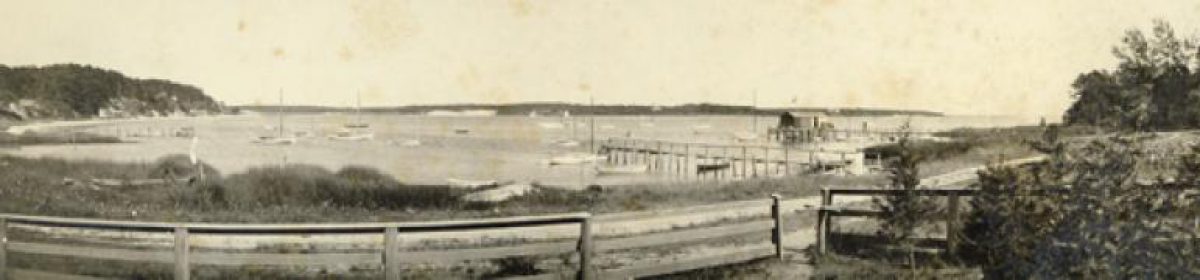
These pictures say it all. Napatree Point, Rhode Island before the storm.
And after (note the wooden groins, or planks in both pictures for reference.
Restricting the amount of storage one has for one’s corporate inbox, and then disabling the send function when that limit is exceeded is a great way to take a stressed out person and further stress them as they have to start saving and deleting attachments, run compression and archiving tools, and revert to IM and personal email to get anything done while that skin disease of personal productivity known as corporate email grinds away to some nirvana of compliance and then readmits the user to email hell.
How much does storage cost? Add a petabyte for $4 million. Let’s assume an hour of an employee time is worth $10. That means 400,000 man hours would need to be saved to justify the expense (and that is a wildly inflated expense: the actual disc cost is likely to be under $500,000)
Okay, 10,000 employees would need to free up 40 man-hours of inbox maintainance to justify the investment. I estimate I spend an hour a week on inbox hygeine. And I make more than $10 an hour.
I’d play devil’s advocate and say the company probably doesn’t want its employees packratting everything they ever received — like my first newspaper managing editor who threw away my stacks of old reporter’s notebooks because, in his words, “The Attorney General can’t subpoena a landfill” — but backup tapes and Sar-Box stuff means my inbox is doubtlessly archived for life somewhere.
Google gives me 2 gigs of inbox. For free. Very interesting debate in the comments under this story as IT guys argue the cost of storage versus the users like me who say they are full of it.
“IT departments have traditionally applied such restrictive limits to Exchange Server mailboxes -as low as 25MB per staff member – that users have become frustrated with repeated “your mailbox is full” errors.
Meanwhile, only senior execs have been granted access to work email from home, or via a Blackberry.
As a result, more and more users are auto-forwarding all their email to Gmail, where they have a 2.7GB mailbox capacity and can access it wherever they are – even via a mobile phone.
While the slumbering giant in corporate IT may not yet have woken up to the data security risks associated with this practice …”
Oh, and it is 1 pm, I have not had email since I woke up, and I am so screwed by the limit that I actually had time to blog while my inbox rebuilds itself.
“Paid content walls rarely work and when the New York Times began Times Select two years, putting most of its content behind a paid subscription, I cringed. Admitting the experiment did not work, as of Tuesday at midnight, the Times wall crumbles.”
I pulled #19 out of the water on Sunday’s hightide. It was sad. Now my Friday afternoon hooky excuse is on a trailer, awaiting three other stout backs to lift her off and onto some sawhorses. I think I’ll do some woodwork on her this fall before tucking her away for the winter on the dirt floor boat shed (never store a wooden boat over a concrete floor, all the moisture in the wood desiccates and a dry boat will rot).
Yesterday, while sitting in a dark bar in Oak Bluffs with my cousin, getting myself around a pitcher of Sunday afternoon beer, conversation ceased and attention was paid to the television where a football game was in progress. We agreed we are retarded and not fit to be called American males when it comes to sports.
“How about those Bruins? Getting that touchdown in the 9th inning against the Celtics?”
And to think I once was a bartender in a sports bar, where I couldn’t tell a pro athlete from a state legislator. My fellow barkeeps would torture me by making me serve drinks to people like Harmon Killebrew and Marvin Hagler and then ask me in the presence of said notables to identify them, their team, and their accomplishments. My cause was not helped by the news that I could identify John Updike and Andre Dubus when they entered the bar, and got very excited about that fact.
To my credit, I can name most of the pro peloton in cycling and can tell you who won the America’s Cup. I can watch most sports and follow the rules — save cricket — I prefer “drag racing” sports where the winner crosses the finish line first (e.g. swimming, rowing, biathalon) and detest all sports which involve a costume, music, and subjective judging (gymnastics and figure skating). Team sports bore me and I subscribe to the small ball theory (more intelligence, wile, and skill is required as the ball shrinks in size).
I haven’t watched basketball since the Bird-McHale-Ainge-Parrish-Walton dynasty. Hockey since Orr-Esposito-Bucyk-Sanderson-Cheever, and Baseball since Bill Buckner did what shall not be mentioned. Football baffles me and I’d rather be car sick than waste a weekend afternoon watching that chaos.