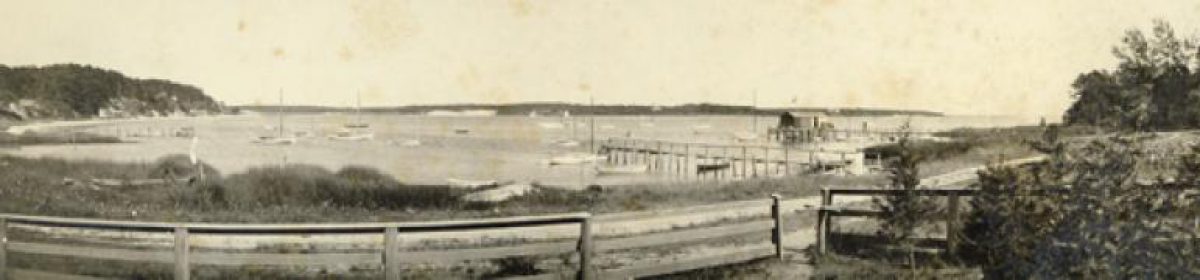
Historic Preservation of Cotuit: What’s Next?

The proposal to move the Ebenezer Crocker house at 49 Putnam Avenue to a new location has revived questions about what can be done to preserve the unique historical character of Cotuit and what regulations are now in place to protect the village’s old homes.

Here’s the bottom line:

  • The National Register of Historic Places (49 Putnam Avenue is on the register) is mainly a honorary designation and generally applies protection when federal funds, licenses, or permits are involved. None of those conditions apply to 49 Putnam.
  • If a building permit is requested from the town of Barnstable to demolish, move, or renovate a structure 75 years or older, it automatically gets referred to the town’s seven-member Historical Commission which can order an 18-month “demolition delay” during which time a way might be sought to save a threatened structure either by persuading the owner not to proceed, or to move the structure to a new location.
  • If a project involves the demolition or substantial alteration of a building listed on the National Register, then it must be referred to the Cape Cod Commission as a candidate to be reviewed and designated a “Development of Regional Impact” (DRI). The project is reviewed in light of the Regional Policy Plan, which sets out the standards for protecting historic buildings, landscapes, and archaeological resources. The Cape Cod Commission has the authority to block or modify the demolition or alteration of historic structures.
  • The strongest level of protection to preserve old houses is a Local Historic District (not to be confused with the Cotuit Historic District listed on the National Register). These are districts established under Chapter 40C of the state’s housing laws, with their own regulations and review board. They are unpopular due to their reputation of being overly strict and fussy. Cotuit attempted to create such a district in the mid 1990s but neighborhood opposition killed the plan. The Old King’s Highway District that covers Route 6A from Sandwich to Brewster, is an example of a Local Historic District. Nantucket, Beacon Hill, Concord …. are some other notable examples. There are more than 200 local historic districts across the state. If Cotuit had enacted such a district, then the 49 Putnam Avenue proposal could be denied without the involvement of the town Historical Commission or the Cape Cod Commission.

The National Register of Historic Places

First, a little history lesson into historical preservation. The Federal Historic Preservation act of 1966 was enacted when urban renewal and other federally funded projects were erasing important historic landmarks. A great example of why the act was passed was the extension of Route 18 in New Bedford in 1963 which obliterated much of that city’s historic waterfront. The Preservation Act established the National Register of Historic Places, the official federal list of “sites, buildings, structures, districts, and objects deemed worthy of preservation for their historical significance or great artistic value.”

There are over 1.5 million properties on the National Register. Of those, 95,000 are listed individually and the rest are contributing resources within historic districts. The National Park Service administers the register. Inclusion on the register does not guarantee protection as it places few if any restrictions on what a private property owner can do with their property, up to and including demolition.

The Massachusetts Secretary of State oversees the Massachusetts Historic Commission (MHC) which inventories historic properties within the Commonwealth and acts as the state-wide arm of the National Park Service. The MHC reviews properties submitted for inclusion on the National Register. Submissions follow an inventory format that are created by local historic commissions, historical societies, and volunteers.

Cotuit was the subject of such an intensive inventory effort in the 1980s led by the late Professor James Gould, the Town of Barnstable Historical Commission, and several volunteers who catalogued over 100 properties. That led to the creation of the Santuit and Cotuit Historic Districts, both of which are listed on the National Register of Historic Places.

As of now, the following houses/properties in Cotuit and Santuit are listed in the National Register of Historic Places. Keep in mind there are two “historic districts” — Santuit and Cotuit — that encompass a large number of historic homes. Santuit encompasses eight homes along Route 28 in the original colonial settlement; the Cotuit district includes 107 buildings, “and encompasses the areas historically known as Cotuit Port and Cotuit Highground. Boundaries were selected to encompass the areas of densest 19th century development, when this part of Cotuit assumed the leading village role from the inland area of Santuit.”

The listing for the Santuit Historic District states: “The boundaries for the Santuit Historic District include 8 buildings, 2 of which are modern and non-contributing. The boundaries were selected to encompass the remaining dwellings of the important Santuit family, the Crockers.”

Cotuit’s seven stand-alone listings on the National Register are structures that fall outside of the two districts.

Here are links to the Cotuit and Santuit Historic District listings on the National Register.

Town Regulations

The Town of Barnstable Historical Commission is a seven member board (one alternate) appointed by the Town Council. Its powers are defined by Section 241-22 of the town bylaws. Any application to demolish, modify, or renovate a historic structure (older than 75 years) is submitted by the building department to the BHC who convenes a public hearing to either grant or delay the proposed changes.

“The Historical Commission surveys and compiles a listing of all historical sites and buildings within the Town, public and private; determines the functions and structures of all historical organizations within the Town; and holds correlative seminars with historical organizations. It further determines the requirements for repair, reconstruction, and protection of historical landmarks and assists and cooperates with public commissions in the conduct of public historical events. The Historical Commission is an advisory committee of the Town.”

The town bylaws governing “Protection of Historic Properties” (Section 112) states “This article is enacted to promote the public welfare and safeguard the Town’s historical, cultural and architectural heritage by protecting historical resources that make the Town a more interesting, attractive and desirable place in which to live. This article aims to protect and preserve historic properties within the Town by encouraging their owners to seek alternatives to their demolition and by providing the Town an opportunity to work with owners of historic properties in identifying alternatives to their demolition.”

The Town Historical Commission defines a “significant building” as:

Any building or portion thereof, which is not within a regional historic district or a local historic district subject to regulation under provisions MGL c. 40C but which has been listed or is the subject of a pending application for listing on the National Register of Historic Places, or has been listed on the Massachusetts Register of Historic Places, or is over 75 years of age and which is determined by the Commission to be a significant building as provided by § 112-3D of this article, either because:

A.  It is importantly associated with one or more historic persons or events, or with the broad architectural, cultural, political, economic or social history of the Town or the Commonwealth; or

B.  It is historically or architecturally important (in terms of period, style, method of building construction, or association with a famous architect or builder) either by itself or in the context of a group of buildings.

The by-law goes on to state that if the Historical Commission determines an applicant’s notice of intent to demolish a significant building “would be detrimental to the historical, cultural or architectural heritage or resources of the Town, such building shall be considered a preferably preserved significant building” then:

Upon a determination by the Commission that the significant building, which is the subject of the application for a demolition permit, is a preferably preserved significant building, the Commission shall notify the applicant, the Building Commissioner, and the Town Clerk, and no demolition permit may be issued until 18 months after the date of such determination by the Commission is filed with the Town Clerk.

The Cape Cod Commission

The Cape Cod Commission has a mandatory “development of regional impact” (DRI) review for any proposed demolition or “substantial alteration” of a building listed in the National Register of Historic Places or the State Register of Historic Places. 49 Putnam Avenue qualifies for mandatory Commission review.

Referral to Cape Cod Commission, if necessary:

In cases where the Historical Commission finds a proposed project constitutes a “substantial alteration,” or when full demolition of an historic building is proposed, the building inspector/commissioner or other appropriate municipal agency (including the select board/town council) shall refer the project to the Cape Cod
Commission for mandatory DRI review. In these cases, the DRI review will be limited to issues related to the “cultural heritage” goal of the Regional Policy Plan (RPP).

The Cape Cod Commission, once it takes over the review of the proposal from the town Historical Commission, can designate it a development of regional impact. The Commission’s enabling legislation grants it the following powers over a DRI:

The commission may approve, approve with conditions, or disapprove the development of regional impact. If the commission disapproves the development of regional impact no further work may be done on the development. A development of regional impact which has been approved, or approved with conditions shall be valid and effective, and municipal development permits may be issued pursuant thereto for seven years following the date of the written determination.

What’s next?

On August 19 the Town of Barnstable Historic Commission voted unanimously to impose an 18-month demolition delay on 49 Putnam Ave.

Chairman Robert Frazee noted in his time serving on the commission he could think of no project which received as many letters of opposition as 49 Putnam (39) with no indications of support.

After hearing from the applicant’s architects and taking testimony from more than a dozen concerned Cotusions, the commission voted to impose the 18-month delay and refer to the application to the Cape Cod Commission for its review as a possible Development of Regional Impact (DRI) .

The criteria for referring a project for DRI review varies, but the CCC’s regulations specifically call out as mandatory “any proposed demolition of substantial alteration of an historic structure listed with the National Register of Historic Places or the Massachusetts Register of Historic Places, outside a municipal historical district or outside the Old Kings Highway Historic District.”

Because 49 Putnam meets that criteria, the Barnstable Historic Commission was bound by law to send a mandatory DRI referral form by certified mail or hand delivery to the clerk of the Cape Cod Commission.

Once the clerk receives the referral, “the Commission may, at a meeting, accept the referral for review as a development which may have regional impacts and which presents one or more of the concerns listed in Section 12(b) of the Act. The Commission may delegate to its regulatory committee, the Executive Director, or to the Commission Staff the responsibility to meet and make a recommendation to the Commission as to whether the Commission should accept a discretionary referral.

The Cape Cod Commission is required to conduct a public hearing within 60 days of receiving the DRI referral from the town. [As of August 25, 2025 such a hearing has not appeared on the Commission’s online calendar.] The official page for CCC meeting notices is https://www.capecodcommission.org/meeting-notices/

Written comments may be submitted by mail to the Cape Cod Commission, P.O. Box 226, 3225 Main Street, Barnstable, MA 02640 or online using the form located at https://capecodcommission.org/comment

Documents submitted to the Commission for its review of the project as potential Development of Regional Impact will be archived and available to the public.

When all is said and done, the Commission “may disapprove the development of regional impact. If the commission disapproves the development of regional impact no further work may be done on the development.”

In the future I’ll write about the effort led by the late Professor Jim Gould in the 1990s to establish a Local Historic District in Cotuit.

Wastewater Management and Cotuit

On Tuesday, August 19, at 7 PM, at the Cotuit Federated Church’s Hamilton Hall, the Cotuit Santuit Civic Association and the Cotuit Fire District Board of Water Commissioners will host (as part of the civic association’s annual meeting) a panel discussion with five experts on the topic of wastewater management in Cotuit.

Last spring the board of water commissioners asked the civic association to convene the forum to build awareness of the issues, technologies, and deadlines surrounding the complex topic of wastewater management.

The panelists are:

  • Zenas “Zee” Crocker, Executive Director of the Barnstable Clean Water Coalition and a member of the Town of Barnstable Comprehensive Wastewater Management Plan Ad Hoc Committee
  • Scott Horsley, Cotuit Fire District Water Commissioner and Chair of the CWMP Ad Hoc Committee
  • Anastasia Rudenko, water resources engineer at the civil engineering firm GHD
  • Rob Steen, Assistant Director of the Town of Barnstable Department of Public Works
  • Sara Wigginton, deputy director of the wastewater division and program manager at the Massachusetts Alternative Septic System Test Center

We hope to answer questions such as:

  • What is driving the issue of wastewater treatment?
  • How will the changes made in 2022 by the state department of environmental protection to the Title 5 septic regulations affect Barnstable and Cotuit?
  • Where does Cotuit stand in the town’s Comprehensive Wastewater Management Plan?
  • Is Cotuit ever likely to see a municipal sewer system?
  • What are the available options, benefits, drawbacks, and costs of: sewer, I/A septic systems, satellite or “cluster” wastewater treatment, urine diversion, composting toilets or other solutions?
  • Which of these options will protecting the drinking water supply; reduce nutrient contamination of the estuaries and ponds?
  • What are some short term solutions for wastewater pollution? What actions can we take now to reduce contamination?

Lest We Forget: It’s Hooper’s Landing not Ropes Beach

In 1957 the Santuit-Cotuit Historical Society circulated a petition to change the name of “East Main Street” to “Old Shore Road” and “inasmuch as Samuel Hooper gave the land to the town in the early 1800s, that the name of “Hooper’s Landing” be restored in that the present sign of “Ropes Beach” This to be presented to the Selectmen of Barnstable for the 1958 town meeting.”

Barnstable Patriot July 25, 1957.

In March of the following year, 1958, at the annual town meeting of the Town of Barnstable, the Patriot reported:

“Adopted [was…] Article 113, which changes the name of East Main Street in Cotuit to Old Shore Road and of Ropes Beach in the same village to Hoopers Landing.

“The meeting was told that these changes “to keep the old salty flavor” were desired by the Cotuit Historical Society and had been approved by a majority at a meeting of the Santuit-Cotuit Historical Society.

“Opponents argued that to change the name to “Old Shore Road” would be to encourage tourists to drive down along the waterfront and create a traffic hazard to the many small children in the beach area.”

I guess someone forgot to tell the town DPW’s sign czar that it ain’t “Ropes Beach” but has officially been “Hooper’s Landing” since 1958.

In 1970, Mrs. Nita M. Crawford, curator of the Historical Society of Santuit and Cotuit wrote the editor of the Barnstable Patriot to correct his reference to the public beach at the landing as “Ropes Beach” (after the Ropes family who lived there in mid-20th century, not because of the floating rope corral the once delineated the swimming area before the town gave up on the beach and let it turn into a muddy mess).

“Dear Mr. Hornig,”

I have read with great interest your article “Cotuit’s Beach Needs” (Aug. 27 issue). This was a subject that my late husband. Calvin D. Crawford, was deeply interested in. It is to be hoped that you will have started the ball rolling and that now real positive work will start.

Now I must tell you that you should say “Hooper’s Landing” (sometimes called “Ropes Beach”).

The present Ropes house was purchased in 1849 by Samuel Hooper of Boston along with much land even into Little River. At his death in 1874 he left the beach below this house to the Town of Barnstable. Then it was called “Hoopers Landing.”

However the house, which had changed hands several times, was finally willed to Prof. and Mrs. James Ropes in 1898. The beach then began to be called “Ropes Beach.”

At the March 1958 town meeting a petition was presented to change the name of East Main Street to Old Shore Road and Ropes Beach back to the original name of Hoopers Landing. This was so voted and the sign names changed.

As a Historical Society we like to keep to the old original names. I hope you understand.

Cordially,

Nita M. Crawford, Curator

Historical Society of Santuit and Cotuit, Inc.

Moving the Oldest House in Cotuit Port

One of the oldest and most prominent homes in Cotuit is the Ebenezer Crocker house that has presided for close to 250 years over the bay above Hooper’s Landing on the curve at 49 Putnam Avenue since 1783. The house was built that year by Ebenezer Crocker, Jr., descendant of the colonial Crocker clan who founded Cotuit. In 1849 it was bought by Samuel Hooper, the village’s first summer resident. Hooper and his descendants lived there and entertained prominent guests such as Harvard historian Henry Adams (grandson of President John Quincy Adams), Hooper’s niece: the pioneering photographer Marian “Clover” Hooper Adams, U.S. Senator and abolitionist Charles Sumner, and a parade of prominent political and cultural figures of the late 19th and early 20th century.

Below the property, on the shoreline, Ebenezer Crocker built the first pier on the shores of Cotuit Port. It was a “crib pier” located adjacent to the present dock of the Cotuit Mosquito Yacht Club. There Ebenezer’s son, Braddock Crocker, built a small shop that served the growing fleet of packet sloops that departed from the cove bound for Edgartown and Nantucket.

The Crocker Pier, c. 1910 by Edward Darley Boit

The new owner wants to move the two-and-a-half story structure  to the field to the north where the former farm’s grand barn stood until it was demolished in 2017. On Tuesday, August 19, 2025, at 4 PM, the Barnstable Historic District will conduct a public hearing on the following application:

“Popolo, Joseph Victor Jr. TR, 49 Putnam Avenue, Cotuit. Map 036, Parcel 004001, Built 1783 Partial demolition & relocation. Demolish the ells of existing dwelling. Relocate the dwelling to the parcel across the drive owned by the same over or to 555 Main Street, Cotuit.”

The application, filed on behalf of the owners by Jennifer Birnstiel of the Plymouth, MA firm of Archiplicity, LLC (dated April 17, 2025) is addressed to Ben Haley, National Register Director of the Massachusetts Historical Commission and states the reason for the move is:

“The move of the structure is being proposed to create a better connection between the owners existing home on an adjacent property and the outdoor living space. This move will create a better visibility for The Ebenezer Crocker Jr. house in the Town making it a more prominent landmark. The current house location is not visible from the street. It is located on a turn and shrouded by trees. The new location is an adjacent grassy field of the same original property where the structure of the original barn once stood.”

The letter further states under the heading of “Appropriateness of the New Setting:”

“The new site is adjacent to the existing house location. The property was originally one property and was divided at a later date into separate lots. The move of the house will have no affect on the historical significance of the property as it was originally a singular property. The move is wholly appropriate as the current building location and the proposed were originally the same property. The visibility in the field adds to the visibility of the property as a whole.”

Under the heading of “Impact on Historic Significance,” the architect states:

“The Ebenezer Crocker Jr. House will continue to be located on the original property which was historically one and will remain adjacent to the buildings in the original listing (The Ropes Ice House c 1851 and the Ropes Workshop c. 1855). There is therefore no impact as the listing will remain constituent to the current listing with the joined properties.

“The building will be moved and relocated on a concrete foundation. We will repurpose stones from the original barn as part of the new foundation. In this regard the building shall still be considered eligible for retaining its National Register Historic status.”

It should be noted that the property that the owner wishes to move the house onto has been under a conservation restriction (Barnstable County Registry of Deeds, book 12934 page 41)  since 2000:

“The purpose of the Restrictive Covenant is to assure that the Restricted Area will be retained in perpetuity predominantly in its natural, scenic, and open condition and to prevent any use of the Restricted Area that will significantly impair or interfere with the conservation values of the Restricted Area. The public benefits resulting from conservation of the Restricted Area include, without limitation: protection of a field, that together with the field on the opposite side of Putnam Avenue, preserves the scenic and historical rural character associated with this area of Cotuit for the benefit of the public.”

The conservation restriction may be why the agenda item states an alternative location for the house could be 555 Main Street, Cotuit (north of the driveway to the Cotuit Elementary School).

The late Prof. Jim Gould wrote about the house in the June 29, 2012 edition of The Barnstable Enterprise. A copy is on his blog, where he describes how Samuel Hooper came to own the house and become Cotuit’s first summer resident:

“The story behind the purchase of the house is that Samuel Hooper could find no captain to go to China for him since all had gone off to California. He heard there might be an available captain in Cotuit, and approached the postmaster Captain Alexander Scudder. Captain Scudder was attracted by Mr. Hooper’s generous offer to take a ship to China but asked who would take care of his house and farm. Mr. Hooper paid for the farm and house, and became the first summer resident of Cotuit, and perhaps of Cape Cod.”

Samuel Hooper, Cotuit’s first summer resident

The Barnstable Historic Commission will meet on Tuesday, August 19th at 4 PM in the Selectmen’s Conference room on the second floor of Town Hall, 367 Main Street, Hyannis. The application concerning 49 Putnam Avenue is last on the agenda.

The 75-page filing submitted to the Commission can be read online.

The Historical Society of Santuit and Cotuit’s monograph about “The Crocker-Hooper-Lowell-Ropes House 1793-1957” is below.

Part 1: A Village Allergic to Docks

“The battle of the pier has resulted in neighbors no longer speaking to each other, name calling and the collection of money for legal fees from the citizenry.”

If you have any memories of the Harbor View pier, the court battles and controversies, or if you have a photo of the former 250-foot pier, I would be grateful and happy to include your thoughts on the matter, or any correction to the record of the dispute which follows. Thank you.

David Churbuck

The history of docks and piers in the village of Cotuit would seem to be one of the most tedious topics I could be blogging about. Yet it is a story that goes to the heart of Cotuit’s early maritime history, the reason why the village was once known as “Cotuit Port” and became one of the most important commercial ports on Cape Cod in the 19th century. Docks have  been a subject of intense controversy and debate in the village over the past 50 years, debates and court fights that have pitted neighbors against neighbors, dominated village politics, and ( it could be argued), lay the foundation for the village’s tradition of   preserving open space, fighting the demolition of historic homes, and advocating for the environmental health of its waterways and beaches.

The current application by a life-long summer resident to construct a new pier adjacent to Cotuit’s town dock has reignited community interest in the controversial and divisive topic of piers and docks. This essay is not about the pros and cons of that present proposal, but a brief look at Cotuit’s history of opposition to new docks and piers. I’ll break up the story into three parts.  

Older residents will recall the first major battle over a pier: the Harbor View Club’s 250-foot long permanent pier which was built in the mid-1960s, and then demolished in 1969 after years of court cases culminating in the state’s Supreme Court order to have it removed. The Harbor View pier fight was followed in the late 1970s by another battle over the so-called “Sobin pier” on Codmans/Bluff Point, a battle the pier’s opponents lost and its  owner won, again a fight entailing  years of hearings, court cases and arguments within the village  that pitted neighbor versus neighbor. The third major controversy over docks and piers came nearly 20 years ago, in 2001  the village and recreational shellfishermen successfully pushed for a ban on new piers from Handy’s Point to Loop Beach despite vigorous opposition from the real estate and construction lobbies.

But before jumping into the sad tale of the Harbor View, let me digress with a little history of docks in Cotuit

The First Docks

The reason the Commonwealth of Massachusetts has unique laws governing the ownership of waterfront property down to the edge of the water, and not the high-water mark like most other states, is the important role piers played in the settlement of the colony in the mid-1600s. Piers allow a ship to unload its passengers and cargo without needing to transfer them to a small boat – or lighter – which would then be rowed ashore into shallow water where it would be unloaded and carried the rest of the way. A contributor to the high mortality rate of the Pilgrims over their first winter in Plymouth was blamed in part on the need for the passengers and crew of the Mayflower to wade ashore in frigid waters, soaking their boots and clothing twice a day as most of the passengers lived aboard the ship while the first houses were being built ashore.  As subsequent ships arrived carrying Puritan colonists to Salem and Boston, it was apparent to the first colonial governors that substantial piers would be needed to handle the passengers, cargo and livestock arriving from England. Those piers – some of which remain to this day along Boston’s waterfront – were massive structures created by dumping boulders and stones into the harbor, then encasing the fill in timbers and planks to create a permanent pier where ships could berth and be easily offloaded. To encourage such construction the colonial regulations granted waterfront property owners control over the entire beach – from dry sand down to the water’s edge and then beyond into the waters of the harbor, giving them “water rights” over the submerged bottom under the pier. Because shipping and fishing were the foundation of the colony’s survival and success, the regulations succeeded and Massachusetts became the most successful maritime colony on the continent, with its  piers leading to shipyards, warehouses, ropewalks, and other related trades.

The first commercial pier built in Cotuit wasn’t built until 1797. It was owned by Braddock Crocker on the beach where the current yacht club pier stands at Ropes Beach/Hooper’s Landing, and some remnants of it can still be found buried in the mud there. Crocker’s pier was soon joined by Hezekiah Coleman’s pier, then others, making the Ropes Beach cove the commercial center of the village and leading to the renaming of the neighborhood as “Cotuit Port” to distinguish it from the original colonial settlement inland at Santuit near the Mashpee town line and the Santuit River.

Braddock Crocker’s pier, built 1797

In the early 19th century Cotuit’s piers were used to load cordwood for the island of Nantucket, to embark and disembark passengers on the  packets which ran daily between the village and the island, as well as load other cargo bound to the prosperous island.  After the Civil War, when the first summer residents began to build homes along the shores of Cotuit Bay, the commercial center began to shift to the area around the current town dock. Carleton Nickerson built a boat shop there, the Cotuit Oyster Company’s headquarters were there, and Sears, a Hyannis lumber company, built a depot at the town landing along with sheds to store coal delivered by coastal schooner to the village’s stoves.  The harbor was an important commercial port, and businesses such as the Coleman family’s Santuit House hotel, the blacksmith shop on Old Shore Road, Thomas Chatfield’s sail loft, and the Handy’s shipyard at Little River all prospered serving the hundreds of coastal schooners that passed through Nantucket Sound every day, carrying the cargo the country depended on at a time before roads or railroads connected its cities and towns.

As Cotuit made the transition from commerce to recreation in the late 19th century, the piers near Ropes Beach were used for the pleasure of the summer visitors staying at the Santuit House. Ice cream and clams on the half-shell were served from a shed on the end of one pier. Later, with the construction of the Pines Hotel near Riley’otHGs Beach and Sampson’s Island, a pier was built for the convenience of the guests who hired retired whaling captains to take them for day sails around the bay in their catboats.

The Harbor View Club

In 1902 a wealthy businessman—one  W.T. Jenney and his wife — built a large waterfront home on the bluff overlooking Cotuit’s town dock. Thereafter known  as the “Jenney House” it still sits next to Freedom Hall on Main Street and commands a spectacular view over the harbor, Dead Neck, Sampson’s Island, and Nantucket Sound beyond. The property  may also be the   “white elephant” of  the village, having changed hands nearly a dozen times since its construction.

The Jenney House in modern times

The Jenney House sits in a residential zoning district,  but it  became an informal  business in the early 1930s when  its owner, Annie Flanders, opened a tea-room that served sandwiches, ice cream, soda and yes, tea. She was unable to make a go of it, fell behind on the mortgage and taxes, and  lost the property to a foreclosure by the Wareham Savings Bank – who held onto it for six years before selling it in 1944 to a businessman from Worcester, Joseph Abdella.

In the early 1950s Abdella sold the Jenney House without making any significant modifications to it. In 1951 it was purchased by a Providence, Rhode Island “industrialist “named  Morton Clark and his wife Edith. The Clarks incorporated Harbor View Manor Inc., sold the property to that entity, brought on a partner, Ellsworth Rouseville of Attleboro, and gradually expanded the commercial use of the property, running it as a seasonal inn and making some minor modifications that didn’t attract much attention from the abutters despite its ongoing non-conforming commercial use in a residential zone.

In 1956 the Cotuit Mosquito Yacht Club celebrated its 50th anniversary with a regatta on Cotuit Bay. Headquarters for the event was the Harbor View, as the CMYC at the time had no pier or beach of its own, but depended on the hospitality of members to provide it with a home. Ironically, in ten years time the CMYC would be involved in a fight against the harborside inn.

In 1964 the Clarks received a permit from the state Department of Public Works to build a 250-foot long, eight-foot wide permanent pier with a 50-foot wide “T” at the end and slip accommodations for 26 boats.  While it appeared to be a marine, Harbor View Inc. founded a yacht club, registered it with the International Yacht Racing Union, and applied to the town of Barnstable for building permits to enclose and enlarge the home’s porch, to construct locker rooms for the yacht club’s members, dig up the 6,000 square foot lawn to make a parking lot, and various  other modifications to turn the former Jenney House into a year-round restaurant, hotel, and yacht club.

In January of 1965 the Harbor View Manor Club went before the Barnstable zoning board of appeals to get a variance for its non-conforming use and permits for the new construction. At that meeting the Clarks and investors in the corporation were met with opposition by 300 village residents and 200 telegrams sent by summer residents unable to make it to the Cape for the hearing in the off-season.  After taking the matter under advisement, the board unanimously voted to deny the building permits and variance and it appeared the expansion plans would be thwarted.

The Barnstable Patriot’s Cotuit correspondent, the late Frances X. Schmid, wrote in the weekly Cotuit news column of January 15, 1965, an item with the headline: “Villagers Protest Proposed Yacht Club”

“Three hundred villagers in person and 200 telegrams were part of  a protest presented to the zoning board at a  standing-room-only only hearing In the hearing room at the town office building last Thursday afternoon, protesting the petition of the Harbor View Manor Club, Inc.,  for an extension of the non-conforming use to permit the enclosure of a part of the existing building on Main Street and lo allow the use of the premises as a hotel-yacht club. Harbor View Manor Inc. President Lloyd J.  Clark has asked permission to enclose the  porch. Install plumbing facilities  on first floor, extend basement area for enlargement of cocktail lounge, and to add a sub-basement for installation of 228  lockers, shower and toilet  plumbing for both men and women. Representatives of the fire district and the prudential committee were also present lo protest the granting of the extension. Summer homeowners — among them Victor Boden of Stamford. Conn , and  J.C. Stookey of Hasting-on-Hudson, N.Y.— made the trip from their winter homes to join the protest. The petition was taken under advisement”

Frances X. Schmid, Barnstable Patriot, Jan. 15, 1965

Emboldened  by the state’s  permit to build the pier, the Harbor View pushed ahead with construction in the spring of 1965 and received a special building permit from the town’s building inspector, Herbert Stringer for the modifications to the building.  Two neighbors – Dr. Donald and Mary Higgins, and Mr. and Mrs. William Crawford – sued the building inspector in June of 1965. The battle over the new yacht club had begun.

Public opinion was divided. Some year-round villagers welcomed the arrival of a “real” yacht club and marina. Cotuit lacked a gas dock or boating facilities like Osterville, and the Harbor View Yacht Club promised to bring some real waterfront amenities to town  – including a fancy restaurant – which the village lacked since the decline of the commercial district at the turn of the century. The opponents were mainly summer people who wanted to preserve the informal, uncommercial character of the village.

In 1967, a reporter from the Los Angeles Times wrote a feature article about the impact of the late President John F. Kennedy’s summer “White House” at Hyannis Port on the sudden popularity of the Cape, especially along the south side between Cotuit and Hyannis Port. Cotuit summer resident and former Secretary of Commerce John Connor told the reporter that life in the village was “… delightfully unorganized.  Here, the ‘yacht club’ is the end of a dock and dues are one dollar a year. There is none of that white-jacket stuffiness you get over in Oysters Harbors.”

That state of  “delightful unorganization” changed forever in 1966 when opponents to the Harbor View began to raise money through the Cotuit-Santuit Civic Association and the Cotuit Mosquito Yacht Club  to help pay the fees of the Higgins and Crawford’s  attorney: the late Richard Anderson.  One wag nicknamed the effort the “Watch and Ward Society of Cotuit” in humorous reference to the Boston Watch and Ward Society that was  notorious for banning books in the early 1900s.

The agenda of the Cotuit-Santuit Civic Association meeting of August 1966 was dominated by the topic of the Harbor View. Frances Schmid wrote in her Barnstable Patriot  column:

Too Many Boats Too Many Gulls

Although it would take more Boston and Philadelphia lawyers than those barristers which have already been involved to make “Harborvlew” synonymous with “happiness” to most summer and settled residents of Cotuit, the attitude of the villagers toward “the external forces impinging on our community” was made much clearer than the water in Cotuit Harbor will be, at the annual meeting of the Cotuit-Santuit Civic Association at Freedom Hall Friday night. After such preliminaries as reading of last year’s meetings, the reporting of the amount in the treasury (some of which, In a motion by William Morse, Jr., will be used to Join with the Mosquito Yacht Club “in their efforts to enforce zoning regulations which we believe have been breached by Harborvlew”), the election of three new members, and such variegated discussions as jal-lai, Popponessett Bay, Barnstable Harbor Motel, cedar tree treatment, keeping Cotuit clean, a new dump site and the growth of the herring gulls, the remainder of the meeting got hotter than the afternoon that preceded this writing as various pro and con speakers rose to express their views and concern over the possible polluting of the harbor by boats that will tie up at the Harborvlew’s pier.

Although the State Health Department is concerned with the pollution of harbors and there are laws concerning the sealing of “heads” while boats are in the harbor or tied up at the dock. It was explained by Dr. Donald Higgins that it is hardly possible to police boats dumping. Robert Hayden, who feels that the pier and boats there can be an asset to the village, advocated the furnishing of more “facilities.” He also felt present regulations were acceptable to the modern day.

Motions for the joining of forces with other interested groups in the taking of more samples of water for testing by the Board of Health, followed by appropriate action if indicated, came from Dr. James Dunning, Mrs. D. T. Craw, and William Morse, Jr.

Gordon Browne, Jr., noted that although many protests were received over the holding of the firemen’s ball at the Harborvlew, there was no other place in the village to hold it. Which reminds us of a good joke about why firemen have so much more lavish affairs than policemen, but you’ll have to send a self-addressed stamped envelope for the answer.”

Frances X. Schmid, The Barnstable Patriot, August 1966

The dock was built in 1966  and the Harbor View Club opened for business. The Civic Association met again in August 1967 and the members voted to contribute $400 to “help defray expenses in the suit now pending in Superior Court.”  

That suit was heard by  Barnstable Superior Court Judge Edward F. Hennessey in January of 1968. To the dismay of the plaintiffs and the anti-Harbor View coalition, Judge Hennessey upheld the building inspector’s issuance of the special building permits, finding the changes to the property were “as lawful exercise in the discretionary powers of the building inspector under the terms of the (town) by-law.”  Judge Hennessey  also approved of the changes made to the property, writing in his decision: “…the new enclosures have enhanced the internal and external appearance of the building….the new (blacktop) surface was applied in a professional fashion and is attractive in appearance …motor vehicles, formerly parked on the dirt path and indiscriminately on all part of the grass surface … the new pier is attractively constructed …. There is no credible evidence that boat traffic in the vicinity has been increased by reason of the pier (and that) it is an obstruction to navigation…appropriate state authorities approved its installation before it was constructed … the efficiency and utility of that portion of the harbor has been enhanced.”

Judge Hennessey concluded: “All of the alterations complained of in the petitioner’s bill have made Harbor View and its immediate neighborhood more attractive to the eye.”

The Higginses and Crawfords appealed Hennessey’s decision and it was heard by the state Supreme court over the winter and early spring of 1967.  There, with Bernard A. Dwork of Dwork & Goodman representing the Harbor View, and Daniel J. Fern representing the abutters, the appeal was reviewed by five justices who focused on precedent and a close interpretation of the town of Barnstable’s zoning laws as they related to the concept of “non-conforming use.”  On May 2, 1967 the Supreme Court ruled against the Harbor View. Two years later, in June of 1969, Associate Justice Paul G. Kirk ruled that “use of the pier, constructed without a building permit in 1964, be stopped then and there.”

 The Patriot’s story about Kirk’s decision  said: “Judge Kirk’s ruling shuts off application for a special permit from the Town of Barnstable Appeals Board.” Yet despite the massive set back, the Harbor View did just that and made one final effort to gain a permit from the town zoning board of appeals  to preserve the pier. Denied unanimously five year before by the ZBA, they were denied again despite a new show  of support for the pier.

The sailing instructor at the Harbor View yacht club, James Ryan of Acton, wrote an impassioned and bitter letter to the editor of the Barnstable Patriot. He began by saying Judge Kirk should have disqualified himself from hearing the appeal because he was a “summer resident of the area.” (Kirk had a summer home in Centerville). Then Ryan described a malignant atmosphere of harassment and lies (and even anti-Semitism) by the opponents to the pier. Some of his claims included:

“Harborview Club and its members have been constantly harassed by those opposed to the club. The concern of those opposed is not with a zoning law, but to cause the failure of Harborview and eventual eviction of its members. They have charged us with polluting the waters, conducting noisy parties, trespassing on their properties, using obscene language, peering at them through binoculars, dirtying their beaches and other falsities. They have recently stooped to anti-Semitism. These self-appointed guardians and protectors of Cotuit Bay have, by their actions, done a disservice to the village of Cotuit. The Cotuit Mosquito Yacht Club has, on several occasions, solicited funds from Cotuit Post Office box holders to pay the cost of litigation against Harborview.”

James Ryan, sailing instructor at the Harborview, in a a letter to the Barnstable Patriot, August 1969

After Judge Kirk issued his demolition order, the Barnstable Patriot wrote in an editorial published August 28, 1969:

“For about five years a battle royal has sputtered in Cotuit, as quiet, and sedate a little village as any in New England.

The bone of contention has been a pile of timbers extending  from the Harborview Club into the bay. This, summer a superior court judge decreed that the controversial pier must be torn down as it had been constructed without proper permit.

Arguments for and against retaining the pier were heard by Barnstable Appeals Board this week in a marathon session attended by a horde of opponents and proponents in the matter.

During debate of the issue one Cotuit resident declared that until now controversies in the community had been resolved among the villagers themselves. However, the battle of the pier has resulted in neighbors no longer speaking to each other, name calling and the collection of money for legal fees from the citizenry.

As a matter .of principle, he contended, the law in a town should be upheld without citizens having to reach into their own pockets.

It is a certainty that the gentleman from Cotuit would find many who support his theory.”

Editorial, Barnstable Patriot, August 28, 1969

On September 4, 1969, the lead story on the front page of  the Barnstable Patriot reviewed the long, sad history of that  “Battle Royal” and reported on the Harbor View’s final arguments in its August appearance before the ZBA.  So many people turned out to witness the hearing  that the meeting had to be moved from town hall  to the auditorium at Cape Cod Community College.

The three-hour long meeting opened with the club’s attorney, John Curley, Jr., arguing that unlike the 1964 hearing for variances to renovate and change the former Jenney home,  the  current application was to seek a permit for the pier, which had not been on the agenda five years before.  Curley’s arguments focused on the yacht club and recreational benefits  of the pier, not its commercial use by a for-profit corporation.

The Harbor View contingent  arrived with a petition signed by 90 names urging the pier be preserved,   two letters from  a current and former selectman who were in favor of the project, and testimony by the Falmouth Harbormaster who  said since it was nearly impossible to enforce sanitation regulations on the water, the harbor would be better served by onshore toilet facilities. Thirteen people in all  stood to speak on the Harbor View’s behalf.

Attorney Richard Anderson, representing the Higginses and Crawfords, argued the club was purely a commercial venture and quoted from the Harbor View’s promotional literature which stated: “Our magnificent new dock can accommodate your craft, even cabin cruisers.” Attorney John Alger, representing Cotuit realtor Helen MacLellan on the side of the plaintiffs,  disputed the Harbor View attorney’s claim that the pier had never been reviewed by the ZBA and said the hearing was not to determine “what recreational facilities should be available to children nor to determine if there is a shortage of piers in town, but rather to determine an issue of zoning.”

The Patriot’s article concluded: “Perhaps the most acute observation came from a native Cotuiter who commented on the impact the issue had on the village, bringing about a situation where neighbors and friends have become enemies and the breach created will be difficult to close.”

On October 30, 1969, the ZBA rejected the Harbor View’s proposal. One member of the board, Jean McKenzie Bearse of Centerville voted in favor, the other two members were opposed, saying in their decision that while they may have been inclined to grant the club its pier, their hands were tied by the state Supreme court’s decision.

And with that, the Harbor View Yacht Club’s fate was sealed. In the aftermath the Barnstable Patriots editor groused in an editorial titled “Never the Twain Shall Meet”

“Probably no village controversy in the past year has raised such dissension among neighbors as that of the pier at Harbor View Manor Club in Cotuit. The hearing in August routed more Cotuitites out of their oyster shells than any in some time, most of them strongly opposing the petition by the club to build another pier….”

“From beginning to end, the case of the Cotuit pier seems a paradox. At no time has there been greater demand for expansion of waterfront facilities than now. Yet a court orders one such accommodation torn down and the local appeals board cannot, in its opinion, legally accede to the request for building another in its place.

“Legality and logic appear at times to be much like east and west, and as the saying goes, never the twain shall meet.”

Editorial, Barnstable Patriot, November 6, 1969

In response, a leader of the anti-Harbor View contingent,  Dr. James Dunning of Cotuit, wrote a letter to the Patriot:

“Cotuit could easily fall prey to the intense commercial development that has occurred in other parts of the Cape. If this were to happen, Cotuit would lose it quiet village character. Its harbor waters would be polluted to the detriment of both the bathers and the oyster industry. Residents of Cotuit do not want this to happen. The many visitors and summer people we now entertain value the village just as it is. Conservatism and conservation have their place. We are glad the Supreme Court respects this concept.

“Second, the Harbor View dock was constructed without permit and in flagrant violation of zoning ordinances. Off-Cape money was forcing the development. We are justifiably afraid of such lawless tactics. We must resist them, as must all who respect law and order.”

Dr. James Dunning, letter to the editor, Barnstable Patriot, November 1969

The Harbor View still stands today with a very short, permanent pier in front of its beach. It is a private residence now, living on as a would-be marina and yacht club in the memory of those who lived through the first of what would be several brutal battles over piers on Cotuit’s shore.

Next: The Savery and Sobin Pier Fights  of the 70s

On the water in October

Chasing fish on a Saturday afternoon in Cotuit

Yesterday was a perfect day to get on the water with a fishing rod. After doing the usual chores to absolve any guilt, we circled Dead Neck to check out the last of the dredging and admired the new mountain of sand near the Wianno Cut.

Mount Seapuit

Stripers were blitzing near the Cotuit Oyster Company’s grant in the middle of the bay, so we drifted along the shore of Grand Island and caught (and released) a few hungry schoolies. With only a few weeks left before the dinghy has to come off the beach, boating season is coming to an end.

Bluff Point Low Tide

Beating the winter one walk at a time.

Paul Noonan has passed away

My dear friend Paul Noonan passed away at home in Cotuit yesterday, Sept. 20. As the arrangements for his memorial come together I’ll share them here, along with my memories of the man. My condolences to his brother and sisters and his many friends.


Like most people I googled his name and found this fitting tribute to Paul in a cruising guide to the New England Coast. This was doubtlessly back in early 90s when he was driving the red jeep with the “Friends Don’t Let Friends Vote Republican” bumper sticker, clam rakes hanging out the sides because he was off to perform A Blessing of the Rakes in Waquoit Bay for his pal Chiefy. That was just before he totaled my Volkswagen Fox at the corner of School and Main — essentially Cotuit’s Time Square — when the “brakes went beserk.”

Rest in peace you old salt.


By Paul Fenn and W. Wallace Fenn in A Cruising Guide to New England Including the Hudson River


Tom Burgess’ Eulogy

I’m indebted to Marylou Noonan, Sally Noonan Ratchford, Janie Hayden Uyenoyama, Sally Hinkle, Alex Lowell, and David Churbuck for help in composing the obituary that formed the basis of this Eulogy to which I have added what Paul might have termed the “juicy bits.’

Tom Burgess     

 Paul David Noonan, 71

             We are gathered here today to celebrate the life and to mourn the passing of a colorful Cape Cod character, Paul David Noonan.  Both locals and tourists knew him as the eccentric and witty man behind the counter at the Cotuit Grocery during the 1990’s and later as the erudite advisor to those looking for old and interesting volumes at the Parnassus Bookstore in Yarmouthport, where he worked from 2001 to 2013.  But perhaps a majority of us are here to say a final thank you to Paul because we owe him a debt of gratitude for some act of charity, gesture of support or bit of wise counseling that he offered us over the past half century.

He was born on January 19, 1943 in Marblehead, Mass. and was the son of Paul J. Noonan and Bernice (Lucey) Noonan, whom he cheerfully called Bernice “Banshee” for her continual and fruitless attempts to make him toe the line during a boozy and conflicted adolescence.  He grew up in Marblehead and later in West Bridgewater, Mass., where he attended public schools.  His family summered in Cotuit, and Cape Cod eventually became both his spiritual and physical home.  I first met Paul at the Loop Beach when I was 13 or 14 and Paul occupied a permanent position at Janie Hayden’s, the Lifeguard’s, feet from dawn to dusk.  He seldom if ever went in the water and seldom if ever stopped talking. A few sunny afternoons listening to him converse on the beach with the late Ray Smith was the equivalent of a course in liberal politics and theology 101.   His predilection for dressing totally in black in his period of his teens attracted the bemused interest of our parents and foretold his life long interest in the clergy.  He attended Tabor Academy and graduated from Cape Cod Preparatory School in Santuit, Mass. in 1962.

Paul started his career with books with the Harvard University Libraries where he worked first at Lamont Library and later at the Fogg Museum Library from 1964 to 1978.  Here began his interest in local history.

Born and raised a Catholic, Paul was from the first a both a reformer and a deeply spiritual person, who looked both inside and outside the church for inspiration and fulfillment.   While in Cambridge, he began working with needy, addicted, and homeless as a lay volunteer under the auspices of the Episcopalian Cowley Fathers, driven in part by his own work as a recovering alcoholic, which began in 1967, and then in the late 70’s as a member of the monastic community of Oblates of the Incarnate Word, where he donned the black monastic robe for which he had been modeling for the years of his youth.   Paul’s decision to become sober was for him rather like Saint Paul’s conversion on the road to Damascus.  It coalesced his energies outside of himself and impelled him to think of others, while he maintained a complete resistance to attempts to reform or change him by friends and family.

He entered the Order of the Most Holy Trinity following his departure from Cambridge.  While in Baltimore, Maryland as a novitiate, he became deeply interested in the history of Afro-Americans in the tidewater area and later throughout the country.  This became one of several life long passions.  However, he found the tenets of the Catholic Church too confining and left the Order in 1979.

He returned to Cape Cod and settled in Provincetown, working off and on as a fisherman and attending St Mary’s of the Harbor, Episcopal Church. From his late teens he had been unabashed about his sexuality often declaring that he was “as gay as the Christmas goose.”  Of course, he settled happily in Provincetown, where he once exulted to us that “even my laundryman is gay.”  But Paul’s sexuality was very much subordinate to his thirst for social justice for all.  He administered to the needy, recovering alcoholics and those suffering the then scourge of AIDS while going about his day to day life, which was punctuated with more than occasional fireworks of political activism.  He served as Town Clerk of Provincetown for several years until he chose to depart to reside with his elderly father.  This characterized his life from then on, in which the political was often public whereas the charitable was personal and often private.

Upon his return to Cotuit, he worked for the Barnstable County Registry of Deeds, where the work appealed to his interest in local history.  It is rumored that this employment terminated when he attempted to unionize the employees – a testament to his equal desires to be a force of social justice and a very annoying gadfly to those in charge.

Soon after his return to the mid-Cape, he joined the Society of Friends, and eventually became Clerk of the Sandwich meeting.  In this capacity he was instrumental in enlarging the meeting and opening the meetinghouse for year round worship.  He became an authority on the early history of the Quakers on Cape Cod and lectured on this topic frequently.  This proved to be perhaps the happiest time in his search for spiritual fulfillment as the patience and pacifism of the Quakers cooled the flames of 60’s radicalism and brought Paul to new methods of helping others.

During his sojourn in Provincetown, Paul had made close friends with some members of the Wampanoag Tribe.  Upon returning to Cotuit, he became a vigorous ally of the tribe in the quest to achieve recognition of tribal status from the Federal Government.  From this time onward, he counted many of the Wampanoag elders and their kin as close and dear friends, which is why we are here in this Meeting House today.  In his office of clerk of the Sandwich Quaker Meeting, he spearheaded a joining of hands between the Cape Cod Friends and the Mashpee Wampanoag Tribe. For his numerous works on their behalf, he was the first non-native-American to be awarded the Lew Gerwitz Spirit Award by the tribe. Until a month or so ago, he regularly visited elderly companions of his in the tribe to offer them his friendship, companionship and solace.

Paul’s reputation as a character was fueled by his acerbic wit and twinkly-eyed cynicism. When he left the Registry of Deeds, he worked first at the Kettle-Ho Restaurant in Cotuit and later as the regular holding down the cash register at the Cotuit Grocery.  Here and later at the Parnassus he found a secular pulpit and a continually changing congregation.  His love of banter and repartee earned him special mention in the Cruising Guide to the New England Coast.  If I may quote: “In behind the Town Dock is the Cotuit Grocery, with a colorful employee named Paul Noonan in residence.  The Grocery carries a nice selection of liquors and food and does deliver. Mr. Noonan, if you run into him, won’t service fiberglass boats or Republicans.  So don’t call if it bothers you to be scrutinized for your choices.  […] Take your chances with Mr. Noonan. It’s worth it.”

Many of the younger generation did take their chances and learned gradually that “What can I get you, you wretched little child?” was a term of jesting endearment from a softhearted curmudgeon.  A life-long Democrat, he particularly enjoyed sending up members of the opposite party when they were across the counter.  When a local Republican gentleman opened the grocery door one day and asked if his dog could enter the store, Paul replied that the dog was welcome but he had the gravest doubts about the possibility of entry for the dog’s master.  Age seemed to bring about even a grudging camaraderie to this combat, and only last week he was chatting to my Republican brother – deemed “the archfiend” by Paul.  My brother, of course, always knew Paul as “The Shining Path.”

During late 80’s and early 90’s, Paul continued his work informally with the needy and deprived and formally as an elected representative to the Barnstable Town Meeting and later as Town Councilor for Precinct 7, the village of Cotuit, in the years 1991 and 1992.   He engaged himself continually with village and town organizations.

Beginning in 2001, as the indefatigable “clerk” of the Parnassus Bookstore, Paul returned to the books he loved.  He was an excellent salesman and a learned commentator who earned mention in the Cape Cod Times and local guidebooks: “Visitors were happy just to wander through the stacks in search of whatever, perhaps hoping for some banter with the store’s idiosyncratic employee, Paul Noonan. Clearly a frustrated comedian in search of an audience, Paul’s quick one-liners and snappy retorts are equally as fun as finding a dusty tome among the chaos.”

A decade ago, Paul left the Sandwich Quaker Meeting during a period of dissension and turned back to the Episcopalian Church, attending St. Barnabas in Falmouth and St John’s in Sandwich. A great believer in the power of prayer, he lately sought and gained admission to a contemplative prayer order.  I believe he saw himself in many ways as a latter day mendicant monk.

He continued his interest in Afro-American History and was called upon by the local chapter of the NAACP to research topics on their behalf.  This led him to establish a relationship with the Sisters of the Holy Family in New Orleans, with whom he corresponded frequently and to whom he was devoted.  In the past year, he donated his collection of books on Afro-American History to the Zion Union Heritage Museum in Hyannis.

Paul was also devoted to his longtime housemate, Gary Gifford, a commercial shell fisherman in Cotuit, who died in 2010, with whom Paul worked from time to time.  This relationship inspired Paul to revive the “blessing of the shell fishing fleet” in the Three Bays and to lobby hard for the interests of shell fishermen in the town of Barnstable.

There are a lot of us here who particularly remember Paul as the foremost unofficial representative of the Lord God on Cape God, for whom Paul often donned the very black robe that hung in his closet and married, buried and baptized those who counted him as a friend, an advisor and a counselor and their offspring.  I know of this first hand as Paul married our daughter, and buried my son and my son-in-law within the space of three months.  I remember very little of those black days except that Paul’s reassurance somehow led me to believe that neither I nor the world had gone mad.

A very sound appreciation of Paul in the late ‘90’s was lately given to me by Christina Kelley.

“Paul Noonan revels in his self-inflicted image of rebel and non-conformist.  A true radical, he always finds some injustice to lash at.  Mellower now (the once-brown beard is white) than some years ago, his has become a more gentle radicalism.  Don’t expect to find Paul tossing rocks that might hurt people at the barricades.  His criticism is more of ideologies and collective actions, less of individual people.  He will allege and skewer the abuse of police power, then say he finds it an honor to live in the same village as an Officer […].  He has an abiding passion for social justice, but he exercises it within the group of most patient and tolerant people, the Quakers.  He embraced their teaching after years in the church of those of his ancestors who were Irish.  And, yes indeed, as Brother Paul David during part of the 1970s, he wore a friar’s black robe with a blue cord or cincture, a member of the monastic community of Oblates of the Incarnate Word, in Cambridge.”

“You can say -­ and this is a compliment – ­ that for the 32 years of his uninterrupted sobriety, Paul Noonan has been drunk on life. It exhilarates, turns him on. His laughter rings in large rooms. A Well-flavored Life.”

It is said de mortuis nil nisi bonum, that one should not speak ill of the dead, but no one is entirely without failings – and I would have to say that, when pressed or lectured by well meaning friends and family on matters of his own health, his finances, and lately his eclectic mode of attire, Paul developed what I might term a tangential relationship with the truth. This often created stormy relationships particularly with us miss-guided well-wishers.  And, he treated his “motorcars” abominably.

Lately, He suffered more and more as time went on from bouts of anxiety, depression and even agoraphobia – perhaps as he intimated his own demise.  That said, we all remember that he did draw his sword enter the battle with alcoholism from which he emerged victorious.   Now, we mourn that late in life he lacked the energy and strength to do the same against tobacco with the lamentable result that we are here today far earlier than we should have been.

In sum, all of us here took a chance on Mr. Noonan and it was worth it.  It is his manifold virtues have brought us here, and we all seek to emulate them.  We can be firm in our knowledge that Paul’s virtues in the scales of life far, far outweighed his failings, and we can be confident that in the final judgment he has been deemed a valiant Christian Soldier, who, like the Saints who so nobly fought of old, has finally won his cross of gold.

God rest Paul David Noonan.  Amen.

 Friday, September 26, 2014

Thomas Knight Burgess


Saw the Game. Bought the Shirt

image