Thalassotherapy

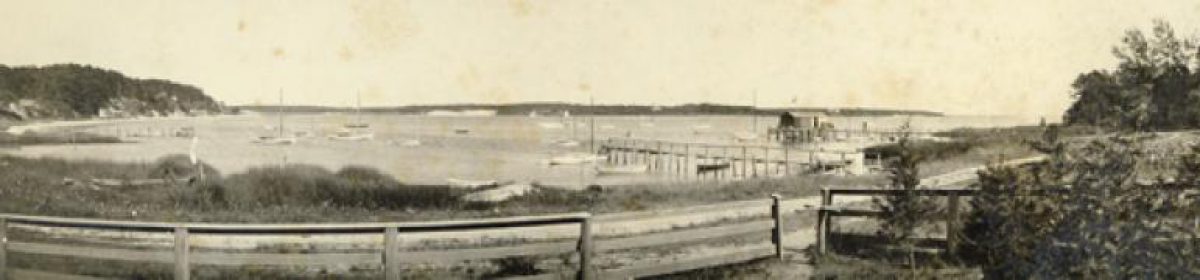
I was going to take some time off this week to sort out my “damp, drizzly November soul” but work stuff popped up and I didn’t get a chance to go stand on a east facing beach and throw a black needlefish into the surge with my 11-foot surf rod and old-school Penn Squidder. I was hoping to land a laggard striper headed south for the winter, even the seals and white sharks made that a dim prospect. My boats are all pulled so my mind’s at ease for the first time since the beginning of the hurricane season. I still have some motors to winterize, then tulips to plant and gutters to clean, but the urge to trudge along the Atlantic shore from Wellfleet to Truro still tugs strongly.

Which of course got me to thinking about the palliative powers of saltwater and helped me remember this quote by Vincent J. Scully, Jr., the Sterling Professor Emeritus of the History of Art in Architecture at Yale that concluded a profile of him written by James Stephenson in the New Yorker in February, 1980:

“When the river is frozen in the winter, I carry the boat until I find open water, and then I just launch it. It’s wonderful rowing through the ice floes. I go out in wild seas all winter. The wind comes from different directions, and the water is always alive, always different. I love to row through the big waves. Way out in the Sound, there’s a triple rock, sort of a monster, and I often row out to that. Sometimes I shout Greek: ‘Polyphloisboi thalasses!’ It’s from the ‘Iliad.’ the best description of the sea: ‘the many-voiced roaring.’ And it’s exactly the sound that the big waves make: ‘polyphloisboio’ as they come tumbling toward the bow, and then the soft, sighing sound — ‘thalasses, thalasses’ — as they pass under the boat.”

In Which Slothrop eats a Gin Marshmallow

Gravity’s Rainbow is one of the great white whales of fiction, the book everybody tries to read and generally gives up on around page 158. Considered Thomas Pynchon’s masterpiece, it was published in the early 70s and won the National Book Award, focusing a lot of unwelcome attention on the famously reclusive author by an audience zonked out of their skulls on LSD and weed. The novel is ranked up there with other unreadables which include James Joyce’s Finnegan’s Wake; Thomas Mann’s The Magic Mountain, and Laurence Sterne’s Tristam Shandy.

As a novelist manque in the early 70s I did my best to make it through the novel and after a few stops and starts finally did with the assistance of a compendium which helped footnote some of the more obscure references. I’m glad I made it through the book, and to this day, if a password reminder asks me the question: “Who is the person you’d most like to meet?” It always come down to Pynchon. Why? To ask him what the hell the deal was with Byron the Bulb.

Anyway, in a discussion with a colleague this morning on writing,I recounted how a professor of mine held up the following excerpt from Gravity’s Rainbow as a masterpiece of list writing. To set the stage, it’s World War II in London. The protagonist, Lieut. Tyrone Slothrop, has been brought home by a girlfriend to meet her mother, Mrs. Quoad, for afternoon tea. Candy is offered. Slothrop takes a piece that looks like a WW I hand grenade:

“Under its tamarind glaze, the Mills bomb turns out to be luscious pepsin-flavored nougat, chock-full of tangy candied cubeb berries, and a chewy camphor-gum center. It is unspeakably awful. Slothrop’s head begins to reel with camphor fumes, his eyes are running, his tongue’s a hopeless holocaust. Cubeb? He used to smoke that stuff. “Poisoned…” he is able to croak.

“Show a little backbone,” advises Mrs. Quoad.

“Yes,” Darlene through tongue-softened sheets of caramel, “don’t you know there’s a war on? Here now love, open your mouth.”

Through the tears he can’t see it too well, but he can hear Mrs. Quoad across the table going “Yum, yum, yum,” and Darlene giggling. It is enormous and soft, like a marshmallow, but somehow—unless something is now going seriously wrong with his brain—it tastes like: gin. “Wha’s ‘is,” he inquires thickly.

“A gin marshmallow,” sez Mrs. Quoad.

“Awww…”

“Oh that’s nothing, have one of these—” his teeth, in some perverse reflex, crunching now through a hard sour gooseberry shell into a wet spurting unpleasantness of, he hopes it’s tapioca, little glutinous chunks of something all saturated with powdered cloves.

“More tea?” Darlene suggests. Slothrop is coughing violently, having inhaled some of that clove filling.

“Nasty cough,” Mrs. Quoad offering a tin of that least believable of English coughdrops, the Meggezone. “Darlene, the tea is lovely, I can feel my scurvy going away, really I can.”

The Meggezone is like being belted in the head with a Swiss Alp. Menthol icicles immediately begin to grow from the roof of Slothrop’s mouth. Polar bears seek toenail-holds up the freezing frosty-grape alveolar clusters in his lungs. It hurts his teeth too much to breathe, even through his nose, even, necktie loosened, with his nose down inside the neck of his olive-drab T-shirt. Benzoin vapors seep into his brain. His head floats in a halo of ice.”

That remains one of my favorite comic passages ever.

Millennial Ukuleles and Hashtags

Historical Wreckage

I happened upon a great trove of old photos on Flickr posted by the Boston Public Library. Dozens of albums containing shots of historical Boston from its sports to its building to its maritime accidents. Being a shipwreck fan of course I was all over that album.

wreckgallery

The pictures are not downloadable and covered by copyright, so the next image is scraped without the permission of the library:

schooner

NYTimes: How Twitter Killed the First Amendment

Hear, hear. How Twitter Killed the First Amendment https://nyti.ms/2iGd6Wj

Dave? Dave’s not here man.

I hate the phone. I hated it as a kid, I hate it even more not.

The old phone in Cotuit was on a party line shared with a few neighbors and as a child I was warned never to pick it up unless it made some distinctive ring, like a long/short/short sequence I could never remember. The phone was a wall phone, rotary dialed, and in those days one didn’t have to dial the entire prefix when dialing around Cotuit or even Osterville — a simple five digits were all that were needed.

When I was allowed to answer the thing I was expected to be some perfect Lord Fauntleroy of telephonic etiquette and say “Churbuck Residence” and never “Hello?” There was one, and only one phone in the entire house, and if the call was for a grown-up one was expected to haul ass screaming from room to room that there was a CALL!

Long distance calls were expensive. As I grew older and called summer friends at their winter homes out of loneliness my father would call me to task and confront me with $15 charges for daring to yak with my buddy Jeffrey in Philadelphia. I’d have to work the conversation off raking leaves or doing some grim chore until I was so paranoid I never dared use it again.

The lack of mobile phones meant children were truly out of sight and out of mind. No one could stalk us if we took off on our bikes — the only rule was to report in ASAP if the firehouse whistle blew two times, the signal for an ambulance which made every Cotuit mother a nervous wreck until her flock checked in.

Skip ahead to 2017 and I have an ADHD inducing supercomputer in my hand that chirps, rings, belches and vibrates every time someone posts a picture of their latest meal on Instagram, tweets their displeasure, shares a video on Facebook, decides its cool to call me with a robot offering me solar panels, or finds me on LinkedIn and cold calls me to hear their sales pitch for “dynamic social engagement metrics solutions.”

So I turn the thing off and people are pissed. I get it, the entire purpose of the little tyrant is to be reachable anywhere, anyplace, anytime, but if nine out of ten actual phone calls are from IRS scammers in India, if text messages consist of incomprehensible emojis of poop, guns, vomiting smiley faces, and the rest is just so much shitty noise in a life already driven to Adderall by email, Slack, instant messages, news alerts, and all appointment reminders; then who the hell wouldn’t set the thing to “no disturb” and learn to ignore it?

Don’t get me started on the asshats who stroll the sidewalks of Boston with their earphones plugged in and their eyes locked onto their screens, just begging for a Silver Line bus to put them out of their shoes and their misery while obliviously crossing Atlantic Avenue. Don’t get me started on the parking lot entropy caused by some dipshit with their hand held to their ear as they blab away while trying to take off the bumper of my car. Don’t get me started on the pissed off accusations of “DON’T YOU EVER ANSWER YOUR PHONE” when I go silent on friends and families.

In my retirement I think I’m going device free. Heck, the inner Amish in me might even go back to candlelight and kick electricity out of my life.

The Mashpee Woodlot Revolt of 1833

I met someone yesterday who has a summer home on Briant’s Neck on Santuit Pond in Mashpee. Of course I got all professorial on them and started babbling about the Trout Mound and the old Wampanoag meeting house that used to stand on the neck until it was moved to its present location by oxen in 1717 ……

Anyway, I dug around on this blog to find my posts from 2013 when I presented a paper to the Cotuit Historical Society on the history of Mashpee and the “Woodlot Revolt of 1833 and realized I didn’t have the full paper on the site.

So here is the PDF. All 23 pages of it.

The Mashpee Woodlot Revolt of 1833

JP Donleavy: 1926-2017

JP Donleavy — The Ginger Man

The other evening I went to an afterwork cocktail party and light dinner with a couple dozen colleagues at a local pub called “The Ginger Man.” I’ve strolled past the place countless times, but had written it off as just another bad Irish pub in a neighborhood thick with them.

The Ginger Man, now there’s a novel to remember. It was so inappropriate when it was published in the mid 1950s that it was judged too obscene to publish in the UK and US and had to be printed by some Parisian porno press. It was the debut of James Patrick Donleavy, an American-Irish novelist born in New York City and educated at Trinity College in Dublin, and is the tale of a scurrilous American law student who lives a deplorable life of chasing women and punishing his liver while his pregnant wife frets at home. It is not a novel any man’s wife is going to suggest to her book club, and Oprah isn’t going to get gushy about it. Ever.

1024px-J._P._Donleavy_appearing_on_"After_Dark"%2C_16_March_1991.jpg

Donleavy was a remarkably funny, and very talented writer. One of his later works, Schultz, is one of the funniest things I’ve read — recommended to me by my Falstaffian step-brother Joe Nickerson and his British rugby buddy, (and my proctologist) Mark Bazalgette (whose ancestor, Sir Joseph Bazalgette: invented London’s sewer) — as part of a “bad-men doing unspeakable acts” series of literary works which includes the wonderful Money by Martin Amis. Basically tales of crapulous debauchery involving pornography, alcohol, bad hygiene, and inadvertent acts of public vandalism. I would include Fight Club and Fear and Loathing in Las Vegas in this canon of party-hearty fiction, but The Ginger Man came first.

I walked into the bar and saw no evidence of JP Donleavy. The chalkboard behind the back bar seemed to honor some deceased customer, but not Donleavy, who passed away last month at the age of 91.

I ordered an Irish whiskey from the waiter but he claimed to have none. Detesting Guinness I looked at the list of expensive single malt scotches, asked the waiter if he was taking names and attendance, and assured of anonymity on the tab,  ordered a peaty Talisker neat. Ate a “slider”, slapped some backs, “rang the bell” making sure those who needed to note my presence took notice, and then pulled a sober Irish-goodbye to make the next train to Providence.

NYTimes: The Mind of John McPhee

My hero.

The Mind of John McPhee https://www.nytimes.com/2017/09/28/magazine/the-mind-of-john-mcphee.html